
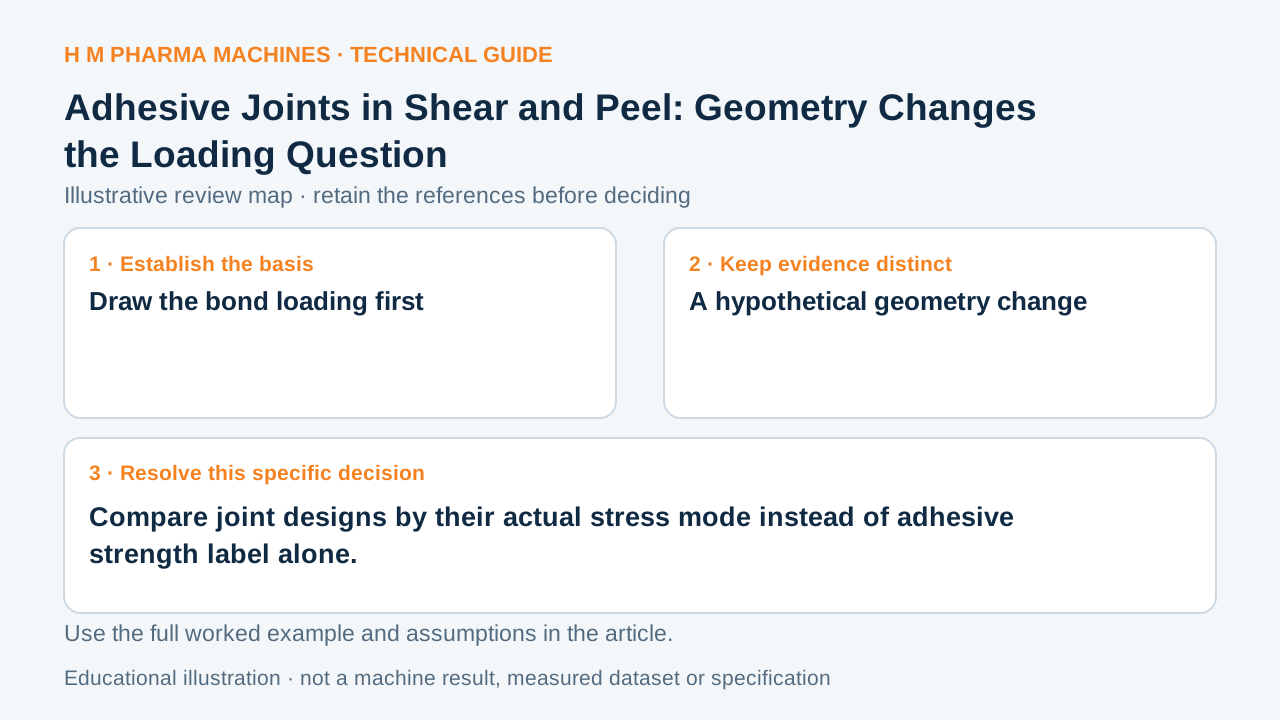
A large overlap-shear value does not automatically describe an edge-peeling joint.
Draw the bond loading first
3M distinguishes shear from peel and other adhesive-joint stress modes. Preserve the actual load direction and geometry when selecting relevant bond evidence. Primary reference: 3M adhesive stress modes.
Identify how the substrates move relative to each other and where the force enters. A broad bond-area measurement does not erase an edge-concentrated load case. Keep the test method and units beside a reported strength rather than treating every adhesive figure as the same quantity.
A hypothetical geometry change
Imagine a fictional bonded strip supported by an overlap-shear result. A revised arrangement allows one end to be lifted, introducing a peeling action. The original test result remains defined information, but it does not by itself represent the revised load mode. Mark the geometry change and ask for its appropriate assessment.
Create rows for substrates, load entry, bond geometry, evidence type and application judgment. This example specifies no HM adhesive, permitted peel force or joint capacity. It supplies no formula that converts overlap-shear stress directly into a peel-strength result.
Retain evidence with the joint design
Ask which tested or assessed configuration supports the intended loading. Material compatibility and curing evidence remain relevant but do not replace the geometry-and-load question. A single strongest-adhesive ranking can conceal those differences.
For replacements or mounting changes, preserve the bond geometry and loading basis with the selected product identity. If the physical interface changes, reassess applicability rather than retaining an earlier strength label automatically. The guide helps a buyer recognize an evidence mismatch without prescribing an adhesive grade, calculating a universal overlap area or asserting that a favorable catalog result qualifies every joint made with that adhesive.
Customer Questions
Can overlap shear be treated as a peel result?
No. The loading modes and evidence differ.
Why draw how the force enters?
It helps identify the actual joint stress mode.
Does a matching adhesive name preserve every joint condition?
No. Geometry and loading can change.
Primary References
These references support the technical principles discussed in this guide. The worked examples and review questions are educational.
Discuss Your Machine Requirement
Share your product, container, required output and the evidence needed for your technical review.
Request a Technical Review