
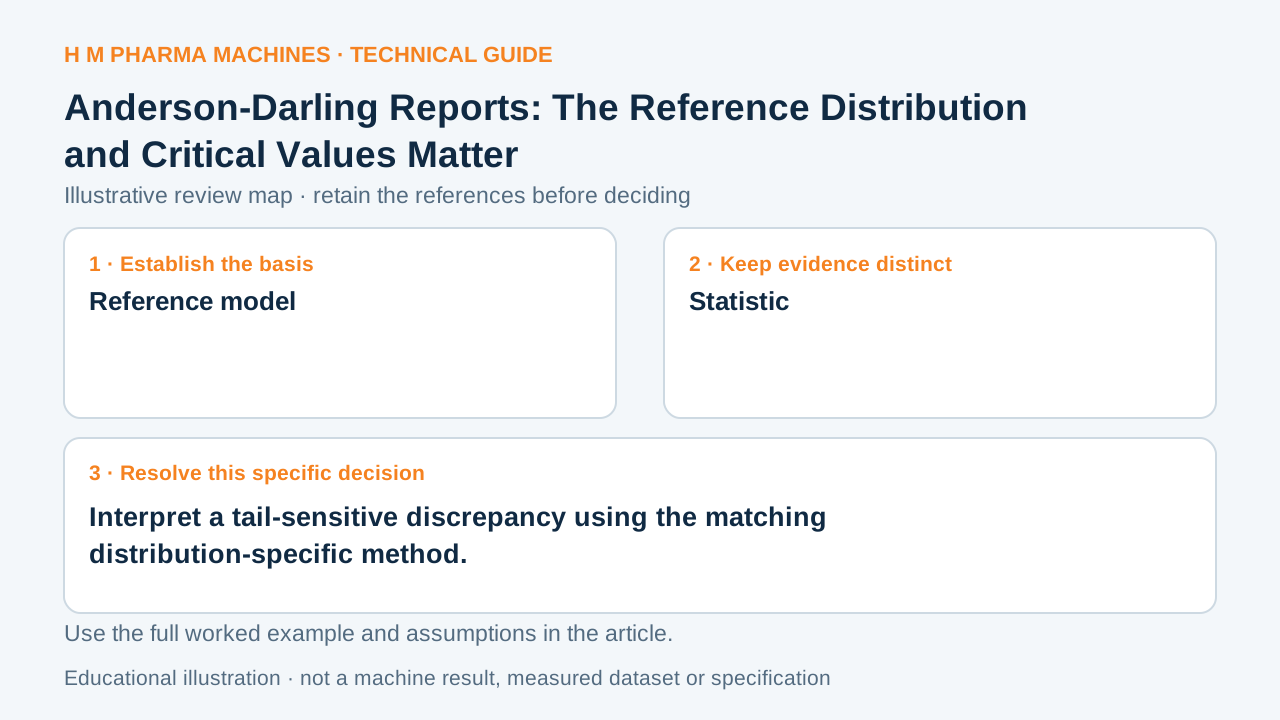
Anderson-Darling output needs the tested distribution and its matching statistic adjustment. A numerical cutoff copied from another model can mislead the review.
The statistical question
Anderson-Darling assesses discrepancy from a specified distribution and gives greater weight to tail differences than the classical K-S comparison. Its critical values depend on the distribution being tested. Implementations may use an adjusted statistic with a corresponding calibration. Preserve the distribution, parameter-estimation treatment and adjustment convention rather than interpreting an unexplained A-squared number by itself.
An illustrative review example
Suppose a fictional spreadsheet reports an unadjusted A-squared value of 0.7 while another reports an adjusted value for the same observations. Copying a cutoff from a third report is not a justified decision unless its distribution and statistic convention match. The number 0.7 has no universal pass meaning. A tail-sensitive test also does not say how many future packs will fall outside a specification.
Prepare the evidence for discussion
Request the complete software output, version, model name, fitted parameters and method reference. Retain readings near the tails and any filtering that changed them. Ask what consequence a distributional mismatch would have for the particular trial analysis. If the purpose is to assess a fill tolerance, keep that conformance question separate from the goodness-of-fit result and agree how a questionable distribution assumption will be handled.
Match statistic and distribution calibration
This blank worksheet is for your own project. It contains no H M machine trial result.
| Question to resolve | Evidence to retain |
|---|---|
| Reference model | Distribution and parameters |
| Statistic | Raw or adjusted convention |
| Calibration | Matching critical-value method |
| Tail evidence | Original readings and filters |
Customer Questions
Can one A-squared cutoff be used for every distribution?
No. The reference distribution and method calibration determine the applicable comparison.
Why retain the adjustment convention?
Adjusted statistics and their critical values must be paired consistently.
Does a goodness-of-fit result predict specification conformance by itself?
No. The specification question and its predictive or conformance assessment require their own basis.
Primary References
These references support the technical principles discussed in this guide. The worked examples and review questions are educational.
Discuss Your Machine Requirement
Share your product, container, required output and the evidence needed for your technical review.
Request a Technical Review