
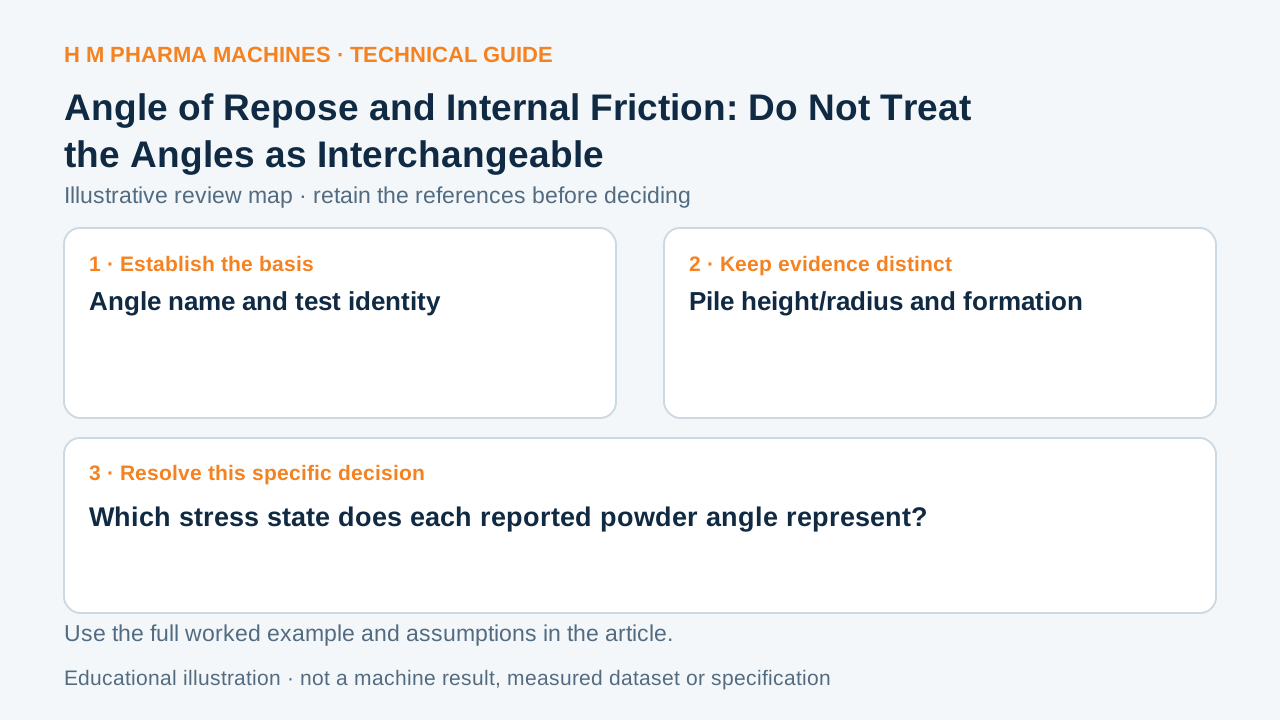
Keep a poured-pile angle separate from a shear-test friction angle before using either number to explain powder movement.
Identify the Material Response
Jenike lists angle of repose and internal-friction measurements as different material properties. Copley describes the repose angle of a powder pile through its height and base radius. Primary reference: distinct powder properties; Primary reference: repose geometry.
Review a Hypothetical Comparison
An invented conical pile has height 50 mm and base radius 100 mm. Its geometric angle is arctan(50/100), about 26.6 degrees. A separate fictional shear report gives an internal-friction angle of 35 degrees at stated test conditions. The difference does not establish that either instrument is wrong: the numbers describe different configurations.
Keep the Evidence with the Decision
Label the measured angle by test and construction, rather than writing only “powder friction.” For the pile, retain how it was formed and which dimension was recorded. For the shear result, keep the load state and reported shear analysis. Ask which material movement the intended calculation actually represents before selecting the input.
Do not enter a pile angle into a shear-based design model merely because both use degrees. A heap observation also cannot supply wall friction against a chosen vessel surface. The teaching comparison gives no universal good-flow band or hopper geometry. Its useful output is a property register that prevents a conveniently available angle from answering a different engineering question.
Which stress state does each reported powder angle represent?
This blank worksheet is for your own project. It contains no H M machine trial result.
| Review field | Reference or result | Responsible person |
|---|---|---|
| Angle name and test identity | To complete | To complete |
| Pile height/radius and formation | To complete | To complete |
| Shear load state and report | To complete | To complete |
| Calculation requiring the selected input | To complete | To complete |
Customer Questions
Is height divided by radius itself the angle?
No. Apply arctangent for the stated cone geometry.
Are repose and internal friction interchangeable?
No. They describe different tests.
Does either number automatically supply wall friction?
No. The wall material and contact test are separate.
Primary References
These references support the technical principles discussed in this guide. The worked examples and review questions are educational.
Discuss Your Machine Requirement
Share your product, container, required output and the evidence needed for your technical review.
Request a Technical Review