
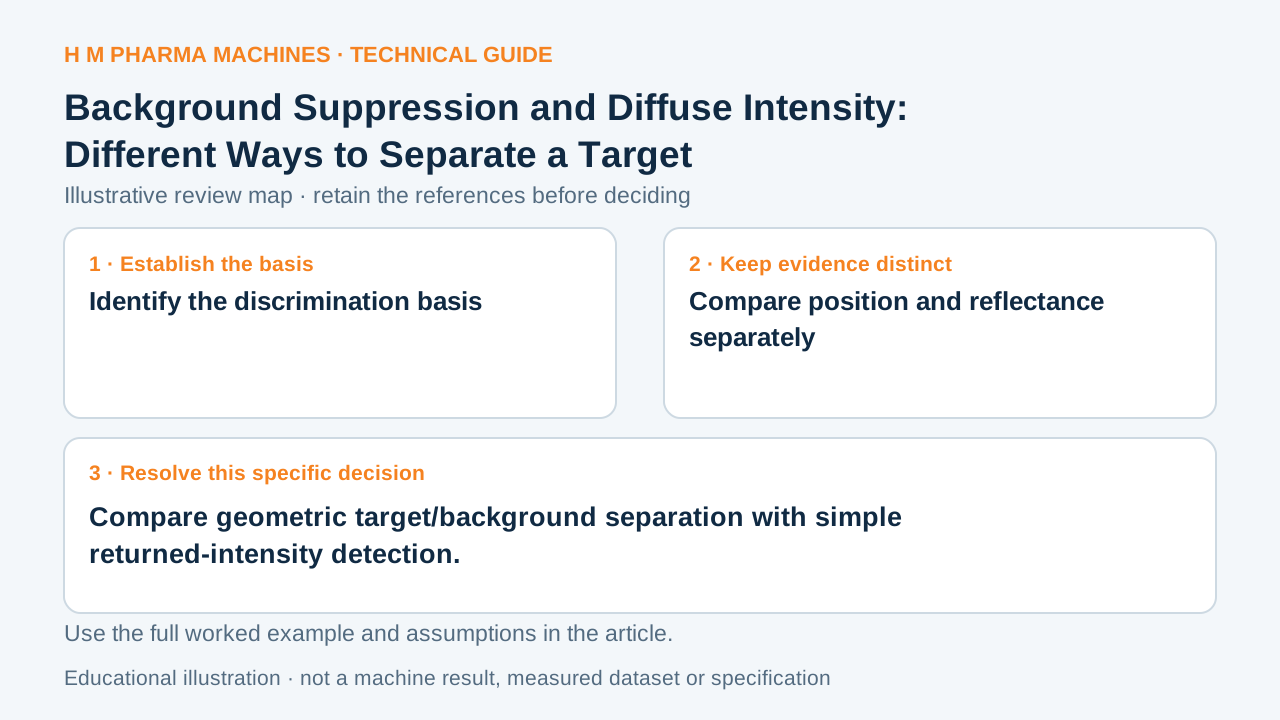
Distinguish triangulation-based background suppression from a decision made solely by returned-light intensity.
Identify the discrimination basis
Pepperl+Fuchs describes background suppression using optical triangulation. Target distance changes the geometric receiving condition; this differs from accepting a return solely because it is bright. Primary reference: background-suppression principle.
Confirm the selected sensing technology before using a background-suppression label. Other distance technologies exist. This guide discusses the stated triangulation principle and does not assign it to every sensor sold under a similar application name.
Compare position and reflectance separately
Imagine a fictional target position and a farther background. First list the required target distances and background distances. In another column, list dark and bright target surfaces. A test that changes only brightness cannot establish every required distance discrimination; a distance test using one ideal surface leaves the surface scope incomplete.
A bright background may still require evaluation within the selected device’s limits. Keep unusual angles, edges and surface conditions with the sample record instead of treating the diagram as a guarantee. None of these hypothetical observations defines an HM switching threshold.
Preserve the actual detection contract
Ask the supplier for the relevant target/background separation capability and sample evidence on the selected model. State what the binary output is meant to indicate and which farther surfaces must not trigger it. Keep the drawing and sample identities attached.
A camera’s ability to focus at both distances is a different question from this discrete detector’s geometric discrimination. Likewise, a brightness margin and a distance boundary answer different needs. This review contains no live teach-in instruction, generic cutoff distance or promise that black and white samples always share identical behavior.
Customer Questions
Is triangulation just a brightness threshold?
Its receiving geometry carries distance information.
Does this cover every distance technology?
Only the specified triangulation principle is discussed.
Does a diagram prove actual discrimination?
Use component-specific sample evidence.
Primary References
These references support the technical principles discussed in this guide. The worked examples and review questions are educational.
Discuss Your Machine Requirement
Share your product, container, required output and the evidence needed for your technical review.
Request a Technical Review