
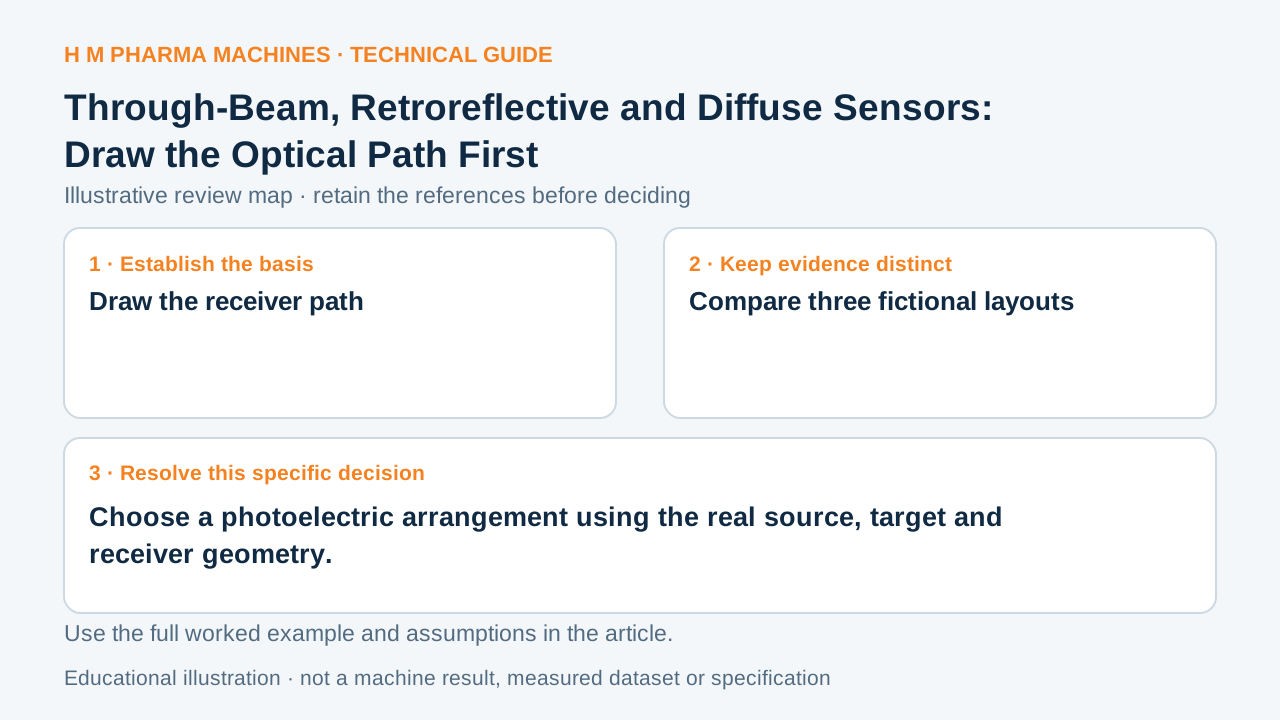
Draw the light path to distinguish through-beam, retroreflective and diffuse presence detection.
Draw the receiver path
SICK distinguishes a separate emitter/receiver through-beam path, a reflector-return path and a diffuse return from the target itself. These are different optical arrangements. Primary reference: photoelectric sensing arrangements.
An output wire tells the controller that a defined switching condition occurred; it does not explain where the useful received light came from. Start with a path sketch rather than treating every photoelectric housing as an interchangeable detector.
Compare three fictional layouts
In layout A, a pack crosses between a transmitter and separate receiver. In B, it interrupts a return from a reflector. In C, the receiver expects light reflected directly by the pack. The same physical location on a conveyor can therefore produce different detection questions.
For C, a changed pack surface affects the target-return condition. For B, preserve the reflector identity and consider the target’s own reflections in the assessment. For A, both mounting locations must exist. These statements identify what to review; they do not prove reliable detection for a real sample.
Write a path-specific requirement
Record emitter, receiver or reflector positions, intended target event, sample identity and the signal meaning expected by the control system. Keep transparent, reflective or irregular samples in the evaluation scope where they belong to the application.
Ask the supplier which actual arrangement and evidence the offer includes. No HM sensor principle is inferred from a machine photograph. This guide concerns binary presence-path selection; camera field of view, image resolution and printed-code grading remain separate engineering decisions.
Customer Questions
Is a reflector a separate powered receiver?
It returns light to the sensor arrangement.
Does diffuse detection rely on the target return?
That return is central to the stated principle.
Does this select a sensor for a clear pack?
Actual sample evidence is still required.
Primary References
These references support the technical principles discussed in this guide. The worked examples and review questions are educational.
Discuss Your Machine Requirement
Share your product, container, required output and the evidence needed for your technical review.
Request a Technical Review