
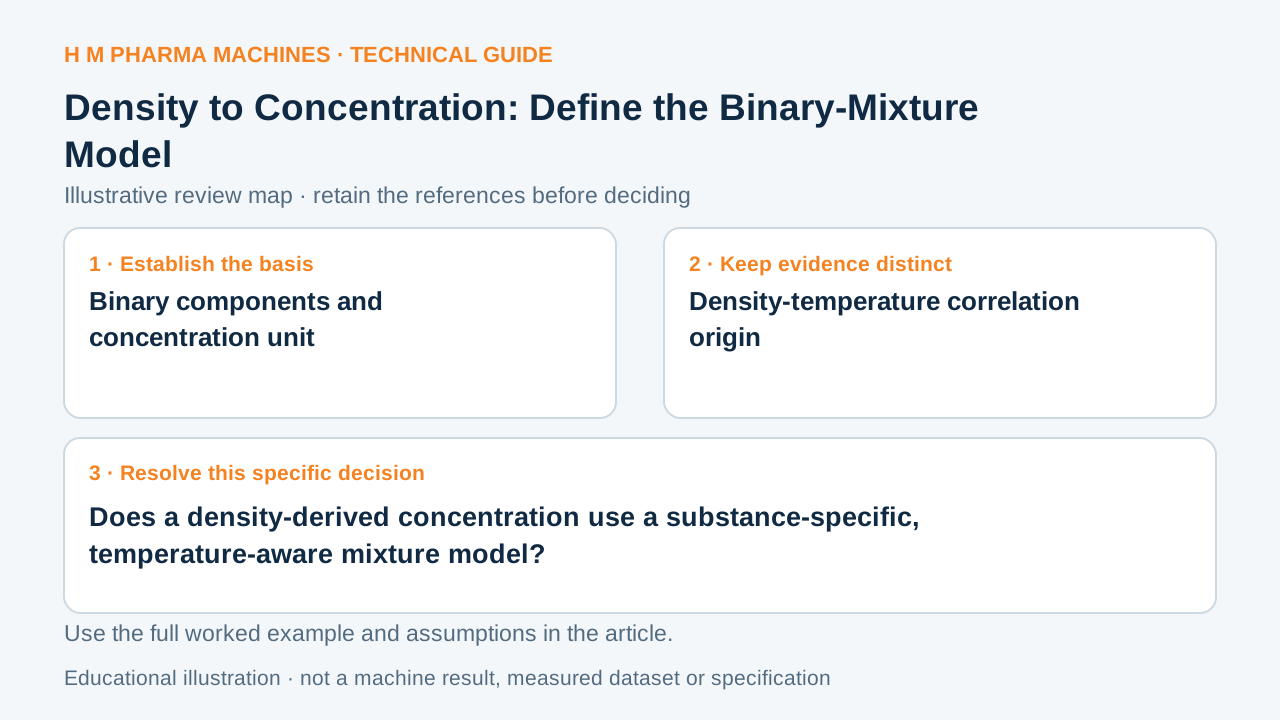
A density reading can support concentration only through an appropriate mixture model. It does not identify composition on its own.
Identify the Physical Basis
For a defined binary mixture, density and temperature can be related to the concentration of one component. Endress+Hauser’s concentration application reference requires a substance-specific correlation and describes the influence of density, temperature and model quality. The concentration unit and composition range belong to that model. A third component or changing formulation can make the original inference ambiguous.
Work Through an Example
Suppose a hypothetical validated table at one temperature maps 0% mass fraction to 1.00 kg/L and 20% to 1.08 kg/L. If linear interpolation were justified within that interval, 1.04 kg/L would correspond to 10%. This deliberately invented table illustrates how the model supplies the answer. The density number alone does not justify that concentration, the linear assumption or a transfer to another temperature.
Use the Result in the Review
Identify both components and the concentration definition: mass fraction, volume fraction or another agreed quantity. Preserve the supporting density-temperature data, fit method and usable range. Test whether likely formulation variations introduce other components with a similar density effect. Keep a direct composition check separate where it is needed to establish the model’s validity. A stable density trend can be useful process evidence without being an absolute purity result.
In a processing-tank enquiry, supply the formulation and desired endpoint rather than asking for a generic density-to-percentage function. This article does not assert a concentration instrument or endpoint-control option is installed. It helps define what would make such an inference meaningful for the selected process.
Does a density-derived concentration use a substance-specific, temperature-aware mixture model?
This blank worksheet is for your own project. It contains no H M machine trial result.
| Review field | Reference or result | Responsible person |
|---|---|---|
| Binary components and concentration unit | To complete | To complete |
| Density-temperature correlation origin | To complete | To complete |
| Valid composition and temperature range | To complete | To complete |
| Independent model checks and third components | To complete | To complete |
Customer Questions
Can one density determine every mixture’s concentration?
No. The substance-specific relationship is essential.
Can °Brix be used for every solution automatically?
No. Confirm the intended scale, substance and model.
Does a stable density prove chemical completion?
No. It is one observation whose interpretation needs process evidence.
Related Equipment References
Review the actual offered equipment and application separately from this educational example.
Primary References
These references support the technical principles discussed in this guide. The worked examples and review questions are educational.
Discuss Your Machine Requirement
Share your product, container, required output and the evidence needed for your technical review.
Request a Technical Review