
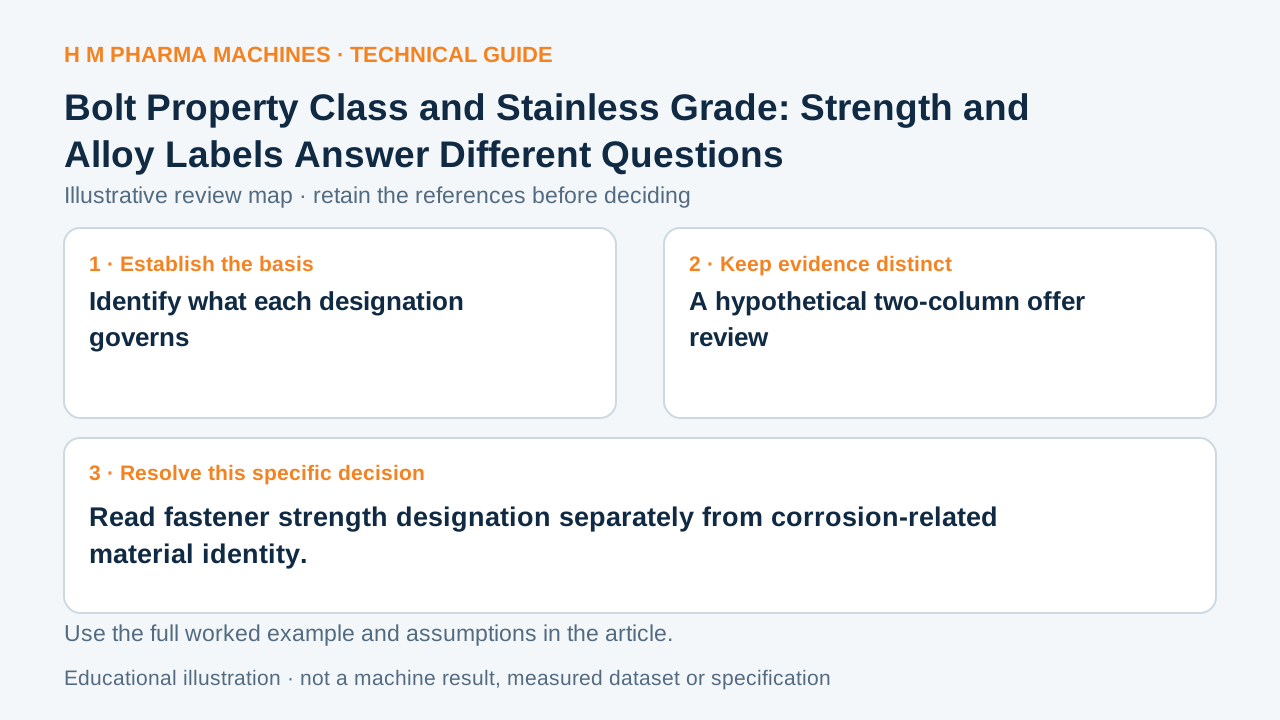
A strength designation and a stainless material label answer different questions. The RFQ should retain both relevant definitions.
Identify what each designation governs
Bossard's technical reference presents screw property classes through mechanical properties and defined test conditions. Those classes should not be read as complete chemical-alloy or corrosion-suitability descriptions. Primary reference: Bossard screw property classes.
Keep the strength specification, material designation, finish and actual component standard in separate fields. A stronger-sounding class does not by itself resolve a wet-environment material requirement. Conversely, a stainless-family description does not establish the intended joint's required strength.
A hypothetical two-column offer review
Imagine a fictional fastener request with a defined mechanical requirement and a separate documented exposure condition. Offer A identifies a strength class but gives no relevant material or finish basis. Offer B says stainless but leaves the mechanical class unspecified. Mark the answered and unanswered fields for each rather than ranking them from one label.
Request the complete designation and supporting references for the actual component. The exercise copies no property table, selects no class and supplies no HM bolt specification. It demonstrates that two incomplete offers can leave different gaps.
Keep substitution evidence complete
When an alternative is proposed, compare all required fields and the joint's application basis. Diameter, head style or colour cannot stand in for the missing mechanical and material definitions. Preserve the actual standard edition or supplier reference where it governs the acceptance question.
The final ordering record should be sufficiently specific for the responsible supplier to identify the intended fastener. That identity supports a subsequent joint assessment; it does not automatically certify the assembled machine or establish a torque value. Strength and environment questions remain visible as separate requirements.
Customer Questions
Does a property class identify complete alloy chemistry?
No. Mechanical class and material identity have different scopes.
Does stainless automatically establish a required strength class?
No. Specify the relevant mechanical requirement separately.
Can the class label supply an installation torque by itself?
No. The complete joint and assembly basis are required.
Primary References
These references support the technical principles discussed in this guide. The worked examples and review questions are educational.
Discuss Your Machine Requirement
Share your product, container, required output and the evidence needed for your technical review.
Request a Technical Review