
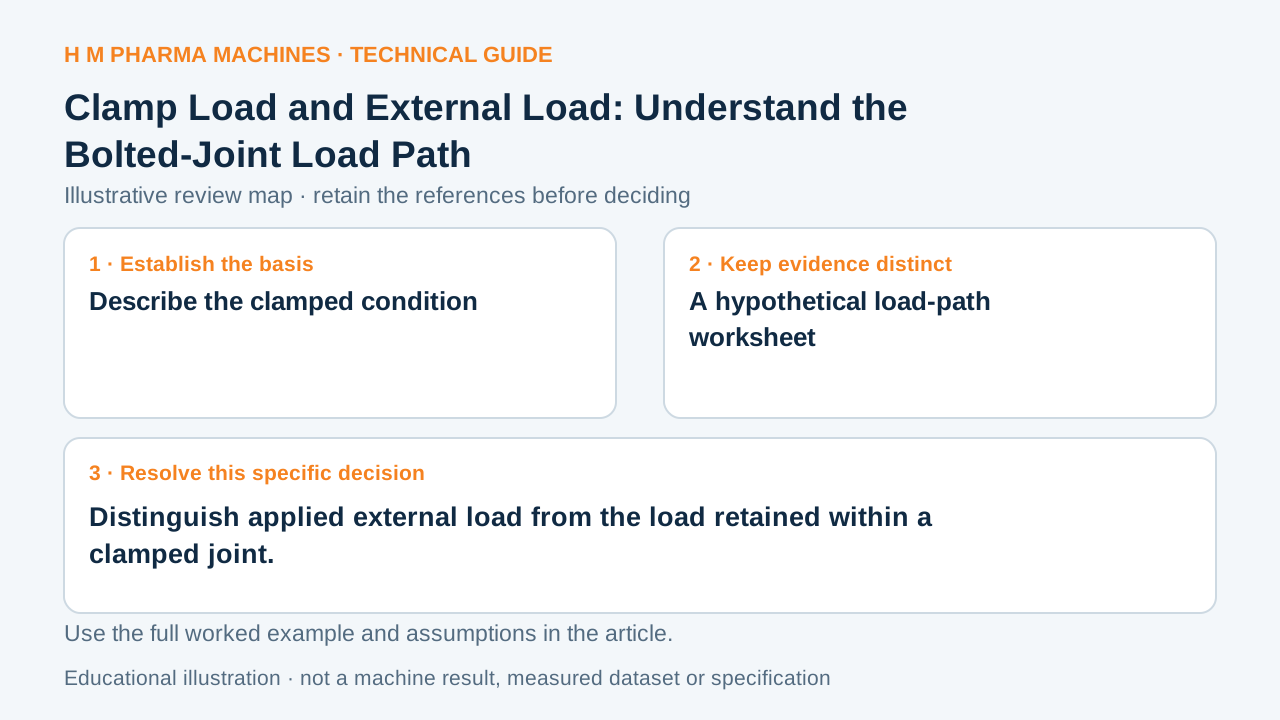
The external load is not simply another name for the retained clamp load. A joint assessment needs its actual load path.
Describe the clamped condition
NASA’s Fastener Design Manual distinguishes the preload and externally loaded condition of a joint. Those states require their own load-path interpretation. Primary reference: NASA Fastener Design Manual.
Identify the bolt, clamped members and the direction of external loading. State what the joint must continue to do, such as preserve contact under the assessed case. Do not assume all external load passes into bolt tension or that every load direction affects the clamp in the same way.
A hypothetical load-path worksheet
Imagine a fictional joint with an identified initial clamp basis and a new separating-load case. A supplier report lists only the external force. That figure cannot establish the residual clamping condition because the arrangement and load-sharing basis are missing. Make rows for initial state, external force direction, member geometry, load-path model and required retained contact.
Do not insert a guessed preload to make the worksheet pass. No HM clamp force, bolt size or permitted external load is supplied by this example. It identifies the evidence needed before a responsible joint assessment can answer the actual requirement.
Preserve the assembled-joint question
The fastener's material or tensile rating can be relevant without completing the clamped-assembly assessment. Ask how the component and member properties enter the actual case, and keep the final calculation reference with the drawing.
If a spacer, gasket or mounting arrangement changes, review the joint basis rather than assuming an unchanged bolt means an unchanged clamp condition. The useful record connects tightening and component identity to the retained assembly function. This guide supplies no torque prescription or numerical separation limit, and does not treat one bolt catalog property as capacity for every joint.
Customer Questions
Are clamp force and external force the same quantity?
No. The joint's initial state and response to the applied load must be distinguished.
Does the bolt's tensile rating prove retained contact?
No. The assembled joint and its loading require assessment.
Can a gasket or spacer change matter?
Yes. It can alter the joint basis even if the fastener identity stays unchanged.
Primary References
These references support the technical principles discussed in this guide. The worked examples and review questions are educational.
Discuss Your Machine Requirement
Share your product, container, required output and the evidence needed for your technical review.
Request a Technical Review