
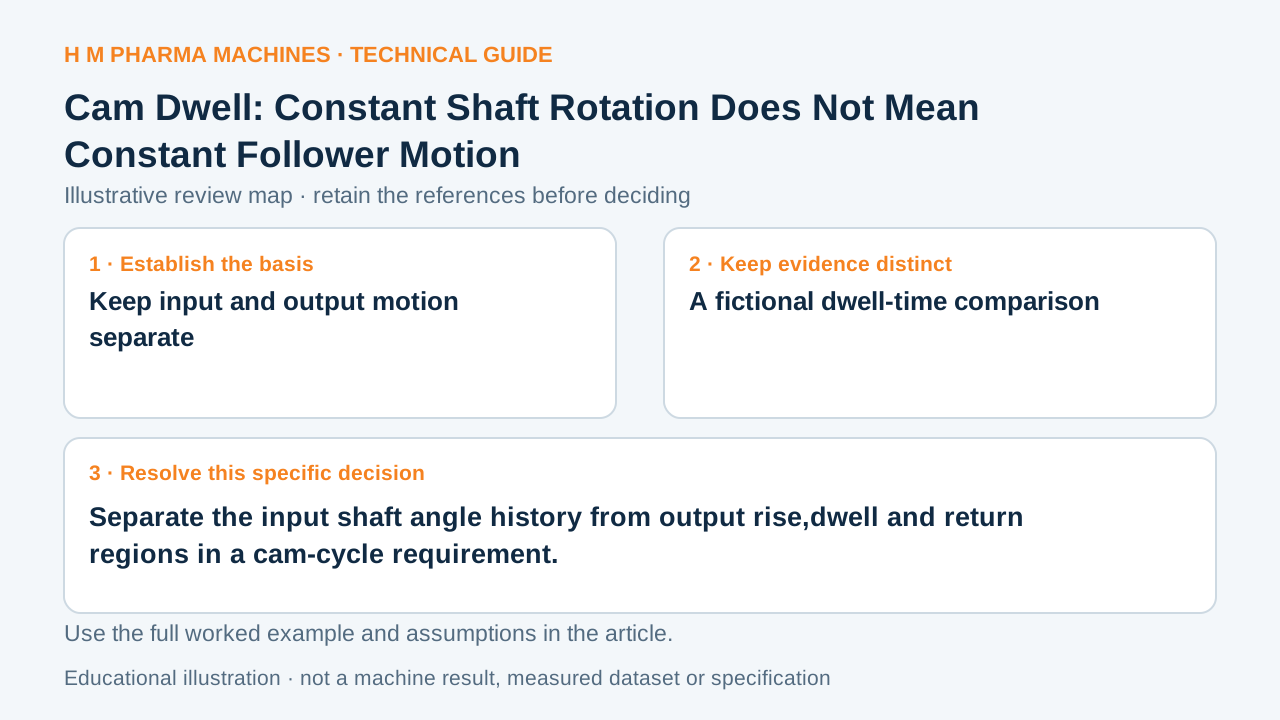
Separate camshaft rotation from follower rise, dwell and return when describing a cycle.
Keep input and output motion separate
Carnegie Mellon describes cam events as rise, dwell and return. During dwell, the follower position remains constant over a defined input-angle region despite continued shaft rotation. Primary reference: cam motion events.
A constant camshaft speed therefore does not imply constant follower velocity. The event diagram is needed to interpret the output sequence. Keep any process timing requirement distinct from the geometric interval that might help fulfill it.
A fictional dwell-time comparison
Assume a hypothetical cycle has a dwell spanning 60 degrees. At 120 RPM, one revolution takes 0.5 s, so that dwell lasts approximately 0.0833 s. At 60 RPM, it lasts approximately 0.1667 s. The same angle produces different durations at different shaft speeds.
Neither duration establishes that a filling, inspection or transfer process completes during the interval. The example uses a purely geometric fictional dwell; actual settling, control delays and process requirements are separate evidence. No existing HM cam cycle is described.
Prepare an event diagram
Record shaft angle, follower position and the required duration of each relevant output condition. Mark where rise ends, where dwell begins and where return starts. If shaft speed varies, derive time from the actual angle history rather than using a constant-speed conversion.
Ask the mechanism owner which physical condition the dwell represents and what confirms the process requirement. A timing label should retain the profile revision and operating-speed basis. This guide supplies no cam adjustment or motion-control setting; it clarifies why input rotation alone cannot describe the complete follower cycle.
Customer Questions
Does rotating input imply moving follower at every instant?
A defined dwell retains follower position.
Is dwell time fixed by angle alone?
The shaft angle history also matters.
Does geometric dwell prove process completion?
Actual process evidence remains separate.
Primary References
These references support the technical principles discussed in this guide. The worked examples and review questions are educational.
Discuss Your Machine Requirement
Share your product, container, required output and the evidence needed for your technical review.
Request a Technical Review