
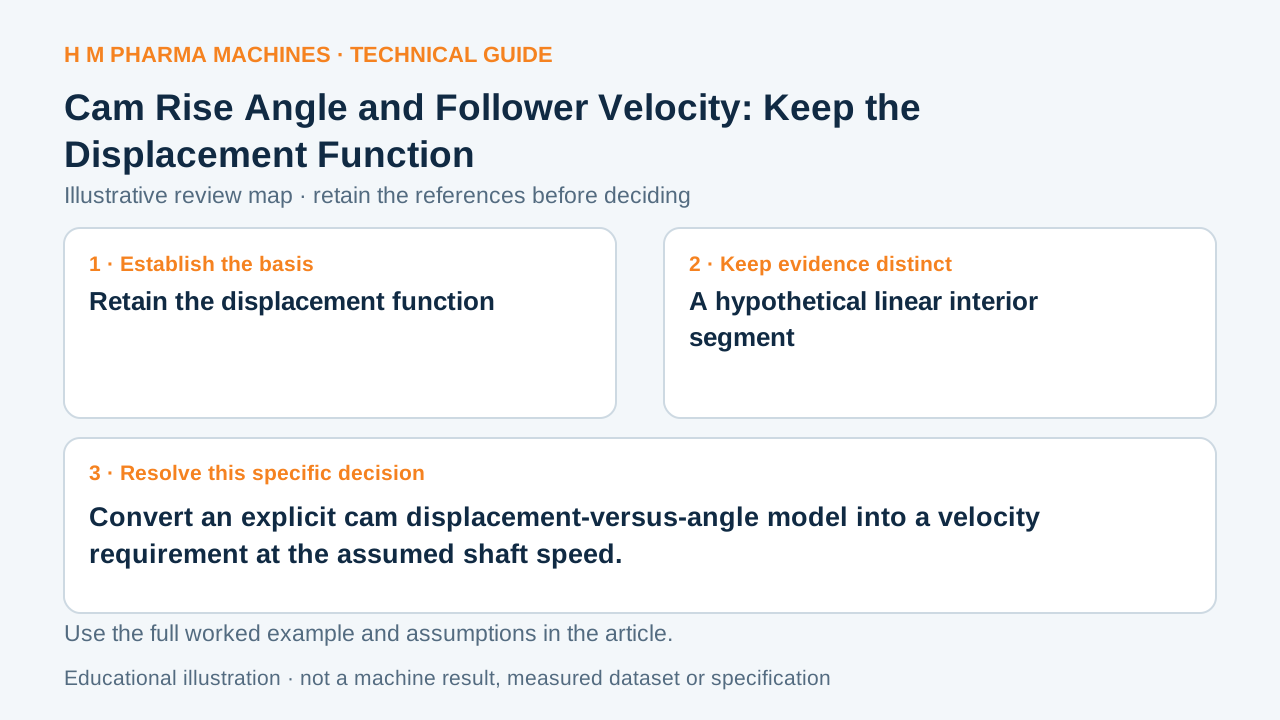
Convert an explicit follower displacement function into velocity using the stated camshaft speed.
Retain the displacement function
Carnegie Mellon defines follower displacement as a function of cam angle and distinguishes displacement, velocity and acceleration. Applying the chain rule to that explicit function s(θ) gives v = (ds/dθ)ω. Primary reference: cam nomenclature and motion events.
Stroke divided by total cycle time is not the instantaneous velocity throughout a rise. The chosen displacement function and rise-angle convention belong beside the shaft speed. Use radians consistently when its derivative is expressed per radian.
A hypothetical linear interior segment
Assume a fictional displacement increases linearly by 20 mm over a 90-degree rise. Within that segment, ds/dθ is 20/(π/2), approximately 12.73 mm/rad. At 60 RPM, ω = 2π rad/s, so the interior follower velocity is 80 mm/s.
Doubling the rise angle to 180 degrees while retaining stroke and speed gives an interior velocity of 40 mm/s. These linear segments are teaching models only. Their abrupt joins can imply discontinuous velocity and require a different actual profile assessment; they are not recommended operating cam laws.
Prepare the derivative ledger
Write the displacement function, its angle interval, derivative units and speed history. Separate interior values from behavior at event boundaries. Ask how acceleration and contact continuity are assessed for the actual selected profile.
A practical motion requirement needs the profile and operating evidence, not only stroke and RPM. No HM cam geometry, velocity or approved adjustment is claimed. The worksheet checks whether the offered velocity calculation used the intended angle-dependent movement rather than a full-cycle average that hides the rise behavior.
Customer Questions
Is stroke per cycle time the instantaneous rise velocity?
The local displacement derivative governs it.
Can degrees be used in a per-radian derivative?
Convert the angle convention consistently.
Is the linear segment a recommended profile?
It is only an illustrative interior calculation.
Primary References
These references support the technical principles discussed in this guide. The worked examples and review questions are educational.
Discuss Your Machine Requirement
Share your product, container, required output and the evidence needed for your technical review.
Request a Technical Review