
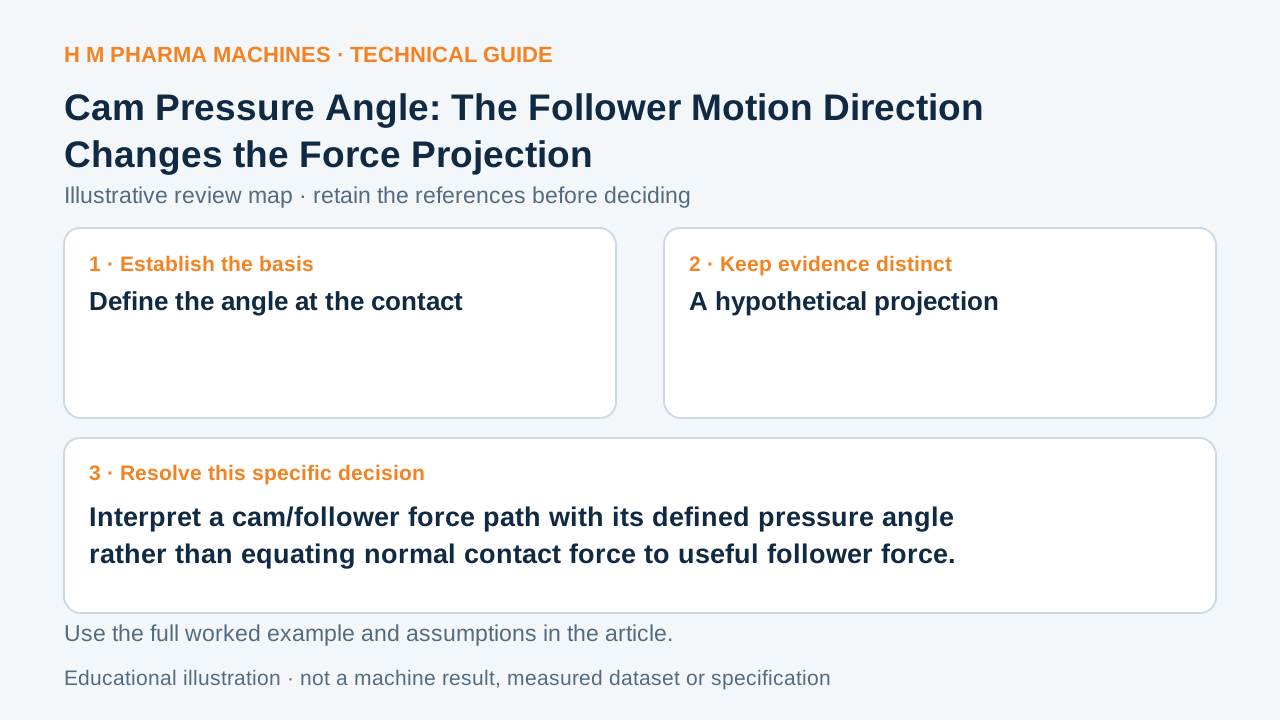
Use the defined cam pressure angle to distinguish normal contact force from useful follower force.
Define the angle at the contact
UC3M defines cam pressure angle between the transmission normal and the follower’s motion direction. The contact force and useful motion-direction component are therefore different quantities. Primary reference: pressure angle, pages 7–8.
Keep the selected follower geometry with the definition. A force magnitude without its direction cannot establish how much acts along the intended motion. This simplified projection excludes friction and other loads unless the model adds them explicitly.
A hypothetical projection
Assume a fictional normal contact force of 100 N and pressure angle of 30 degrees. The motion-direction component is 100 cos30°, approximately 86.60 N; the perpendicular component is 100 sin30°, or 50 N. Both follow from the stated directions.
If the requirement instead specifies 100 N along the follower motion, the corresponding frictionless normal magnitude would be approximately 115.47 N, with perpendicular component approximately 57.74 N. These two cases cannot share the same input label. The angle is illustrative, not a universal permitted design value.
Keep the force path visible
Sketch the contact normal, follower direction and support reaction path. Record which quantity is specified and which is calculated. Ask how the actual model treats contact friction, inertia and return forces before assessing a proposed profile.
No cam size, angle limit or installed follower load is approved here. Use the selected mechanism’s actual analysis for design decisions. The worksheet helps a buyer or reviewer avoid calling a normal contact force useful follower force simply because both are reported in newtons.
Customer Questions
Is normal force always useful follower force?
The projection depends on the defined angle.
Is 30 degrees an allowed limit here?
It is only a fictional calculation input.
Does this include friction?
The illustrative projection is explicitly frictionless.
Primary References
These references support the technical principles discussed in this guide. The worked examples and review questions are educational.
Discuss Your Machine Requirement
Share your product, container, required output and the evidence needed for your technical review.
Request a Technical Review