
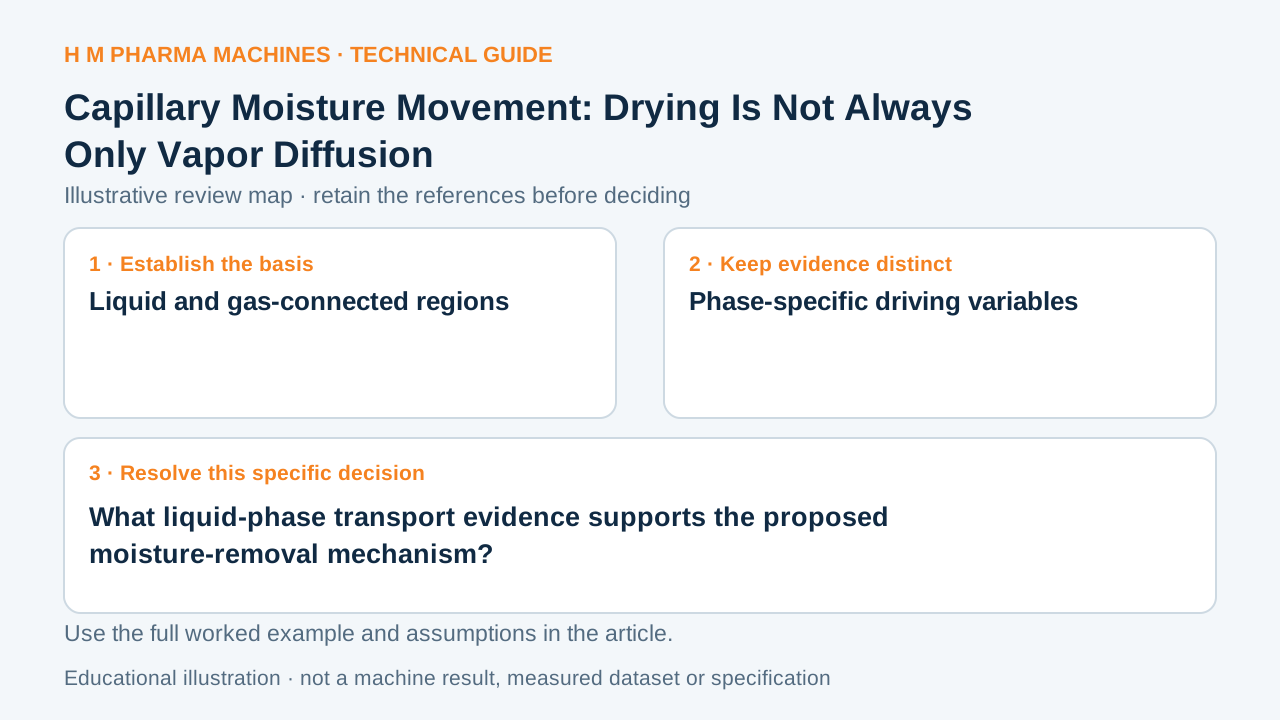
Identify the phase carrying water through the porous material before assigning one transport coefficient to the whole drying path.
Define the Material or Thermodynamic Model
A primary pore-network study models liquid drainage alongside evaporation and gas-phase transport. Liquid flow through connected wet regions and vapour transport through gas-filled regions have different state variables and connectivity requirements; their contributions can coexist.
Review a Hypothetical Comparison
Suppose an assigned model accounts for 0.6 g/min as liquid leaving a connected wet route and 0.4 g/min as water evaporated and transported as vapour. The inventory removes 1.0 g/min, but the two terms should not be merged into one liquid diffusivity. If the wet route disconnects, retaining the same liquid contribution is an additional assumption that needs evidence.
Keep the Evidence with the Decision
Label each route by phase, driving variable and connection to the boundary. Distinguish liquid exported from the sample from liquid that only migrates internally before evaporating elsewhere.
This accounting uses no measured pore-network rates. Capillary, pressure and diffusion models depend on geometry and state; naming one mechanism does not establish that it controls every stage of an actual material.
What liquid-phase transport evidence supports the proposed moisture-removal mechanism?
This blank worksheet is for your own project. It contains no H M machine trial result.
| Review field | Reference or result | Responsible person |
|---|---|---|
| Liquid and gas-connected regions | To complete | To complete |
| Phase-specific driving variables | To complete | To complete |
| External removal versus internal redistribution | To complete | To complete |
| Transition evidence and rate terms | To complete | To complete |
Customer Questions
What total removal is assigned?
1.0 g/min.
Can both terms use one liquid coefficient?
Only with an explicitly justified combined model, absent here.
Does internal liquid movement itself leave the sample?
Not until its route reaches an external removal boundary.
Primary References
These references support the technical principles discussed in this guide. The worked examples and review questions are educational.
Discuss Your Machine Requirement
Share your product, container, required output and the evidence needed for your technical review.
Request a Technical Review