
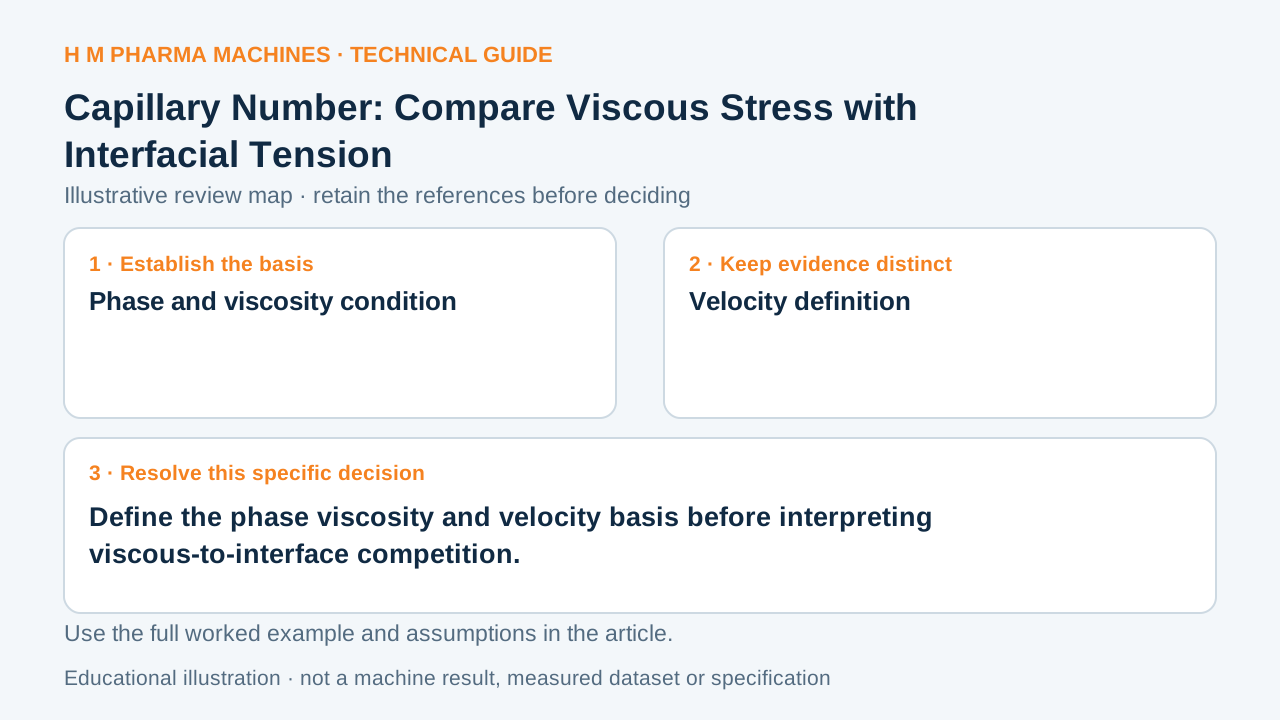
The capillary number tests a viscous-to-interface comparison. It answers a different question from an inertia-based Weber number.
Define the Process Model
Using a selected viscosity μ, velocity v and interfacial tension σ, Ca = μv/σ. COMSOL’s reference presents this dimensionless ratio. State which phase provides the viscosity and which motion supplies the velocity. A non-Newtonian material also needs a justified viscosity condition rather than an unrelated catalogue value.
Compare a Hypothetical Case
In an invented comparison, μ = 0.10 Pa·s, v = 0.020 m/s and σ = 0.020 N/m give Ca = 0.10. Increasing only viscosity to 0.20 Pa·s gives 0.20. Increasing only interfacial tension to 0.040 N/m instead gives 0.05. These cases describe the selected stress balance; they do not specify final droplet size.
Complete the Engineering Review
Keep viscosity, interface age, temperature and composition on the same comparison basis. If a process proposal quotes both Ca and We, check their separate velocity and length conventions instead of treating them as interchangeable labels. Ask what model or experiment connects the ratio to the required deformation or breakup outcome.
Use the ointment-manufacturing page with the offered mixing arrangement and actual formulation information. No critical capillary number or machine operating speed is prescribed. The worksheet is for selecting a consistent physical basis before interpreting an interface-related performance statement.
Define the phase viscosity and velocity basis before interpreting viscous-to-interface competition.
This blank worksheet is for your own project. It contains no H M machine trial result.
| Review field | Reference or result | Responsible person |
|---|---|---|
| Phase and viscosity condition | To complete | To complete |
| Velocity definition | To complete | To complete |
| Interfacial-tension state | To complete | To complete |
| Applicable deformation model or test | To complete | To complete |
Customer Questions
Is Ca the same quantity as We?
They compare different stress mechanisms.
Does higher viscosity always improve emulsification?
The actual process outcome needs further evidence.
Can a single viscosity represent every shear condition?
Justify its use for the selected material and model.
Related Equipment References
Review the actual offered equipment and application separately from this educational example.
Primary References
These references support the technical principles discussed in this guide. The worked examples and review questions are educational.
Discuss Your Machine Requirement
Share your product, container, required output and the evidence needed for your technical review.
Request a Technical Review