
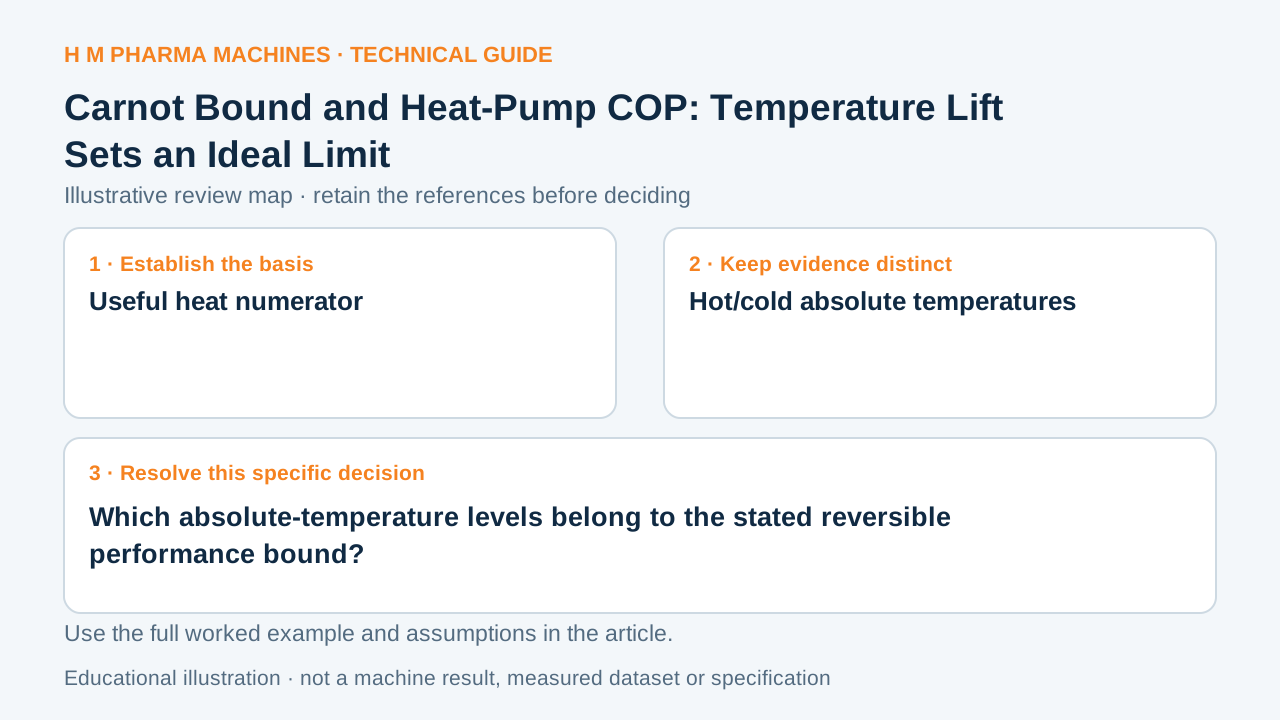
State whether a COP describes heat delivered or heat removed and use absolute reservoir temperatures for an ideal bound.
Define the Material or Thermodynamic Model
The LearnChemE Carnot equations give the reversible cold-side ratio Qcold/W = Tcold/(Thot − Tcold). With Qhot = W + Qcold, the heating COP is Thot/(Thot − Tcold). These ratios are ideal limits for the stated two-reservoir cycle, not measured device performance.
Review a Hypothetical Comparison
Assign a cold reservoir at 280 K. For a hot reservoir at 310 K, ideal heating COP is 310/30 = 10.33 and cold-side COP is 280/30 = 9.33. Raising the hot reservoir to 330 K changes ideal heating COP to 330/50 = 6.60. Reporting only “COP 10.33” without the useful-heat boundary hides what the numerator means.
Keep the Evidence with the Decision
Keep both reservoir temperatures and the intended heating/cooling numerator with the ratio. Compare an actual device only after its utility boundary and operating conditions are defined.
The calculation neither promises those values nor specifies a practical cycle. Finite heat-transfer approaches, irreversible losses and auxiliaries reduce or change the real account; Celsius temperature ratios are unsuitable for this ideal relation.
Which absolute-temperature levels belong to the stated reversible performance bound?
This blank worksheet is for your own project. It contains no H M machine trial result.
| Review field | Reference or result | Responsible person |
|---|---|---|
| Useful heat numerator | To complete | To complete |
| Hot/cold absolute temperatures | To complete | To complete |
| Work and auxiliary boundary | To complete | To complete |
| Reversible bound versus actual evidence | To complete | To complete |
Customer Questions
What ideal heating COP is assigned initially?
10.33.
What is the initial cold-side COP?
9.33.
What happens at 330 K on this model?
The heating bound becomes 6.60.
Primary References
These references support the technical principles discussed in this guide. The worked examples and review questions are educational.
Discuss Your Machine Requirement
Share your product, container, required output and the evidence needed for your technical review.
Request a Technical Review