
In This Guide
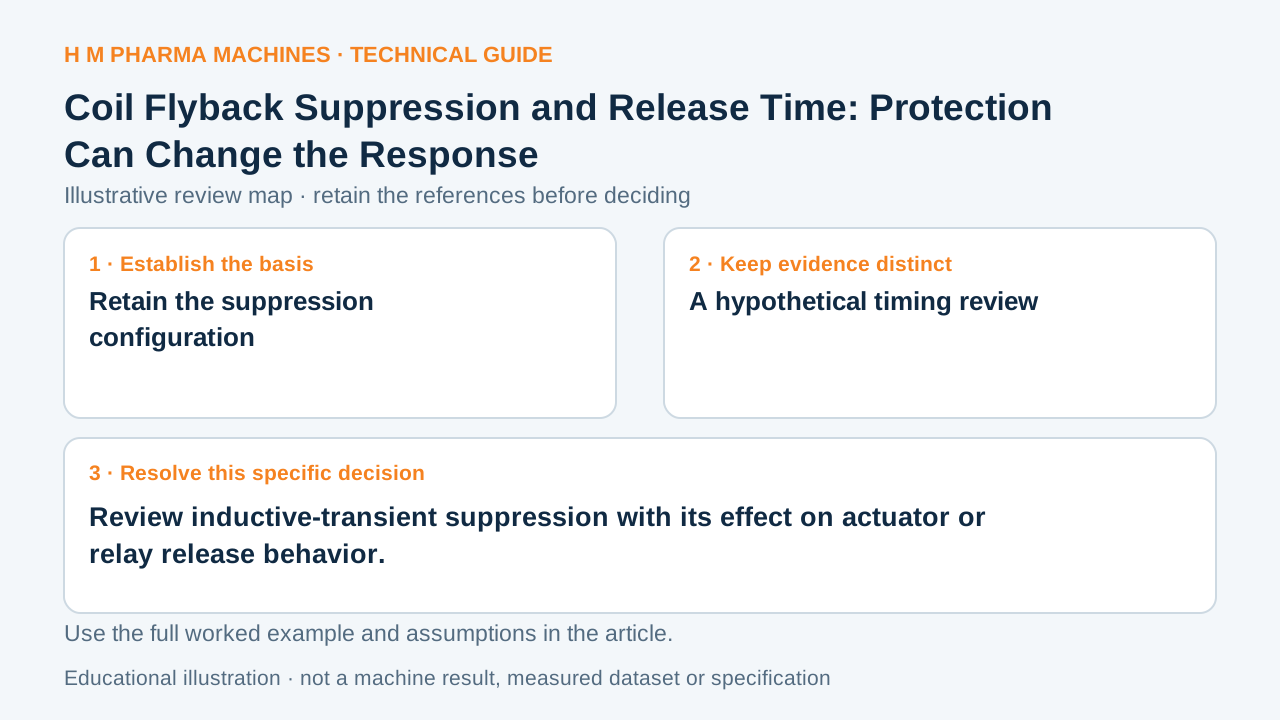
A suppression component can influence response as well as the transient it addresses.
Retain the suppression configuration
Omron's contact-protection guidance notes that certain suppression arrangements lengthen release time for relay or solenoid loads. Preserve the actual arrangement when interpreting timing. Primary reference: Omron suppression and release context.
A relay's timing description should identify which conditions it represents. A later suppression change can leave the original release-time assumption incomplete. Keep coil, supply, protection arrangement and relevant response evidence connected rather than treating protection as unrelated to function timing.
A hypothetical timing review
Imagine a fictional assembly record with a defined release observation before a suppression-component change. After the documented change, a response observation differs. The sequence justifies reviewing the suppression and other altered conditions; it does not prove a universal delay or identify the entire cause from timing alone.
Make rows for coil identity, suppression arrangement, release criterion, observation conditions and compared revisions. The example contains no HM timing, diode selection or verified solenoid result. It does not instruct removing protection or changing installed circuitry to reproduce the observation.
Keep protection and response requirements together
Ask the responsible designer how the selected arrangement satisfies both its electrical protection purpose and the actual timing requirement. Preserve the applicable measurement criterion rather than reducing the result to fast or slow.
The accepted component and response evidence should remain with the circuit revision. This guide gives a buyer a specific reason to revisit timing after a protection change without prescribing a suppression topology, selecting a diode voltage or asserting that one arrangement causes the same delay in every coil. The actual circuit and duty determine the appropriate comparison and conclusion.
Customer Questions
Can suppression affect release timing?
Yes. Preserve the actual arrangement and timing basis.
Does a timing change prove one universal mechanism?
No. Review the complete changed conditions.
Does this guide advise removing protection?
No. It requests a complete protection-and-response assessment.
Primary References
These references support the technical principles discussed in this guide. The worked examples and review questions are educational.
Discuss Your Machine Requirement
Share your product, container, required output and the evidence needed for your technical review.
Request a Technical Review