
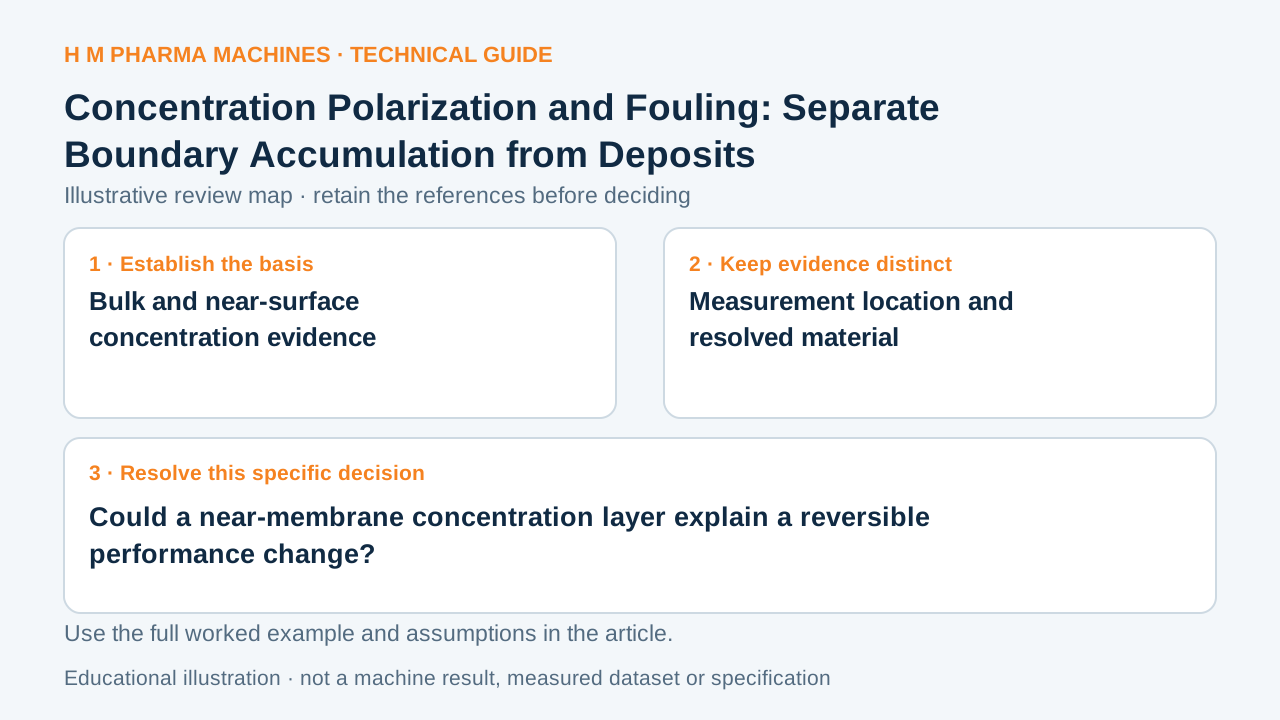
A concentration layer near a membrane can affect performance before a deposit or persistent surface change is established.
Define the Interface or Transport Basis
Biesheuvel and colleagues' primary RO/NF analysis, introduction describes concentration polarization as an upstream concentration increase associated with membrane transport. It can raise local osmotic pressure and change apparent separation behavior. This dissolved concentration field is a different model object from accumulated material on or within a membrane.
Review a Hypothetical Comparison
Imagine a hypothetical observation with bulk salt concentration 10 units and a measured near-surface concentration 14 units. The surface-to-bulk ratio is 1.4. That observation demonstrates a local concentration difference if the measurement is valid; it does not establish that 4 units formed a solid deposit. If the field relaxes when transport conditions change, that supports a reversible concentration-layer investigation, while retained deposits or changed clean-medium behavior need separate evidence.
Keep the Evidence with the Decision
Keep bulk and near-surface observations alongside flow, pressure and sampling location. Record whether measurements resolve the liquid layer or material associated with the membrane. When evaluating a reversible change, preserve the state-change history and an independent membrane assessment. Avoid diagnosing a specific fouling mechanism from lower flux alone, because concentration, temperature and other terms can also change it.
This guide offers an evidence distinction, not a cleaning procedure. Fouling itself can have reversible and persistent contributions, so reversibility alone is not a complete classification test.
Could a near-membrane concentration layer explain a reversible performance change?
This blank worksheet is for your own project. It contains no H M machine trial result.
| Review field | Reference or result | Responsible person |
|---|---|---|
| Bulk and near-surface concentration evidence | To complete | To complete |
| Measurement location and resolved material | To complete | To complete |
| Transport-state changes and relaxation behavior | To complete | To complete |
| Independent deposit or membrane-change evidence | To complete | To complete |
Customer Questions
Does a concentration ratio prove a deposit?
No. It can describe dissolved material in the nearby liquid.
Does declining flux identify one mechanism?
No. Several state variables and transport effects can change it.
Is reversibility a complete fouling test?
No. Keep independent evidence of the membrane and retained material with the interpretation.
Primary References
These references support the technical principles discussed in this guide. The worked examples and review questions are educational.
Discuss Your Machine Requirement
Share your product, container, required output and the evidence needed for your technical review.
Request a Technical Review