
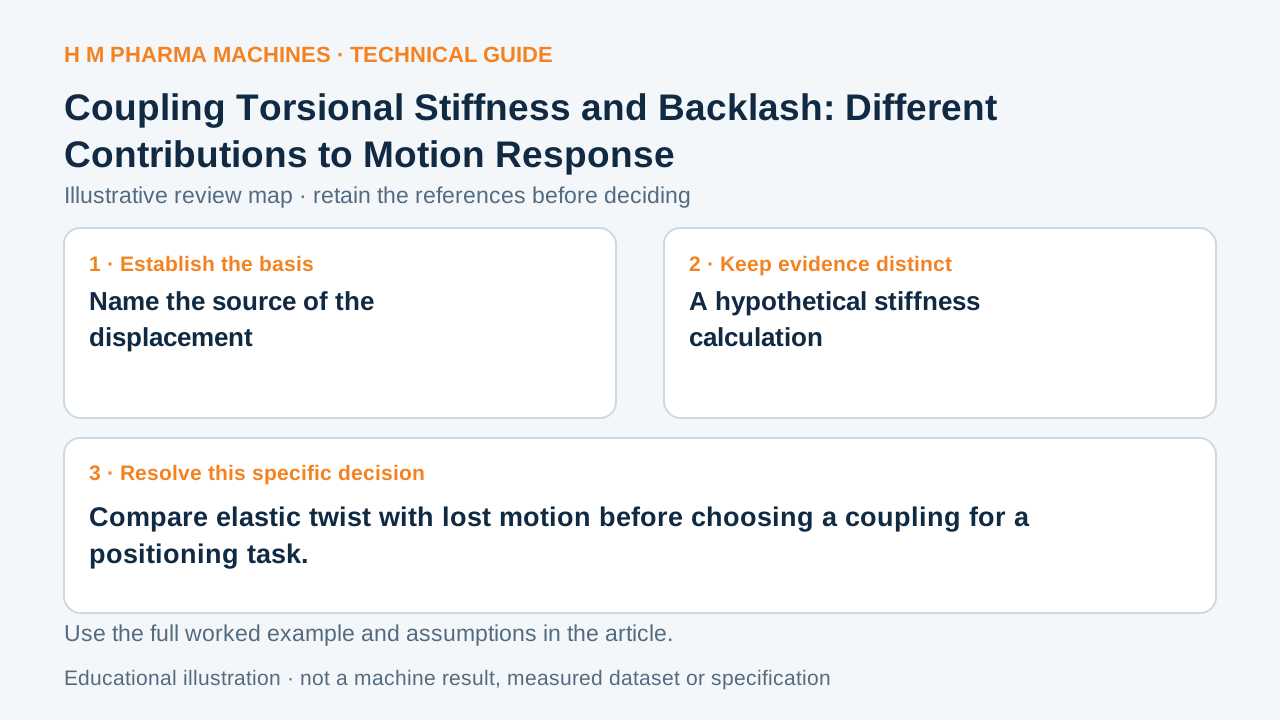
A coupling can have little backlash and still twist elastically under torque. The motion question needs both properties.
Name the source of the displacement
Ruland discusses coupling backlash and torsional rigidity as separate selection characteristics. Clearance between components and elastic twist under load are different mechanisms. Primary reference: Ruland zero-backlash couplings.
A buyer should therefore ask which mechanism the requirement concerns. Reversal can expose lost motion, while applied torque can produce elastic displacement. A zero-backlash label is not a statement of infinite stiffness and does not establish every aspect of position response.
A hypothetical stiffness calculation
For a fictional linear torsional model, let stiffness be 20 N·m per degree. Applying 2 N·m gives 2/20 = 0.1° elastic twist under those assumptions. That result can exist even if the example specifies no clearance backlash. A second fictional proposal gives a backlash statement but supplies no stiffness basis; the elastic-displacement question remains unresolved.
Keep torque, stiffness units, resulting model angle and any separate backlash evidence in different columns. The example identifies no actual coupling or HM positioning result. It also assumes a simplified relationship rather than replacing the manufacturer's full dynamic assessment.
Specify the motion behavior that matters
State whether the application needs position during acceleration, settling at rest or repeatable reversal. Those questions can emphasize different mechanical properties and require the appropriate system evidence. Include connected inertia and duty context when requesting a recommendation.
Keep accepted stiffness and backlash descriptions with their component identity and conditions. A change of insert or coupling type should be reviewed against both requirements instead of preserving only the favorable label. This produces a clear motion-performance question without assigning a universal stiffness threshold or promising a positioning accuracy from one catalog property.
Customer Questions
Does zero backlash mean infinite torsional stiffness?
No. Elastic twist under torque is a separate property.
Why state stiffness units?
The torque-to-angle relationship depends on the defined units and model.
Should reversal and settling be treated as identical tests?
No. Define the motion behavior and evidence the actual application needs.
Primary References
These references support the technical principles discussed in this guide. The worked examples and review questions are educational.
Discuss Your Machine Requirement
Share your product, container, required output and the evidence needed for your technical review.
Request a Technical Review