
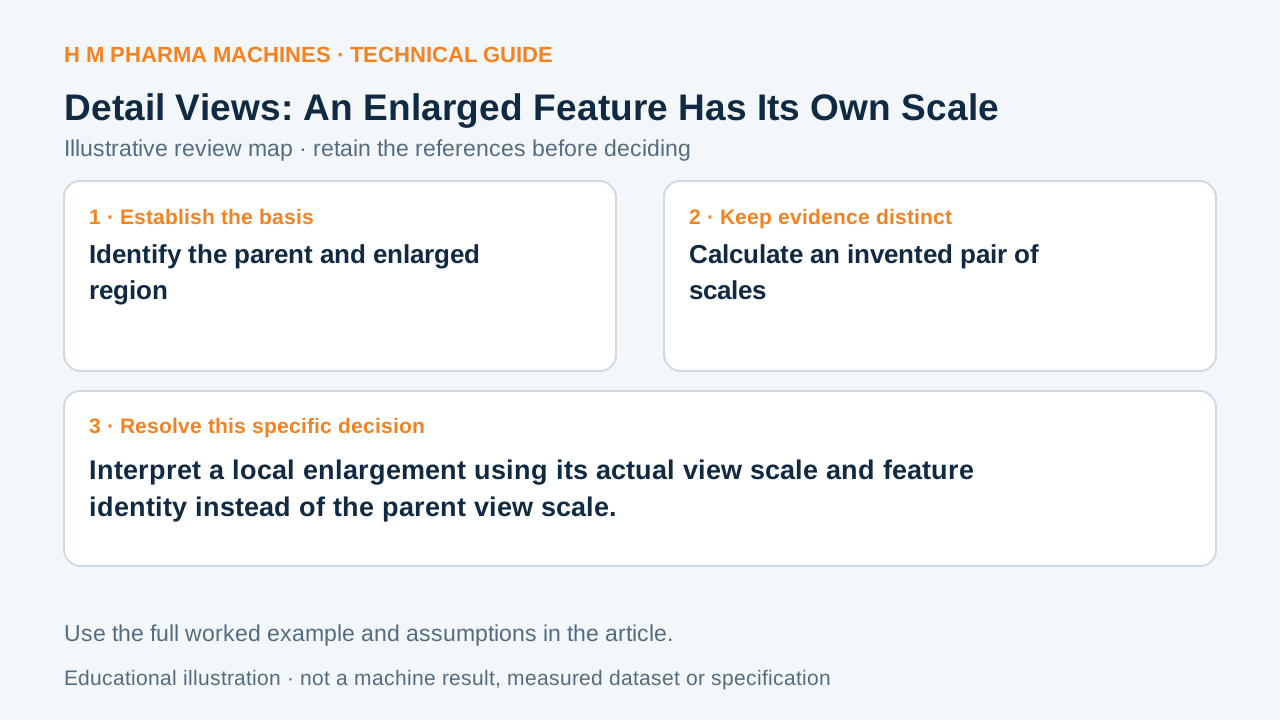
A detail view improves visibility of a local feature. Its larger picture does not indicate a larger component.
Identify the parent and enlarged region
A detail view shows part of another drawing view at an enlarged scale. Its boundary identifies the source region, and its label identifies the detail and selected scale. The parent and detail remain representations of the related geometry. Primary reference: Autodesk: detail boundaries, labels and selected view scales.
Keep the feature identity with that local enlargement. Two similar corners can produce similar-looking details, while describing different interfaces. The label and boundary should establish which location is being explained rather than leaving the receiver to infer it from appearance.
Calculate an invented pair of scales
Imagine a nominal 10 mm feature shown in a parent view at 1:2 and in a detail at 5:1. Under exact stated scale, its page length is 5 mm in the parent and 50 mm in the detail. The nominal feature remains 10 mm in both representations.
Applying the parent ratio to the detail would create an incorrect interpretation. This calculation assumes ideal page reproduction and concerns only the scale relationship. Later PDF or printer scaling can add another transformation, so it does not certify a ruler measurement on an actual copy.
Read the enlarged evidence at its own basis
Use the detail's actual dimensions and feature references for the quantity under review. Check that its source boundary belongs to the correct drawing view and model state. If only the enlargement is forwarded, retain enough of the parent reference to locate it unambiguously.
For a small container or tooling interface, a readable detail can clarify an edge, notch or recess. It should carry the intended nominal requirements rather than become a new size inferred from the picture. Preserve the detail label with the release so reviewers can relate local clarity to the complete component.
Customer Questions
Does a larger detail mean a larger part?
No. It is an enlarged representation of the selected region.
What is the fictional 10 mm feature at 5:1 on the page?
50 mm before any later reproduction scaling.
Which scale applies to the detail?
Use its own stated view scale, not an assumed parent ratio.
Primary References
These references support the technical principles discussed in this guide. The worked examples and review questions are educational.
Discuss Your Machine Requirement
Share your product, container, required output and the evidence needed for your technical review.
Request a Technical Review