
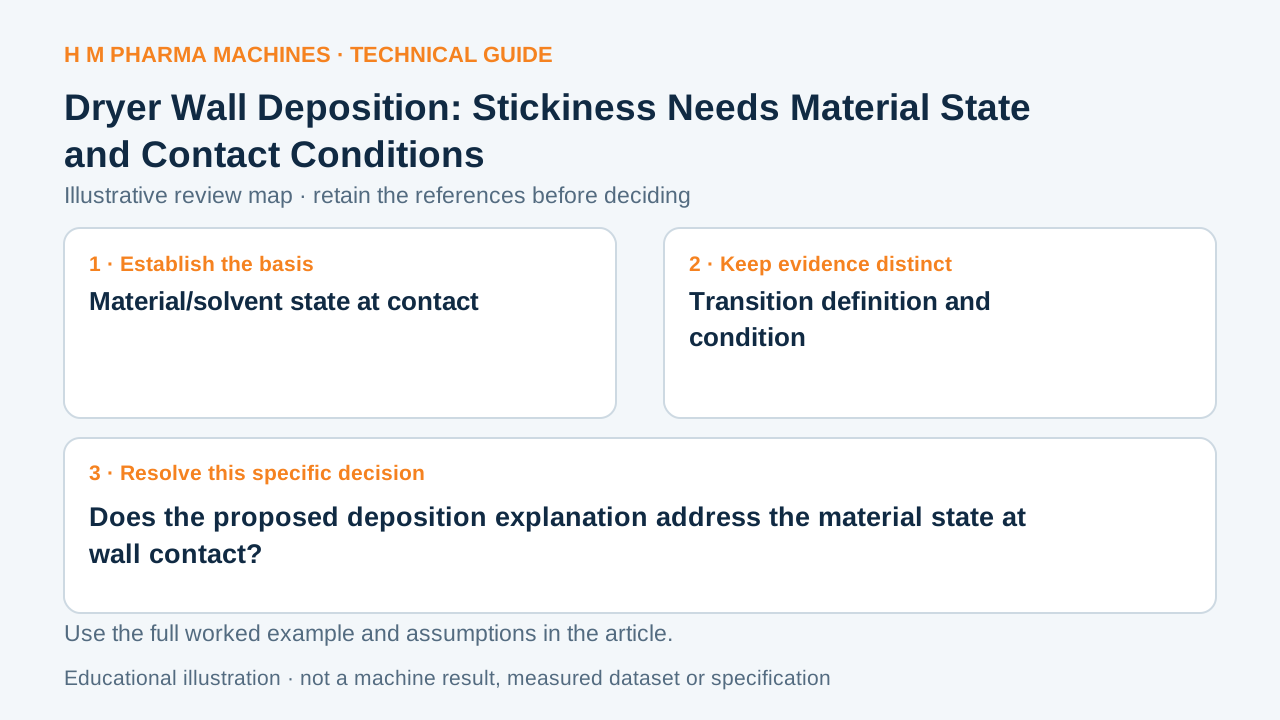
A wall-deposition explanation needs the material state at contact and the contact history, not only an outlet temperature.
Define the Material or Thermodynamic Model
A primary spray-drying study relates wall deposition to material glass-transition behaviour, retained solvent and process/contact conditions. A single nominal temperature compared with a dry-material Tg does not establish the state of the arriving or retained material.
Review a Hypothetical Comparison
In a fictional review, dry material has an assigned Tg of 70 °C, while a solvent-containing sample from wall contact has an assigned transition onset of 45 °C. A contact temperature of 50 °C lies below the dry Tg but above that sample’s onset. The dry-only comparison therefore misses a different material state; it does not by itself calculate adhesion or prove the cause of deposition.
Keep the Evidence with the Decision
Keep arriving-particle state and retained-wall-material history separate. Document moisture or solvent condition, the meaning of the transition measurement and the contact observations that support the mechanism.
The invented temperatures are not thresholds from the cited study or a process recommendation. Adhesion also depends on surfaces and flow/contact conditions, and Tg is not a universal binary sticking switch.
Does the proposed deposition explanation address the material state at wall contact?
This blank worksheet is for your own project. It contains no H M machine trial result.
| Review field | Reference or result | Responsible person |
|---|---|---|
| Material/solvent state at contact | To complete | To complete |
| Transition definition and condition | To complete | To complete |
| Wall/contact history | To complete | To complete |
| Alternative deposition evidence | To complete | To complete |
Customer Questions
Is 50 °C below the assigned dry Tg?
Yes, by 20 °C.
Is it below the assigned wet onset?
No, it is 5 °C above it.
Does that prove adhesion?
No; contact evidence and alternative mechanisms remain relevant.
Primary References
These references support the technical principles discussed in this guide. The worked examples and review questions are educational.
Discuss Your Machine Requirement
Share your product, container, required output and the evidence needed for your technical review.
Request a Technical Review