
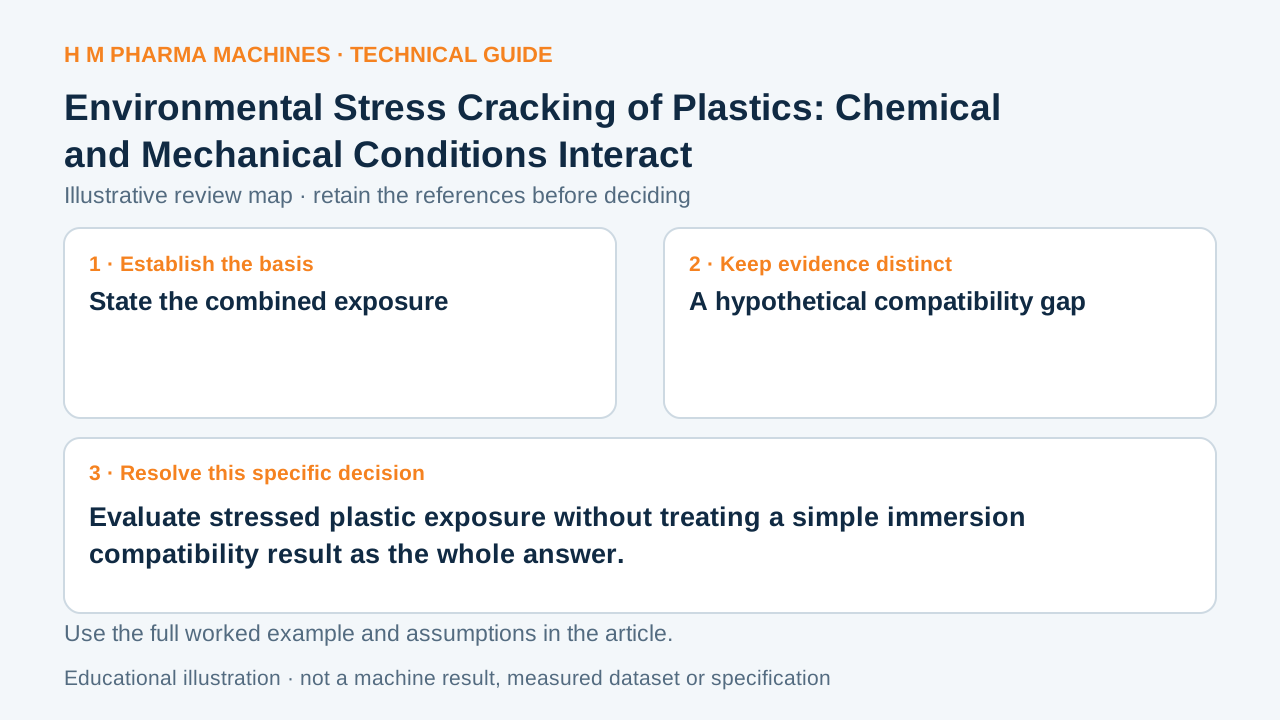
Environmental stress cracking combines mechanical condition and chemical contact.
State the combined exposure
Curbell describes environmental stress cracking as premature brittle failure associated with stress and chemical contact. The interaction should remain visible in the material-review question. Primary reference: Curbell ESC explanation.
Identify applied or relevant residual stress, chemical identity, concentration and contact conditions. An unstressed immersion result may answer its own exposure question without representing the installed stressed part. Keep the actual grade and fabricated condition with the comparison.
A hypothetical compatibility gap
Imagine a fictional plastic cover whose material is reported unchanged after an unstressed liquid exposure. The proposed assembly also holds the cover under a defined mechanical constraint. Mark the immersion evidence as an unstressed result, then ask which evidence addresses the combined condition. Do not assume the missing stress condition is harmless.
Build a matrix for material, chemical, mechanical condition, contact duration and temperature. Retain specimen or part identity for any relevant observation. This example reports no HM cracking, supplies no permitted solvent list and does not declare the cover suitable or unsuitable.
Make substitutions condition-aware
A later fluid, cleaning process or assembly-stress change can alter the relevant combination even if the part outline stays unchanged. Preserve those changes rather than relying on an earlier generic compatibility statement.
Ask what test or application assessment represents the intended stressed exposure and which limitations remain. The guide supports a focused evidence request without providing a universal chemical-resistance chart, predicting lifetime from one demonstration or advising a field chemical experiment on installed equipment. Its purpose is to keep the two interacting conditions in the actual purchasing and design decision.
Customer Questions
Does unstressed immersion establish all stressed-part compatibility?
No. It can omit the combined stress condition.
Can changed assembly constraint matter with the same liquid?
Yes. Mechanical condition is part of the question.
Does the article prescribe an ESC test setting?
No. Use the applicable material and application method.
Primary References
These references support the technical principles discussed in this guide. The worked examples and review questions are educational.
Discuss Your Machine Requirement
Share your product, container, required output and the evidence needed for your technical review.
Request a Technical Review