
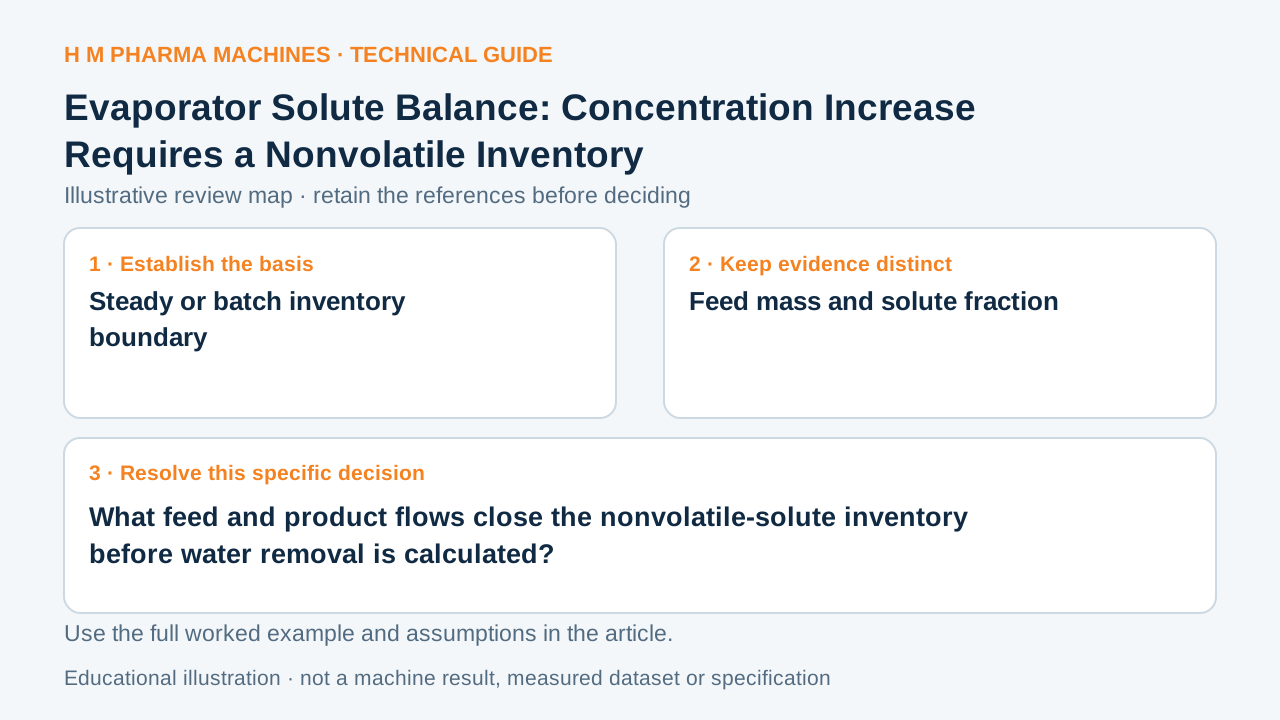
Close the nonvolatile-solute balance before using total feed minus product as evaporated solvent.
Define the Phase or Process Boundary
NPTEL's evaporator mass balances distinguishes feed, concentrate and vapor. For a steady model with no solute in vapor, solute feed equals solute in concentrate. The total balance then determines vapor removed; the solute-free-vapor assumption must remain explicit.
Review a Hypothetical Comparison
Imagine an assigned feed of 250 kg/h containing 12% solute by mass and a concentrate target of 40%. Solute feed is 30 kg/h. With no other outlets or accumulation, concentrate flow is 30/0.40=75 kg/h and vapor flow is 250−75=175 kg/h. Concentrate contains 45 kg/h solvent, while feed contains 220 kg/h solvent; 220−45 also gives 175 kg/h. The two closures help expose a concentration basis or outlet error.
Keep the Evidence with the Decision
Draw all streams and name what the concentration fraction includes. Record any entrained droplets, volatile solute, sample withdrawal or retained material separately if they cross the boundary. Keep transient inventory change visible when a batch concentration is being compared with a steady-flow calculation.
The assigned target and streams are fictional. This balance does not calculate steam consumption, heating area, product exposure or a feasible evaporation rate.
What feed and product flows close the nonvolatile-solute inventory before water removal is calculated?
This blank worksheet is for your own project. It contains no H M machine trial result.
| Review field | Reference or result | Responsible person |
|---|---|---|
| Steady or batch inventory boundary | To complete | To complete |
| Feed mass and solute fraction | To complete | To complete |
| Concentrate composition basis | To complete | To complete |
| Vapor assumption and independent solvent closure | To complete | To complete |
Customer Questions
Is vapor always solute-free?
No. Confirm volatility and carryover assumptions for the actual process.
Does this balance size the heater?
No. An energy and heat-transfer review is also required.
Can a batch inventory change be ignored?
Include accumulation for a transient boundary.
Primary References
These references support the technical principles discussed in this guide. The worked examples and review questions are educational.
Discuss Your Machine Requirement
Share your product, container, required output and the evidence needed for your technical review.
Request a Technical Review