
Events with the same timestamp still need an order in an implemented simulation. A tied arrival and departure can expose an unstated capacity rule.
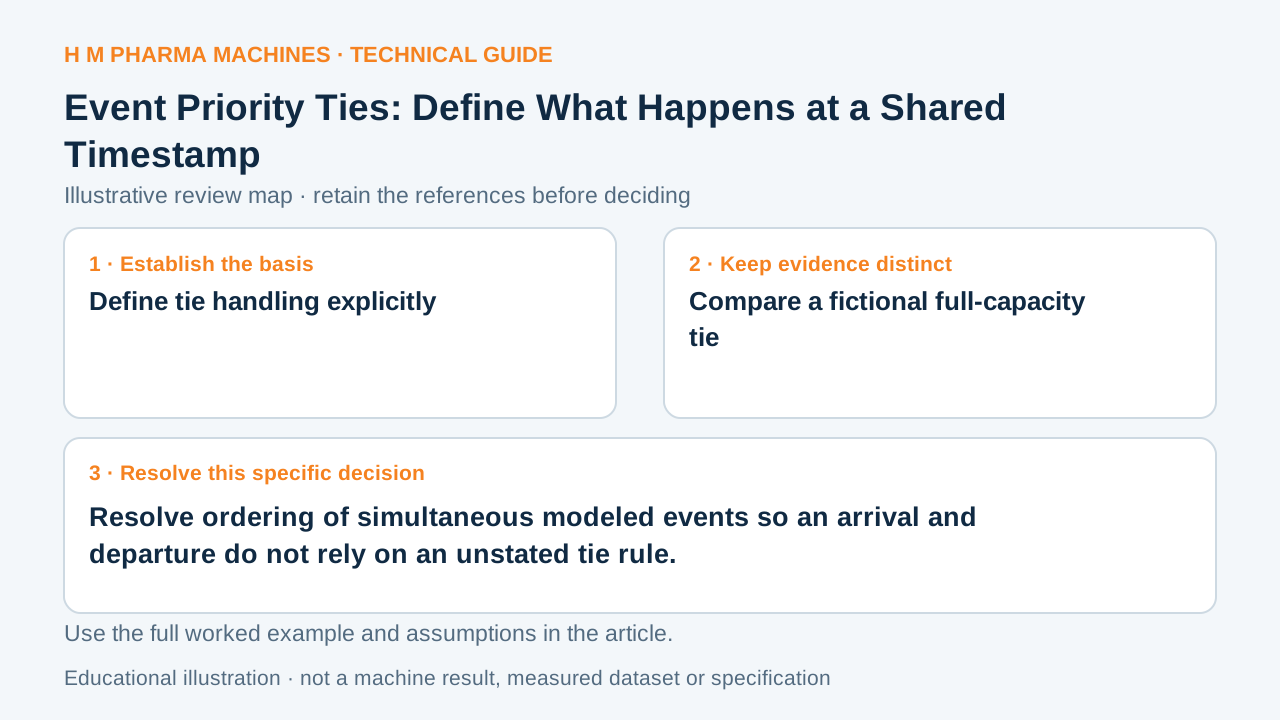
Define tie handling explicitly
SimPy processes events sequentially, including events sharing a simulation timestamp; its scheduling mechanism retains a deterministic order for tied events. A proposed model must consider whether this event order matches its intended process semantics. A displayed equal timestamp does not mean two state updates occur as one atomic action. Primary reference: SimPy time and scheduling: sequential processing of tied events.
On an original review sheet, list which event releases capacity and which event tests admission. Document any explicit priorities and the remaining tie-breaker. Avoid assuming that event creation order supplies the intended real-world interpretation without checking it.
Compare a fictional full-capacity tie
Suppose a hypothetical system has capacity for one admitted job and is full immediately before minute 5. A departure and a new arrival are both scheduled at minute 5. If the departure executes first, it releases capacity and the new arrival can be admitted under the chosen rule.
If the arrival tests capacity first and the model rejects arrivals finding the system full, that job is rejected before the old job leaves. The two outcomes use the same timestamp but different state-update order. They concern the stated loss rule, not a waiting queue that automatically retries admission.
Review the tied-event trial
Prepare a small replay containing state immediately before the tie, each ordered update and state afterward. Retain the admitted or rejected job identity. Then repeat the test with the documented ordering to verify that the event ledger, not a drawing, explains the outcome.
This example does not prescribe a physical interlock priority or actual device response. A simulation’s deterministic tie handling is a modeling choice to review against the intended boundary. Its purpose is to prevent an accidental implementation order from being reported as a process requirement.
Customer Questions
Are equal-time events necessarily processed together?
No. An event engine can process them sequentially.
Why can the arrival outcome differ in the example?
The admission test observes capacity before or after the tied departure update.
Does the example describe an ordinary retrying queue?
No. It explicitly uses rejection when the admission test finds capacity full.
Primary References
These references support the technical principles discussed in this guide. The worked examples and review questions are educational.
Discuss Your Machine Requirement
Share your product, container, required output and the evidence needed for your technical review.
Request a Technical Review