
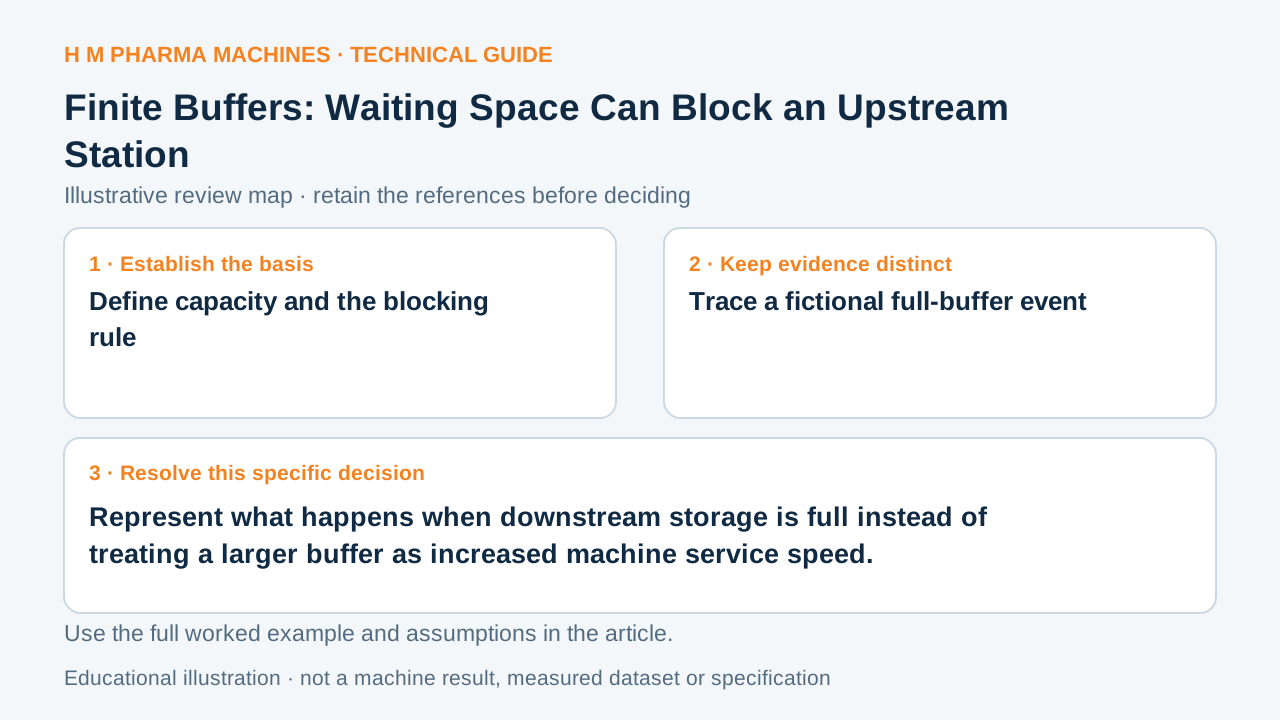
Buffer capacity describes waiting space. When that space is full, the model needs a release rule before its production timeline can be understood.
Define capacity and the blocking rule
Finite-buffer manufacturing models distinguish machines from the storage connecting them. A buffer can hold a limited number of waiting items. If a destination buffer is full, the modeled response must state whether an upstream machine may start work and whether it can release completed work. Primary reference: NIST Simantha: asynchronous manufacturing with finite buffers.
For an original scenario, choose blocking after service: an upstream machine may finish an item, but holds it until a destination slot is available. Include the held item in the machine state rather than silently exceeding buffer capacity. Blocking before service would be a different rule and must be labeled separately.
Trace a fictional full-buffer event
Suppose a hypothetical downstream waiting buffer holds at most two items and currently holds two. At minute 4, the upstream machine completes another item. Under the chosen rule it cannot transfer that item into the full waiting buffer, so it remains occupied by the completed item.
At minute 5, the downstream operation removes one waiting item and a slot becomes available. Transfer can then occur according to the stated event order. Increasing capacity to three could change this particular blocking episode, but it would not shorten either machine’s defined processing duration.
Review state accounting
Build a trial table of buffer count, upstream processing or completed-held state, and downstream removal events. At each event, check that storage count stays within its declared capacity. Distinguish a waiting slot from a machine’s in-process position so the same item is not counted twice.
The two-item illustration does not recommend a physical buffer size or prove that more storage improves every line objective. Actual equipment layout, handling constraints and measured timing need separate review. Here the essential decision is which modeled operation becomes unable to proceed when finite waiting space is exhausted.
Customer Questions
Does a larger buffer increase service speed?
No. Storage capacity and the defined processing duration are separate inputs.
What happens in the stated blocking-after-service rule?
A completed item remains held upstream until its destination can receive it.
Is a machine’s held item automatically a waiting-buffer item?
No. Its state and counting boundary must be defined explicitly.
Primary References
These references support the technical principles discussed in this guide. The worked examples and review questions are educational.
Discuss Your Machine Requirement
Share your product, container, required output and the evidence needed for your technical review.
Request a Technical Review