
A pressure difference can drive sublimation vapour through a dry layer only in conjunction with a defined transport resistance.
Define the Material or Thermodynamic Model
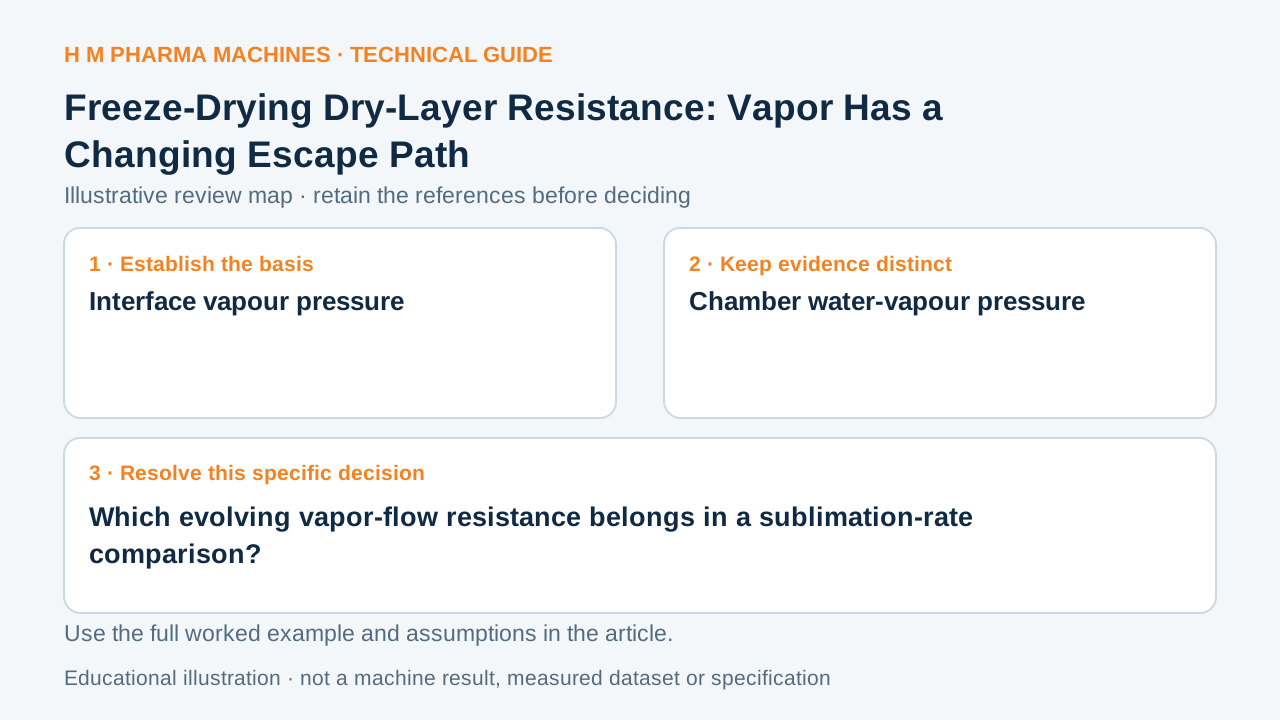
The Srisuma–Braatz lyophilization model writes sublimation flux as the water-vapour pressure difference divided by product resistance. The relevant driving pressures are at the sublimation interface and in the chamber, and the resistance is tied to the drying state.
Review a Hypothetical Comparison
Assign an interface-to-chamber pressure difference of 100 Pa and a resistance of 20,000 Pa·m²·s/kg. The local flux is 0.005 kg/(m²·s). Doubling resistance at unchanged driving pressures halves it to 0.0025. This is a conditional comparison: allowing product temperature to change would also change the interface vapour pressure, so resistance alone would no longer determine the ratio.
Keep the Evidence with the Decision
Write the flux units and pressure definitions beside the resistance. Keep dry-layer development separate from the heating account. Test whether the proposed comparison actually holds pressure and material state fixed.
These assigned resistance units are explicit for this example rather than copied from a source table. The model is not an HM dryer specification, and a measured chamber total pressure is not automatically the required water-vapour partial pressure.
Which evolving vapor-flow resistance belongs in a sublimation-rate comparison?
This blank worksheet is for your own project. It contains no H M machine trial result.
| Review field | Reference or result | Responsible person |
|---|---|---|
| Interface vapour pressure | To complete | To complete |
| Chamber water-vapour pressure | To complete | To complete |
| Resistance definition, units and dry-layer state | To complete | To complete |
| Thermal coupling in the comparison | To complete | To complete |
Customer Questions
What initial flux is calculated?
0.005 kg/(m²·s).
What changes when resistance doubles here?
Flux halves under the fixed driving-pressure assumption.
Does chamber total pressure equal water partial pressure?
Only when the gas composition supports that identification.
Primary References
These references support the technical principles discussed in this guide. The worked examples and review questions are educational.
Discuss Your Machine Requirement
Share your product, container, required output and the evidence needed for your technical review.
Request a Technical Review