
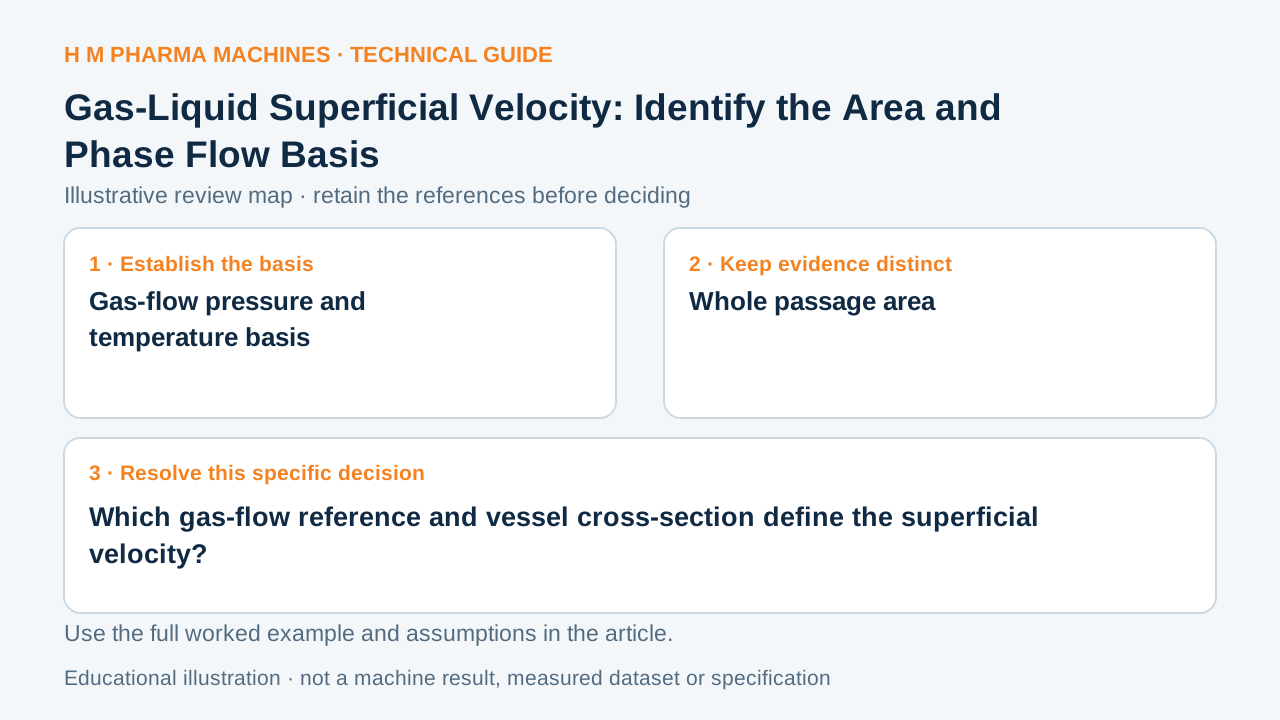
Gas superficial velocity uses the whole flow area. It differs from the gas-phase velocity when gas occupies only part of that area.
Define the Process Model
COMSOL’s airlift-reactor example uses bubbly-flow transport and a superficial gas inlet velocity. For a stated volumetric gas flow Qg through total area A, jg = Qg/A. Under a uniform area-fraction description, jg = αgug, where αg is the gas fraction and ug the phase velocity. The relation needs its averaging and flow-condition basis.
Compare a Hypothetical Case
Assume invented Qg = 0.001 m³/s at the actual stated conditions and A = 0.020 m². The superficial velocity is 0.050 m/s. If a uniform gas area fraction of 0.10 is additionally assumed, the corresponding phase velocity is 0.50 m/s. Using 0.050 m/s as that phase velocity would discard the fraction assumption.
Complete the Engineering Review
Record whether the flow is actual or referred to another pressure and temperature. Identify the total passage area and how the gas fraction or phase velocity is defined and averaged. Do not infer gas holdup, bubble residence or mass-transfer performance from superficial velocity alone. Real nonuniform distributions need the appropriate averaging model or measured evidence.
For a processing-tank enquiry, first establish whether gas–liquid contacting belongs to the offered process. No sparger, airlift configuration or gas duty is claimed for HM equipment. The hypothetical calculation identifies the area boundary behind a velocity statement before different proposals are compared.
Which gas-flow reference and vessel cross-section define the superficial velocity?
This blank worksheet is for your own project. It contains no H M machine trial result.
| Review field | Reference or result | Responsible person |
|---|---|---|
| Gas-flow pressure and temperature basis | To complete | To complete |
| Whole passage area | To complete | To complete |
| Gas fraction and averaging convention | To complete | To complete |
| Separate phase-velocity or contact evidence | To complete | To complete |
Customer Questions
Is superficial velocity automatically bubble velocity?
The area and phase-fraction bases differ.
Does Qg/A specify gas holdup?
Additional model or measurement evidence is needed.
Can standard flow replace actual flow silently?
Reconcile pressure and temperature conditions first.
Related Equipment References
Review the actual offered equipment and application separately from this educational example.
Primary References
These references support the technical principles discussed in this guide. The worked examples and review questions are educational.
Discuss Your Machine Requirement
Share your product, container, required output and the evidence needed for your technical review.
Request a Technical Review