
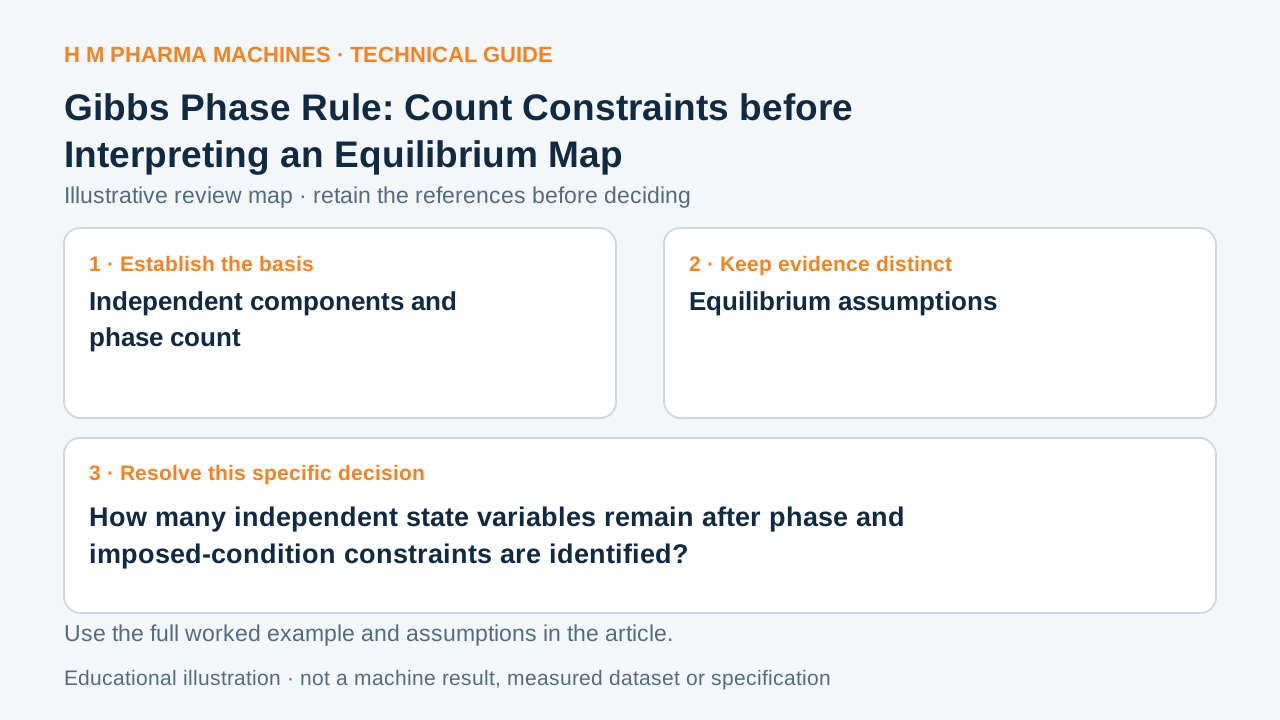
Count independent equilibrium state variables before interpreting a phase map; phase amount requires a separate balance.
Define the Material or Thermodynamic Model
The IUPAC phase rule gives F = C − P + 2 for the stated equilibrium component/phase count. F counts intensive degrees of freedom. An independently imposed pressure or temperature removes a degree of freedom; it does not determine how much material occupies each phase.
Review a Hypothetical Comparison
A hypothetical nonreacting binary two-phase system has C = 2 and P = 2, so F = 2. Fixing pressure leaves one intensive degree of freedom. A pure two-phase system has F = 1; fixing pressure leaves zero on that equilibrium model. Two samples can nevertheless have different phase amounts at the same compatible intensive state because their total inventory differs.
Keep the Evidence with the Decision
Document what counts as an independent component, which phases coexist and which state variables are externally constrained. Use material balances and the relevant phase-composition data for amounts.
The simplified examples exclude additional fields and reaction constraints. A nonequilibrium map or an inappropriate component count cannot be justified merely by substituting numbers into the rule.
How many independent state variables remain after phase and imposed-condition constraints are identified?
This blank worksheet is for your own project. It contains no H M machine trial result.
| Review field | Reference or result | Responsible person |
|---|---|---|
| Independent components and phase count | To complete | To complete |
| Equilibrium assumptions | To complete | To complete |
| Imposed intensive constraints | To complete | To complete |
| Separate composition and amount balances | To complete | To complete |
Customer Questions
What is binary two-phase F initially?
2.
What remains after fixing pressure?
1 in that example.
Does zero intensive freedom mean zero phase amount?
No; those are different quantities.
Primary References
These references support the technical principles discussed in this guide. The worked examples and review questions are educational.
Discuss Your Machine Requirement
Share your product, container, required output and the evidence needed for your technical review.
Request a Technical Review