
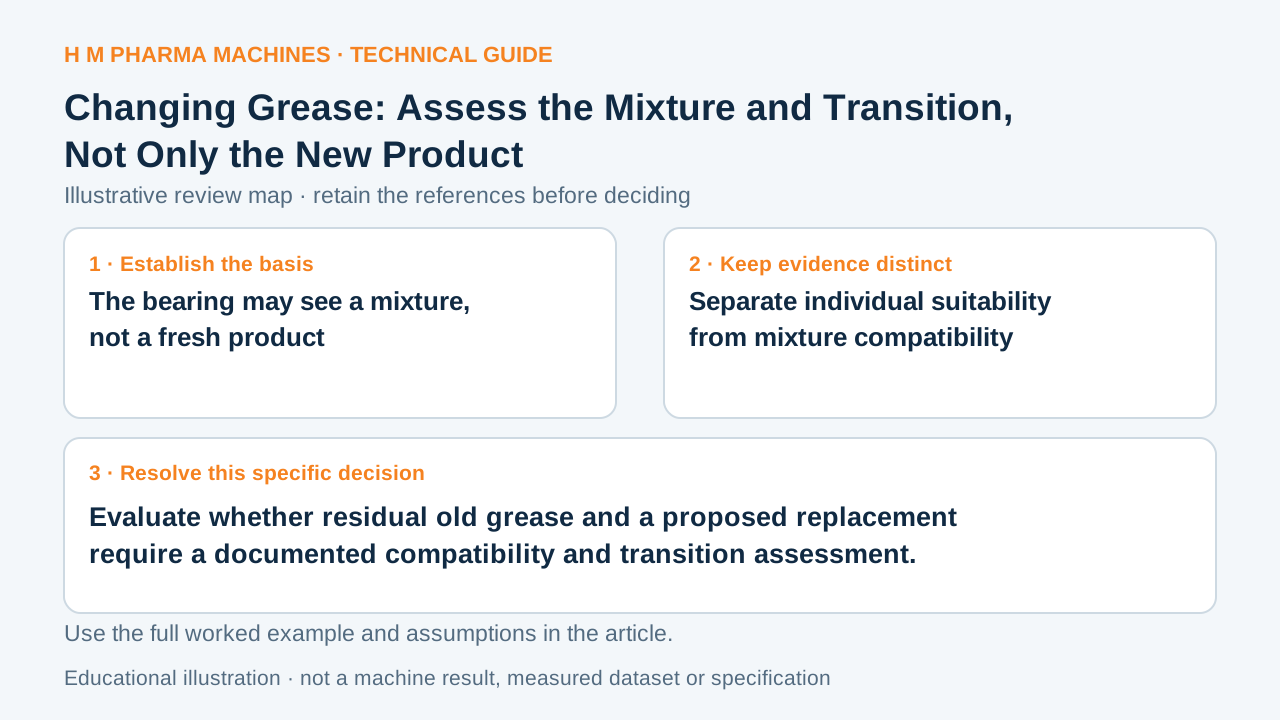
Evaluate whether residual old grease and a proposed replacement require a documented compatibility and transition assessment.
The bearing may see a mixture, not a fresh product
A lubricant change can leave residual grease in the application. SKF warns that mixtures of greases, including incompatible thickener combinations, can develop unacceptable consistency. The new grease's own data sheet therefore does not answer every transition question. A compatible-looking base-oil viscosity or equal NLGI grade cannot by itself demonstrate that the old and new products will behave acceptably together. Identify both exact products before treating a change as a routine refill.
SKF: bearings in centrifugal pumps supports the technical principle above.
Separate individual suitability from mixture compatibility
Create one worksheet section for the proposed grease's suitability in the application and another for the old–new combination. Record both product designations, known thickener and base-oil information, the source of the compatibility assessment and the conditions it covers. A general thickener chart can identify questions, but an actual product-pair assessment is stronger evidence than a family-name assumption.
Describe why residual grease is expected and which application points are involved. The equipment or lubricant specialist should define the transition approach and its limitations. Do not invent a purge amount or cleaning method from a general article; access, seals, bearings and contamination constraints differ between assemblies. The intended outcome is a controlled replacement decision with a defined procedure reference.
Hypothetical transition comparison
In a fictional procurement example, the current product is identified precisely but the proposed substitute is described only as lithium grease. Offer A provides a new-product data sheet with no mixture information. Offer B identifies the exact substitute and supplies an assessment of the named old–new pair, including its limitations. Neither offer proves installed performance, but B answers more of the transition question. Add rows for original identity, replacement identity, application approval, mixture assessment and transition instruction. The missing replacement identity under A prevents even a meaningful compatibility request. This exercise contains no real HM lubricant combination, test certificate or field outcome.
Keep future top-ups consistent with the transition
After acceptance, update the point-specific lubricant record and retain the transition evidence. A machine-wide label alone may be insufficient if several assemblies have different approved products. The record should make the exact active product clear to anyone ordering or replenishing lubricant later. If an unexpected condition follows the change, preserve product and timing information for the review without automatically blaming compatibility. For a machinery project, ask how lubricant identities and authorized substitutions will be communicated at handover. This guide explains the decision structure; it does not direct a particular refill operation or guarantee mixture behavior.
Customer Questions
Does an approved new grease prove the mixture is acceptable?
No. Individual application suitability and compatibility with residual grease are separate questions.
Can a thickener-family chart settle every product-pair question?
No. Treat it as screening context and seek evidence for the actual products and conditions.
Why preserve a transition instruction?
It records how the identified change is meant to be made and prevents an undocumented partial substitution later.
Related Equipment References
Review the actual offered equipment and application separately from this educational example.
Primary References
These references support the technical principles discussed in this guide. The worked examples and review questions are educational.
Discuss Your Machine Requirement
Share your product, container, required output and the evidence needed for your technical review.
Request a Technical Review