
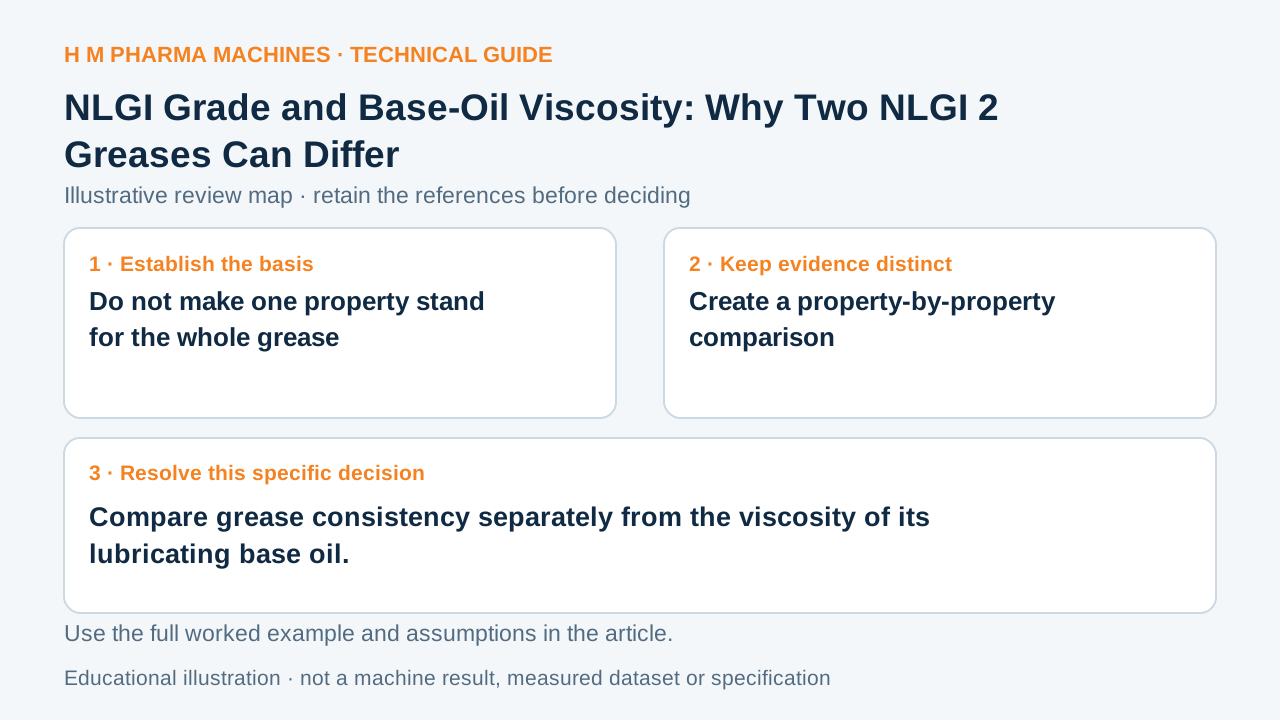
Compare grease consistency separately from the viscosity of its lubricating base oil.
Do not make one property stand for the whole grease
Grease includes a base oil, thickener and additives. SKF's lubrication guidance distinguishes consistency from base-oil viscosity. NLGI grade describes consistency; it does not uniquely identify the oil viscosity, thickener chemistry or suitability for a particular bearing. Therefore two products labelled NLGI 2 may differ in technically important ways. A purchasing comparison that records only the NLGI number can miss the very property the equipment designer intended to control.
SKF: grease lubrication supports the technical principle above.
Create a property-by-property comparison
Use one column for NLGI grade and another for base-oil viscosity, including its stated reference temperature and units. Add base-oil type, thickener identity, product designation and the source date of the data sheet. Keep approvals or application requirements in their own column. A broad operating-temperature range printed on the container does not erase differences in viscosity at the actual bearing temperature.
If the prescribed lubricant is unavailable, send the complete comparison to the responsible equipment or lubricant specialist. Ask which characteristics are essential for the identified application. Do not infer equivalence from colour, price, food-related branding or a shared consistency grade. These may be relevant descriptions but do not constitute a complete engineering substitution basis.
Hypothetical purchasing worksheet
Imagine two fictional grease data sheets. Product A is NLGI 2 with a stated base-oil viscosity of 100 mm²/s at 40 °C. Product B is also NLGI 2 but lists 220 mm²/s at 40 °C. The consistency rows match, while the viscosity rows do not. The worksheet should show both facts plainly and leave application acceptance unresolved. A third offer states viscosity without the temperature; mark that entry incomparable until the condition is supplied. These invented values are not product recommendations or measurements of any lubricant used by HM. Their purpose is to demonstrate why one matching field cannot establish full equivalence.
Preserve the accepted identity in the maintenance record
Once a lubricant is accepted, retain the exact product designation, applicable point and decision basis. Keep an alternative product's assessment separate from the original specification so operators do not combine partial descriptions from different sheets. A practical maintenance record can reference the authoritative instruction for amount and interval without recreating it from catalog properties. For a new conveying or capping project, discuss the duty and environment that inform the lubrication plan. This article explains how to read grease properties; it makes no installed-lubricant claim and prescribes no grease quantity or service frequency.
Customer Questions
Does NLGI 2 mean the base oil has one fixed viscosity?
No. Consistency grade and base-oil viscosity describe different properties.
Why must the viscosity temperature be recorded?
Viscosity changes with temperature, so values without a common stated temperature are not directly comparable.
Can matching consistency approve a substitute?
No. The identified application and the complete required properties need review.
Related Equipment References
Review the actual offered equipment and application separately from this educational example.
Primary References
These references support the technical principles discussed in this guide. The worked examples and review questions are educational.
Discuss Your Machine Requirement
Share your product, container, required output and the evidence needed for your technical review.
Request a Technical Review