
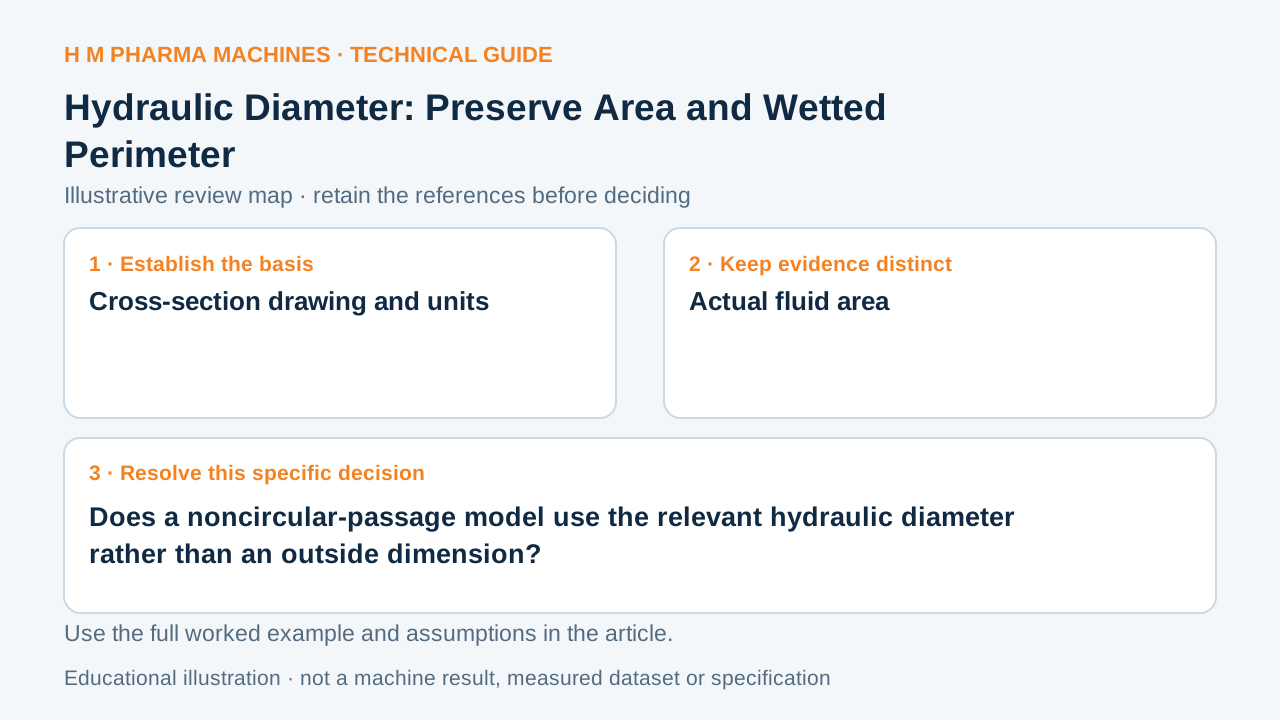
For a noncircular flow passage, the relevant characteristic dimension may come from fluid area and wetted perimeter rather than the outside width.
Identify the Physical Basis
Hydraulic diameter is D_h = 4A/P_w, where A is the flow cross-sectional area and P_w is the wetted perimeter. KSB’s head-loss reference describes this equivalent fluid-mechanical diameter and excludes an open channel’s free surface from its wetted circumference. The definition preserves a geometric ratio; it does not turn every rectangular passage into a circular pipe with identical behaviour.
Work Through an Example
Take a hypothetical fully filled rectangular passage 20 mm wide and 10 mm high. A = 200 mm², P_w = 60 mm and D_h = 13.33 mm. If it instead carries an open free surface with those same wetted width and depth, P_w is 40 mm and D_h = 20 mm. The outside dimensions look similar, but the boundary included in the geometry has changed.
Use the Result in the Review
Sketch the cross-section and shade the actual wetted boundary before entering dimensions. State whether the passage is full, open, partly filled or changing during operation. Calculate mean velocity from Q/A separately; D_h is not an alternative area. Ask which correlation accepts this geometry, particularly for laminar noncircular flow where cross-sectional shape can remain important.
The processing-tank context may lead to a review of connected passages, but the selected drawing must identify their actual shape and fill condition. A calculated hydraulic diameter supports a defined model. It cannot establish cleanability, drainage or acceptable residence time from geometry alone.
Does a noncircular-passage model use the relevant hydraulic diameter rather than an outside dimension?
This blank worksheet is for your own project. It contains no H M machine trial result.
| Review field | Reference or result | Responsible person |
|---|---|---|
| Cross-section drawing and units | To complete | To complete |
| Actual fluid area | To complete | To complete |
| Wetted perimeter and free surface | To complete | To complete |
| Selected geometry-dependent correlation | To complete | To complete |
Customer Questions
Is D_h the narrowest gap?
No. It uses area and wetted perimeter.
Does D_h replace flow area?
No. Q/A uses actual area.
Is every shape hydraulically circular?
No. Check the shape-dependent correlation.
Related Equipment References
Review the actual offered equipment and application separately from this educational example.
Primary References
These references support the technical principles discussed in this guide. The worked examples and review questions are educational.
Discuss Your Machine Requirement
Share your product, container, required output and the evidence needed for your technical review.
Request a Technical Review