
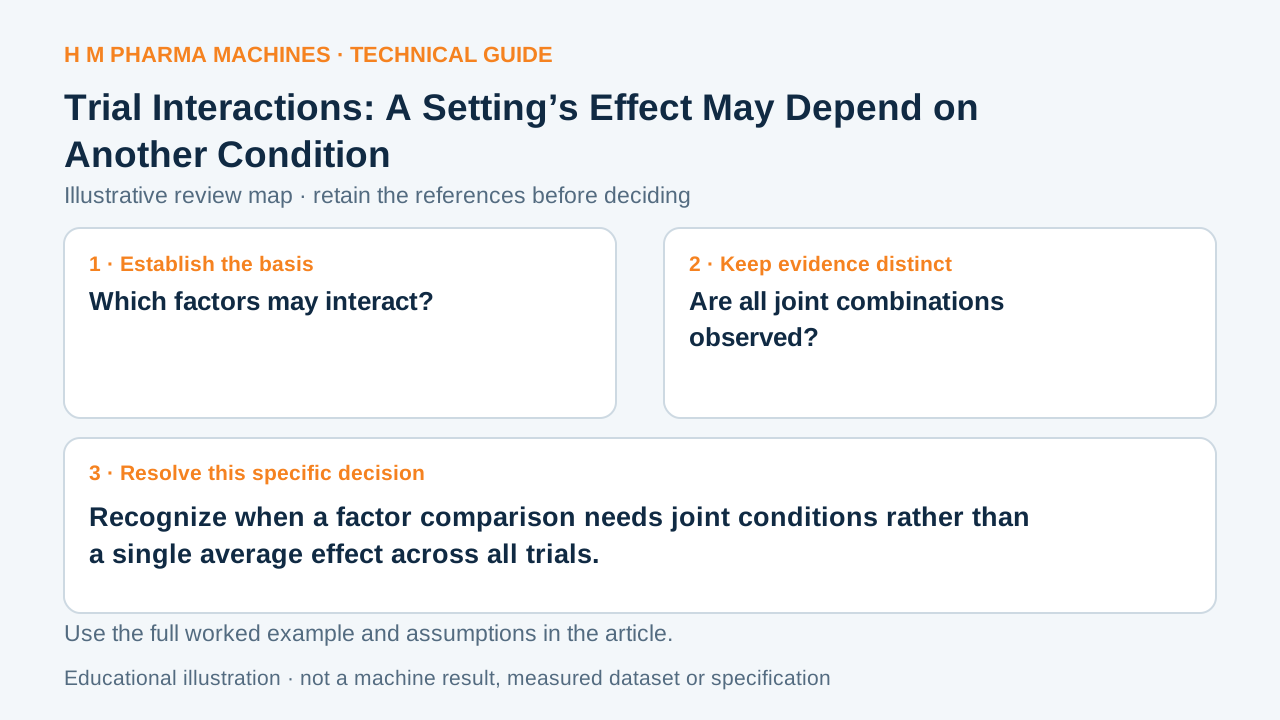
A setting that helps under one condition may behave differently under another. Keep the joint combinations visible.
An interaction is a comparison of effects
An interaction exists when the change associated with one factor differs across levels of another factor. Averaging those changes can hide the dependence. Graphical patterns can suggest an interaction, but the analysis should examine the design, replication and numerical evidence rather than treating crossing lines alone as a complete conclusion.
An explicitly hypothetical response table
Consider two approved setup choices, A and B, studied under two material conditions, X and Y. Under X, the mean response changes from 5 to 3 when moving A to B. Under Y, it changes from 5 to 7. The changes are opposite. Reporting one overall “B effect” would hide that dependence.
The response here is an abstract illustrative quantity, not a prescribed machine setting or HM measured result. A real trial must first establish feasible treatment combinations, an identified response method and enough information to assess variability. A two-by-two table without those foundations remains an exploratory description.
Keep the complete combination record
Store observations with both factor labels, sequence and run identity. Present each joint combination, including those not tested. If a combination was physically unavailable, say so; do not fill its cell with an assumed response.
Before choosing a setup, discuss which condition the machine will encounter in the proposed application. A conditional comparison may be more useful than a single ranking. Keep the resulting recommendation tied to observed conditions and any confirmation work still required. A graphical interaction enquiry should lead to a bounded test question rather than an undocumented operating change.
Trial discussion worksheet
This blank worksheet is for your own project. It contains no H M machine trial result.
| Review question | Reference or observation to retain |
|---|---|
| Which factors may interact? | Two identified conditions |
| Are all joint combinations observed? | Tested and missing cells |
| What variability evidence exists? | Run and replication identities |
Customer Questions
Do crossing lines alone prove an interaction?
They prompt review; design and numerical uncertainty still matter.
Can one average effect hide opposite changes?
Yes. Joint-condition results should remain visible.
Can an untested combination be inferred as proven?
No. Keep the missing evidence explicit.
Primary References
These references support the technical principles discussed in this guide. The worked examples and review questions are educational.
Discuss Your Machine Requirement
Share your product, container, required output and the evidence needed for your technical review.
Request a Technical Review