
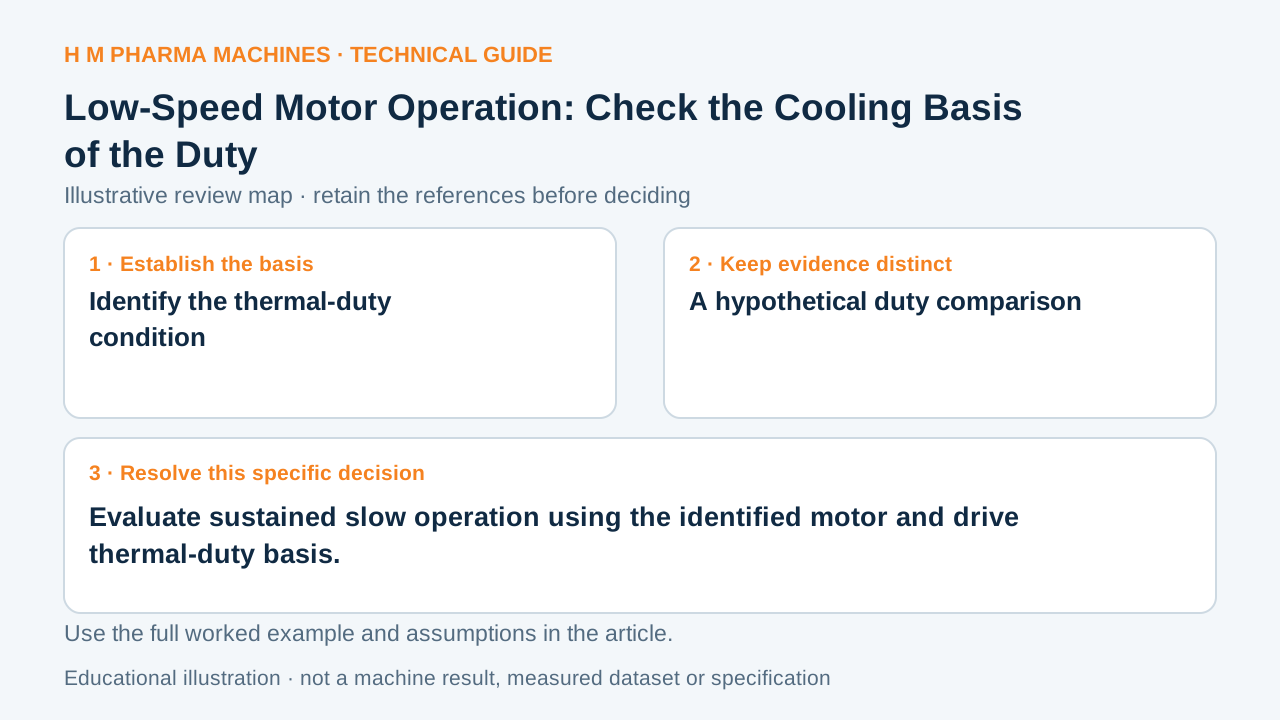
A commanded slow speed does not by itself establish continuous-duty capability.
Identify the thermal-duty condition
ABB's drive-dimensioning guidance includes motor thermal loadability in its selection basis. Retain the actual cooling and speed conditions rather than assuming one nominal rating applies everywhere. Primary reference: ABB motor thermal loadability.
Identify the motor and its cooling arrangement, sustained torque requirement, speed and relevant ambient conditions. A nameplate power figure or the ability to reach a low command speed does not complete the continuous-duty assessment. Keep the required hold or run duration visible.
A hypothetical duty comparison
Imagine a fictional proposal operating briefly at a low speed during one mode, while another project requests a long continuous low-speed run at a stated load. The equal speed command does not make those thermal duties equivalent. Request the applicable thermal envelope for the actual motor and cooling arrangement.
Build rows for mode, speed, torque, duration, cooling basis and supporting evidence. Mark a missing duration as unknown rather than choosing a short convenient period. This scenario reports no HM overheating, motor temperature, permitted frequency or verified continuous torque.
Compare the complete operating schedule
Ask how the proposed drive system meets the full thermal duty, including relevant repeated or sustained modes. An auxiliary cooling description can be important but should retain its actual design and operating conditions.
Keep later speed, load or environment changes with the duty record. This guide gives a buyer a focused evidence request without prescribing a minimum motor frequency, modifying cooling equipment or declaring that every motor needs the same low-speed restriction. The actual component and application basis determine which operating envelope is applicable to the intended sustained task.
Customer Questions
Does reaching a low speed prove continuous capability?
No. The thermal duty needs its actual basis.
Can brief and continuous modes share an acceptance assumption?
Do not assume equivalence; retain their durations and loads.
Does the guide prescribe a minimum frequency?
No. Use the identified motor and application envelope.
Primary References
These references support the technical principles discussed in this guide. The worked examples and review questions are educational.
Discuss Your Machine Requirement
Share your product, container, required output and the evidence needed for your technical review.
Request a Technical Review