
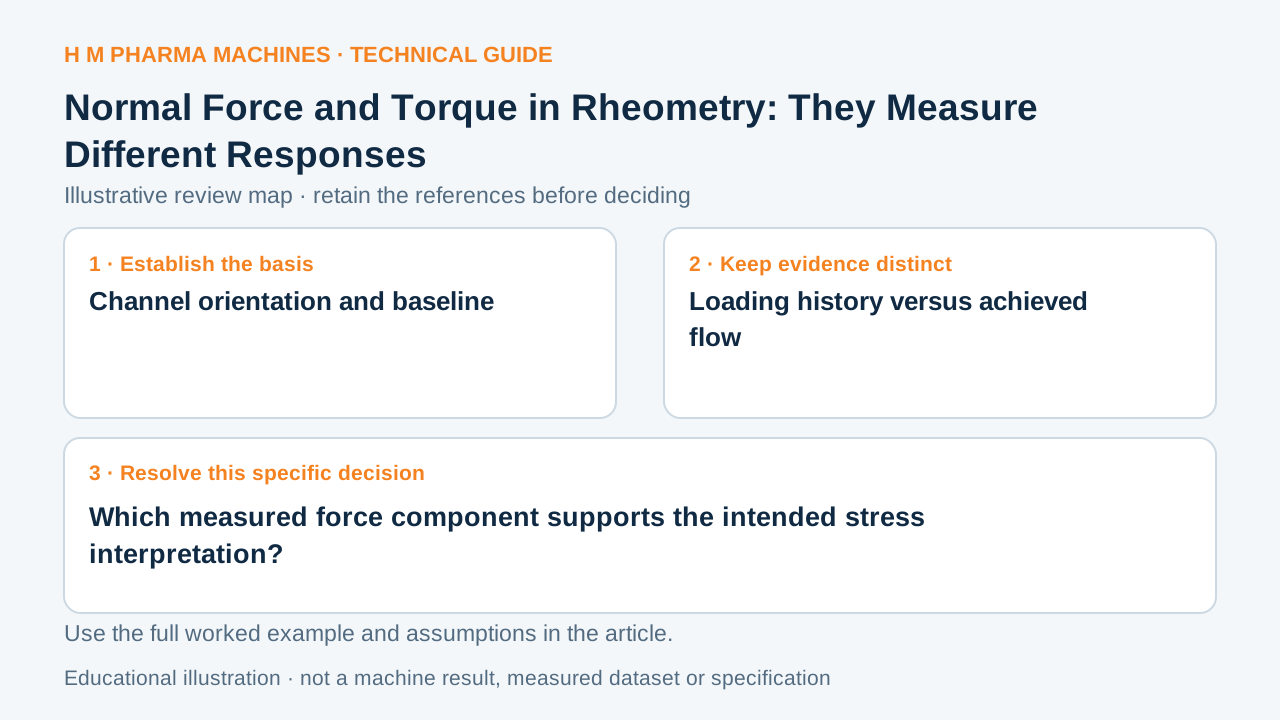
Keep the perpendicular force channel separate from rotational torque when asking which measured response supports a rheological stress interpretation.
Identify the Deformation and Model
TA Instruments describes normal force as perpendicular to the shear deformation and distinguishes it from torque. Its note also separates loading/relaxation effects from subsequent flow observations. Primary reference: normal force and rheological interpretation.
Review a Hypothetical Comparison
A fictional record reports perpendicular force 2 N and rotational torque 0.02 N·m at one identified time. These are different quantities with different dimensions, so dividing or comparing their bare numerical values does not establish a material normal-stress ratio. Converting either measurement into stress requires its relevant geometry and interpretation.
Keep the Evidence with the Decision
Retain channel orientation, baseline, loading history and the achieved motion with both traces. Ask whether the desired quantity is raw force, a geometry-derived stress or a particular normal-stress difference. Keep the applicable conversion model with the reported result. Distinguish a transient force after sample loading from a response observed under a stated flow condition.
Raw force divided by one casually chosen area need not equal the intended normal-stress difference. A normal-force reading alone does not determine every extrudate-swell or formulation-mixing outcome. The invented force and torque establish no HM material certificate, nozzle limit or machine setting. Their useful output is a channel-to-quantity map that preserves the missing geometry/model evidence before making a material conclusion.
Which measured force component supports the intended stress interpretation?
This blank worksheet is for your own project. It contains no H M machine trial result.
| Review field | Reference or result | Responsible person |
|---|---|---|
| Channel orientation and baseline | To complete | To complete |
| Loading history versus achieved flow | To complete | To complete |
| Force/torque units and geometry | To complete | To complete |
| Desired stress quantity and conversion model | To complete | To complete |
Customer Questions
Are N and N·m interchangeable units?
No. They describe force and torque.
Does raw normal force automatically equal a stress difference?
No. The relevant geometry/model is required.
Does one force reading predict every swell outcome?
No. An applicable material-flow interpretation is needed.
Primary References
These references support the technical principles discussed in this guide. The worked examples and review questions are educational.
Discuss Your Machine Requirement
Share your product, container, required output and the evidence needed for your technical review.
Request a Technical Review