
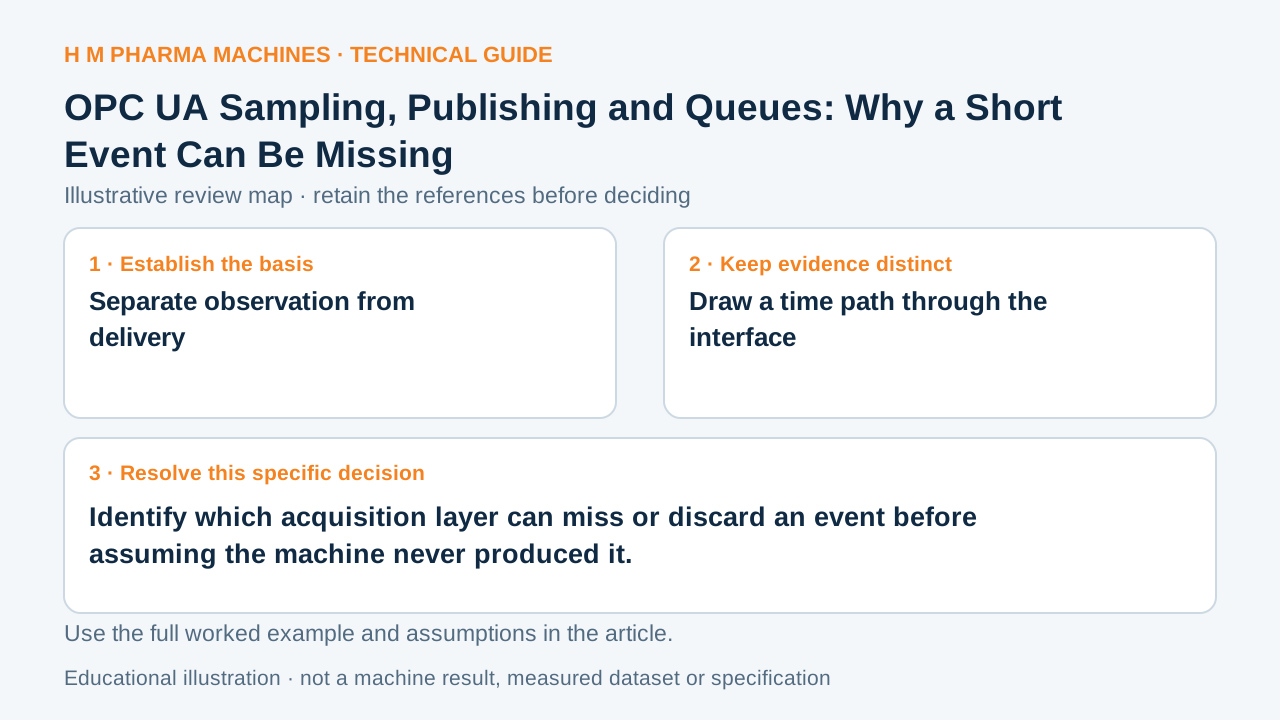
Identify which acquisition layer can miss or discard an event before assuming the machine never produced it.
Separate observation from delivery
OPC UA monitored items and subscriptions separate sampling from publishing. Filters and monitored-item queues also influence what reaches a client. The OPC Foundation's service definitions describe these distinct layers. A publishing interval is therefore not simply the interval at which the underlying process is observed. If a short event is missing from a historian, several explanations remain possible: it was not sampled, was filtered, was not retained in a queue or was handled differently by the consumer.
OPC Foundation: services, monitored items and subscriptions supports the technical principle above.
Draw a time path through the interface
Make columns for the source update behavior, requested and revised sampling interval, filter, queue capacity, discard policy, publishing interval and client storage behavior. Record accepted or revised server values rather than preserving only what the client requested. A source can update at its own rate, so a faster request does not automatically create faster physical measurements.
Identify what must be retained: latest value, every change, a count or an explicit event record. These are different data requirements. Increasing a queue cannot recover a transition the sampling layer never observed. Equally, faster sampling does not ensure every observation is retained if later queue and consumer policies discard it.
Hypothetical event timeline
Imagine a fictional state that becomes active for 80 ms. A sampler taking observations every 100 ms may miss the state entirely depending on alignment. Changing publishing from 1,000 ms to 200 ms does not fix that missed observation if the sampling stays unchanged. In a second invented case, a 20 ms sampler observes several transitions but a queue retaining only the latest item does not promise a complete history. Sketch source transitions, sample points and deliveries on separate timeline rows. These cases teach acquisition logic; they describe no HM interface or actual lost inspection event.
Accept against the required record
Specify the event duration and record completeness the project actually needs. Then verify the whole path with an agreed representative test rather than equating a fast-looking dashboard with complete evidence. Keep timing, accepted settings and expected storage behavior in the integration record. When discussing inspection or checking data, first confirm the proposed interface and source capability. This guide helps frame that discussion and locate evidence gaps; it offers no universal sampling interval or assurance that polling can reconstruct every machine event.
Customer Questions
Does faster publishing guarantee short events are sampled?
No. Publishing cannot recover an event that the observation layer missed.
Can a larger queue recover an unsampled transition?
No. A queue retains available observations; it does not create missing ones.
What should be specified instead of only an interval?
The required record, event duration, completeness, accepted sampling/filter/queue behavior and client storage policy.
Related Equipment References
Review the actual offered equipment and application separately from this educational example.
Primary References
These references support the technical principles discussed in this guide. The worked examples and review questions are educational.
Discuss Your Machine Requirement
Share your product, container, required output and the evidence needed for your technical review.
Request a Technical Review