
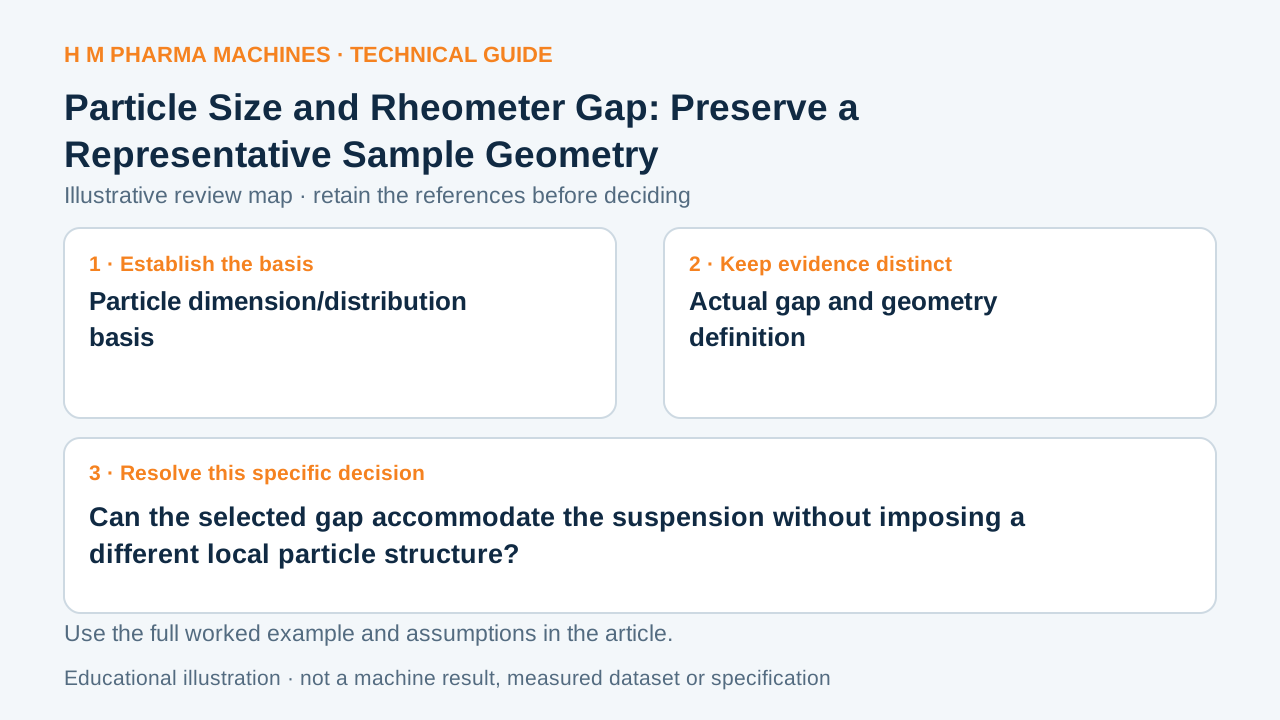
Retain particle size beside the actual measuring gap when comparing suspension rheology; a confined region may not represent the intended bulk sample.
Identify the Deformation and Model
TA Instruments notes that suspension particle size matters when selecting a rheometer gap. Particles and the imposed measuring geometry must be considered together rather than treating the gap as a sample-independent constant. Primary reference: particle size and measuring gap.
Review a Hypothetical Comparison
Imagine an invented suspension whose identified larger-particle dimension is 100 micrometres. A 200-micrometre gap is only twice that dimension, while a 1,000-micrometre gap is ten times it. These ratios describe confinement; neither is presented as a universal permitted gap or proof that the wider geometry reproduces every bulk response.
Keep the Evidence with the Decision
Record the size dimension and distribution evidence used in the comparison, including associations that may differ from primary particles. Keep cone truncation, plate spacing or cylinder clearance identified by geometry rather than applying one gap label to all systems. Ask whether the representative particles enter the measured region and whether preparation changes their structure.
A changed response with gap can have explanations beyond confinement, including boundary effects and measurement sensitivity. Keep them separate from an immediate formulation-change conclusion. Use the actual laboratory method to justify the selected geometry and range. The hypothetical ratios specify no instrument setting, powder acceptance criterion or HM process clearance; their purpose is to expose the sample-to-gap relationship missing from a generic rheology certificate.
Can the selected gap accommodate the suspension without imposing a different local particle structure?
This blank worksheet is for your own project. It contains no H M machine trial result.
| Review field | Reference or result | Responsible person |
|---|---|---|
| Particle dimension/distribution basis | To complete | To complete |
| Actual gap and geometry definition | To complete | To complete |
| Sample entry/preparation and associations | To complete | To complete |
| Confinement versus competing method effects | To complete | To complete |
Customer Questions
Are the ratios automatic permitted settings?
No. The actual method must establish suitability.
Does one gap name apply identically to every geometry?
No. Preserve the clearance definition.
Does a changed gap response prove a changed batch?
No. Review the method effects first.
Primary References
These references support the technical principles discussed in this guide. The worked examples and review questions are educational.
Discuss Your Machine Requirement
Share your product, container, required output and the evidence needed for your technical review.
Request a Technical Review