
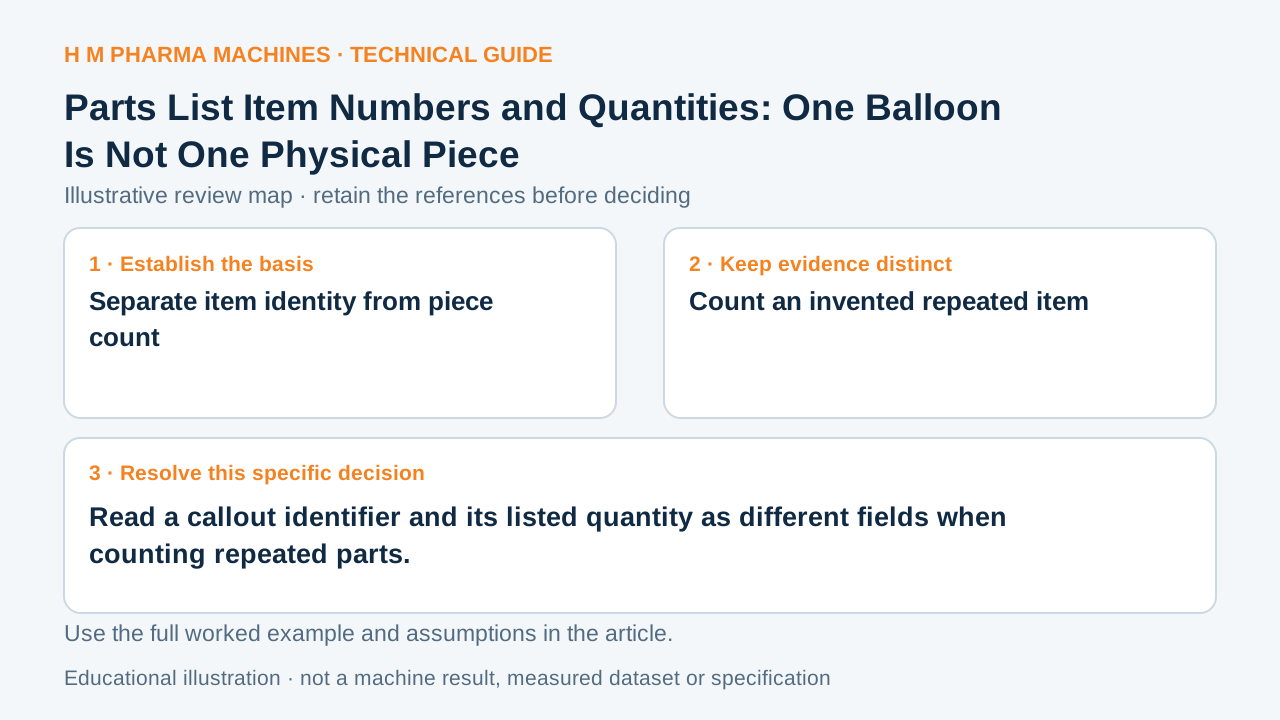
A balloon identifies a listed item. Its printed number is not automatically the number of pieces in the assembly.
Separate item identity from piece count
A parts list can provide distinct fields for item identifier, quantity, part number and description. A balloon connects a component in the view with its listed item. The identifier's numeric value is not itself the required quantity. Primary reference: Autodesk: parts-list item, quantity and associated balloon fields.
Also identify the list's scope and assembly level. A list of first-level components can represent subassemblies differently from an expanded list of their contents. A correct count depends on the meaning of the row, not just the number of visible callout bubbles.
Count an invented repeated item
Imagine item 7 identifies a nominal fastener type and its listed quantity is 4 for one defined assembly. The identifier 7 does not mean seven pieces. If three identical assemblies require that same four-piece quantity, the simplified total for this item is 3 times 4, or 12 pieces.
This arithmetic excludes spare allowances, losses and alternative configurations. It is not a purchase order or a recommendation for a real fastener. Repeated balloons could identify several locations of the same item rather than separate new rows with independent quantities.
Preserve row scope in the handoff
Retain the item identifier, actual part identity, quantity basis and relevant assembly configuration. Confirm whether the table is expanded or grouped before combining counts across rows. Where an inquiry cites a balloon alone, ask which complete row supplies its component information.
Compare a proposed replacement against the intended part definition, not only its item number on another drawing. Item identifiers can serve documentation relationships while actual part identity follows its own fields. A useful equipment-parts discussion carries both identities and the required quantity without assuming that a convenient callout number supplies them all.
Customer Questions
Does item 7 mean seven pieces?
No. Read its separate quantity field.
What total follows the fictional three assemblies with four each?
12 pieces before any separately defined allowances.
Are all balloons separate parts-list rows?
Not necessarily. Several can identify locations of one listed item.
Primary References
These references support the technical principles discussed in this guide. The worked examples and review questions are educational.
Discuss Your Machine Requirement
Share your product, container, required output and the evidence needed for your technical review.
Request a Technical Review