
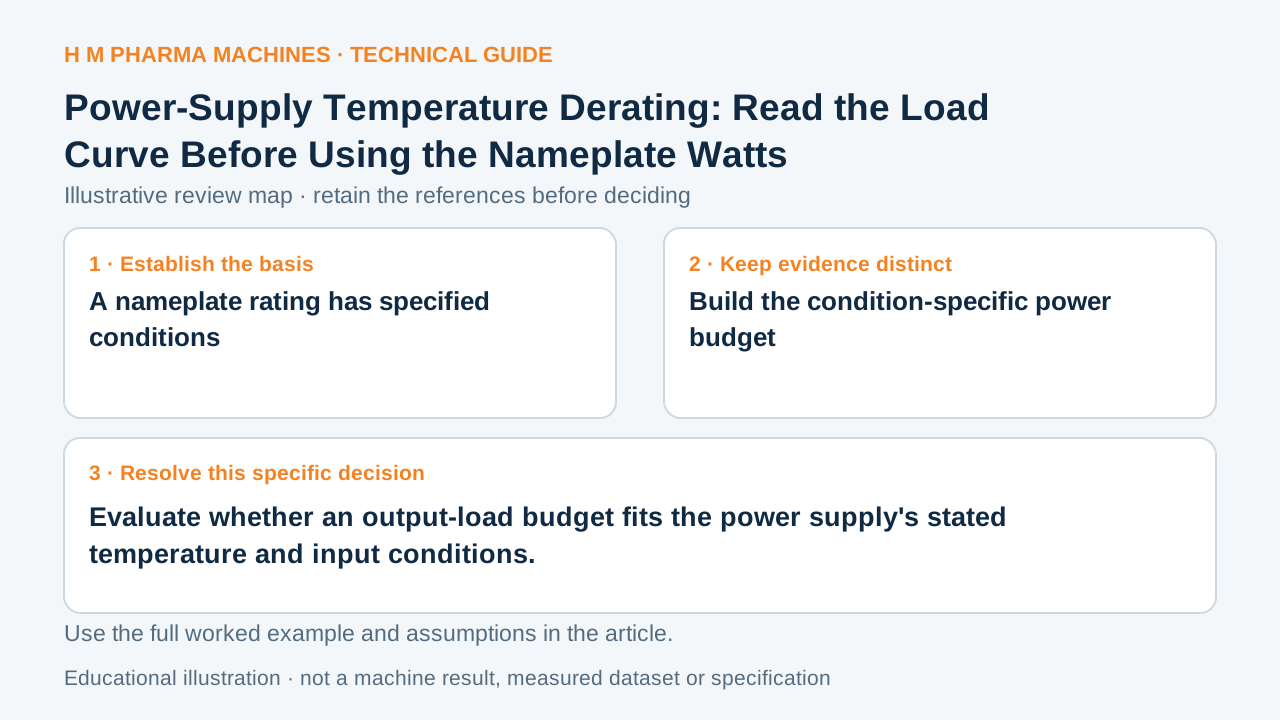
Evaluate whether an output-load budget fits the power supply's stated temperature and input conditions.
A nameplate rating has specified conditions
Power-supply data sheets can specify output derating against ambient temperature or input conditions. The cited MEAN WELL data sheet is one public example of those separate curves. Its values describe that identified product, not every power supply. A buyer should therefore read the actual proposed unit's limits rather than interpreting nominal watts as available output under all cabinet conditions. An ambient operating-temperature range is not automatically a statement of full load throughout that range.
MEAN WELL WDR-120 data sheet: temperature and input-voltage derating curves supports the technical principle above.
Build the condition-specific power budget
Record the exact supply designation, output voltage, rated power, current limits and applicable temperature and input curves. Define where the manufacturer measures ambient temperature and the mounting or cooling conditions referenced by the data sheet. Room temperature outside a cabinet may not be the relevant condition near the supply. If that local temperature is unknown, retain the uncertainty rather than inserting a convenient room reading.
List the loads by operating mode and record whether they can occur simultaneously. Keep steady demand and transient requirements distinct. For multiple outputs, preserve both individual limits and any total-power constraint. Do not add capacities from separate output labels without checking the manufacturer's stated combined basis. The responsible electrical designer should assess the full proposed arrangement.
Hypothetical curve and load worksheet
Imagine a completely fictional supply whose teaching curve permits 100 W at 40 °C and 60 W at 60 °C. A proposed 70 W continuous load fits the first assumed point but exceeds the second. A quotation stating only 100 W would hide this condition dependence. Add rows for the load mode, local temperature, permitted power and remaining margin: 30 W at the first point and negative 10 W at the second. These invented curve points are not taken from the cited product, not an HM component specification and not permission to select or replace a supply. They demonstrate how a stated envelope changes a feasibility result.
Preserve the envelope with the accepted configuration
Keep the accepted load schedule and environmental basis beside the actual supply data sheet. A later added display, sensor or accessory should prompt a budget update if it changes the relevant demand. A cooling or mounting change may also affect the applicable curve conditions. For a new machine project, describe the site environment and proposed external loads so the electrical scope can be reviewed. This guide provides a condition-aware comparison method; it does not claim an installed power-supply brand, prescribe a temperature margin or verify the complete electrical design.
Customer Questions
Does the maximum operating temperature permit full nameplate load?
Do not assume that. Read the identified supply's derating curves and their conditions.
Is room temperature always the supply's relevant ambient temperature?
No. Use the measurement location and cooling basis defined for the actual installation and product.
Are the example power limits manufacturer ratings?
No. They are explicitly fictional curve points used to teach the comparison.
Related Equipment References
Review the actual offered equipment and application separately from this educational example.
Primary References
These references support the technical principles discussed in this guide. The worked examples and review questions are educational.
Discuss Your Machine Requirement
Share your product, container, required output and the evidence needed for your technical review.
Request a Technical Review