
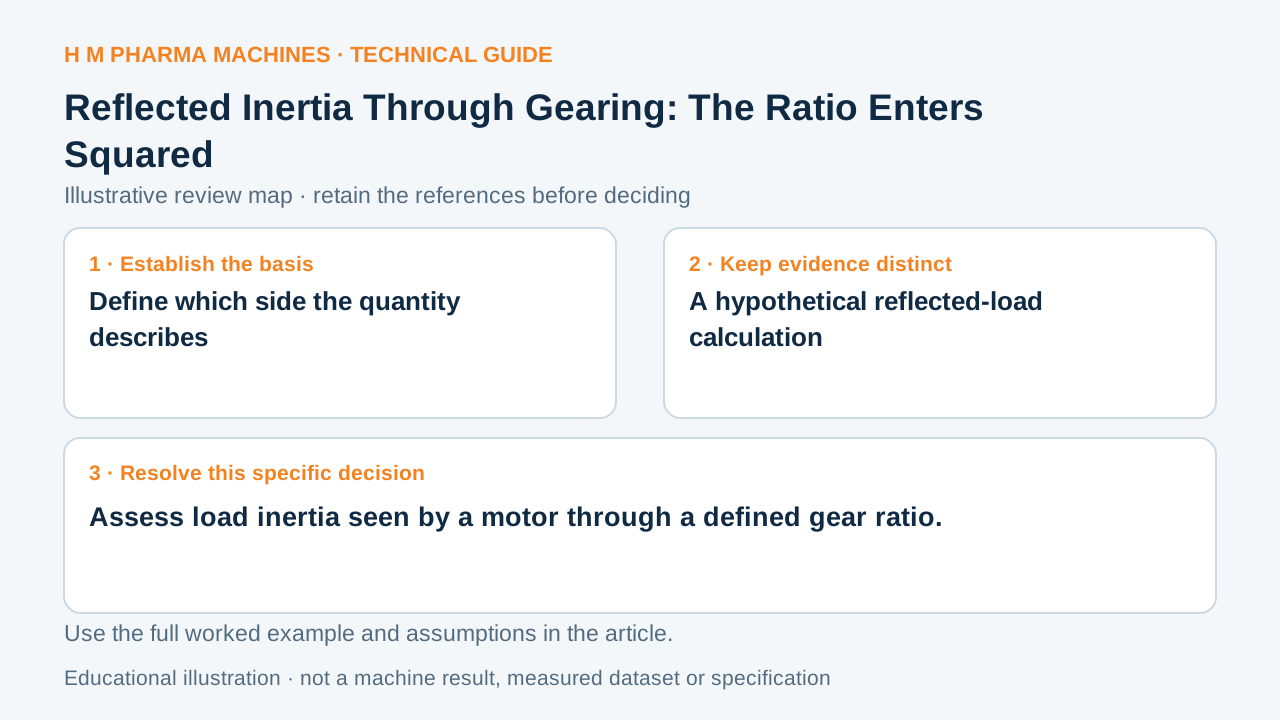
A reduction ratio changes reflected inertia differently from its simple torque ratio.
Define which side the quantity describes
Oriental Motor's geared-stepper overview relates load-inertia capacity to the square of the gear ratio. Preserve the defined motor and load sides when using the relationship. Primary reference: Oriental Motor geared-load context.
For an ideal rigid reduction model with ratio defined as motor speed divided by load speed, load inertia reflected to the motor is the load inertia divided by the ratio squared. Transmission and motor inertias remain separate contributions when the actual sizing basis includes them.
A hypothetical reflected-load calculation
Assume a fictional load inertia of 0.04 kg·m² and reduction ratio 4 under that stated definition. The ideal reflected load contribution is 0.04/4² =0.0025 kg·m². Dividing by 4 only would give 0.01 kg·m² and represent a different calculation. The example does not imply that the transmission's own inertia is zero.
Record load inertia, ratio definition, reflected contribution and separately included elements. These invented values identify no HM motor, gearbox or permissible inertia ratio. The model does not establish compliance with an actual drive's response or selection requirements.
Keep the complete dynamic basis
Ask which rotating and translating elements the actual sizing model includes and how they are referred to the chosen shaft. A mass value alone is not the same quantity as rotational inertia.
If the ratio or load geometry changes, revisit the model and relevant motion demands. The guide supplies a conditional transformation example without asserting a universal permissible inertia ratio, prescribing motor gains or treating one reflected-load result as the full acceleration, transmission and control-system assessment required for the real machine duty.
Customer Questions
Does the ratio enter only once in the ideal inertia conversion?
No. Under the stated definition it enters squared.
Does reflected load inertia include every transmission element automatically?
No. Identify separately included contributions.
Is mass the same quantity as rotational inertia?
No. Geometry relative to the rotation axis matters.
Primary References
These references support the technical principles discussed in this guide. The worked examples and review questions are educational.
Discuss Your Machine Requirement
Share your product, container, required output and the evidence needed for your technical review.
Request a Technical Review