
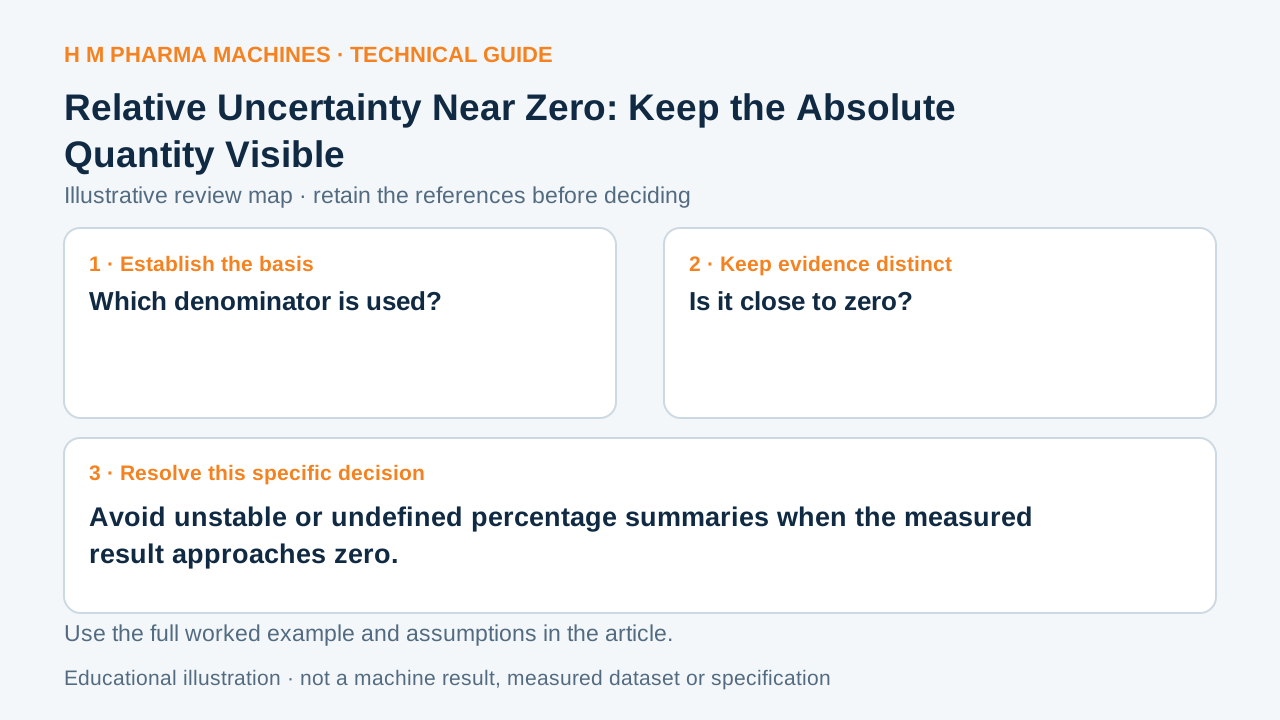
A percentage can become misleading near a zero result. Keep the absolute uncertainty, units and denominator visible.
Identify the denominator
Relative standard uncertainty divides standard uncertainty by the absolute measured value. Its interpretation requires the value and uncertainty to refer to the same result and compatible units. At zero the ratio is undefined; close to zero it can become very large without a corresponding change in absolute uncertainty.
An invented comparison
Consider standard uncertainty 0.02 g for two illustrative results: 10.00 g and 0.10 g. Their relative values are 0.2% and 20% respectively. The absolute uncertainty is unchanged, but the denominator differs by a factor of one hundred.
For a difference result crossing zero, a relative percentage is a poor standalone display. Retain the signed result and absolute uncertainty, then choose a summary appropriate to the review question. These examples do not set an acceptance requirement for any filling system.
Keep the result understandable
Label whether the uncertainty is standard or expanded, and identify the reference used for any percentage. Do not silently substitute a nominal target when the requested metric uses the measured value. If a target-based percentage is useful, name it as a different metric and retain the absolute statement.
Primary references: JCGM international vocabulary.
Measurement review worksheet
This blank worksheet is for your own project. It contains no H M machine trial result.
| Question | Evidence to retain |
|---|---|
| Which denominator is used? | Measured magnitude or separately named target |
| Is it close to zero? | Absolute result and uncertainty |
| Which uncertainty definition applies? | Standard or expanded label |
Customer Questions
Is relative uncertainty defined at zero?
Not as a division by the zero measured value.
Does a larger percentage always mean a larger absolute uncertainty?
No. The denominator can cause the difference.
May nominal target replace measured value silently?
No. Label a target-based metric separately.
Primary References
These references support the technical principles discussed in this guide. The worked examples and review questions are educational.
Discuss Your Machine Requirement
Share your product, container, required output and the evidence needed for your technical review.
Request a Technical Review