
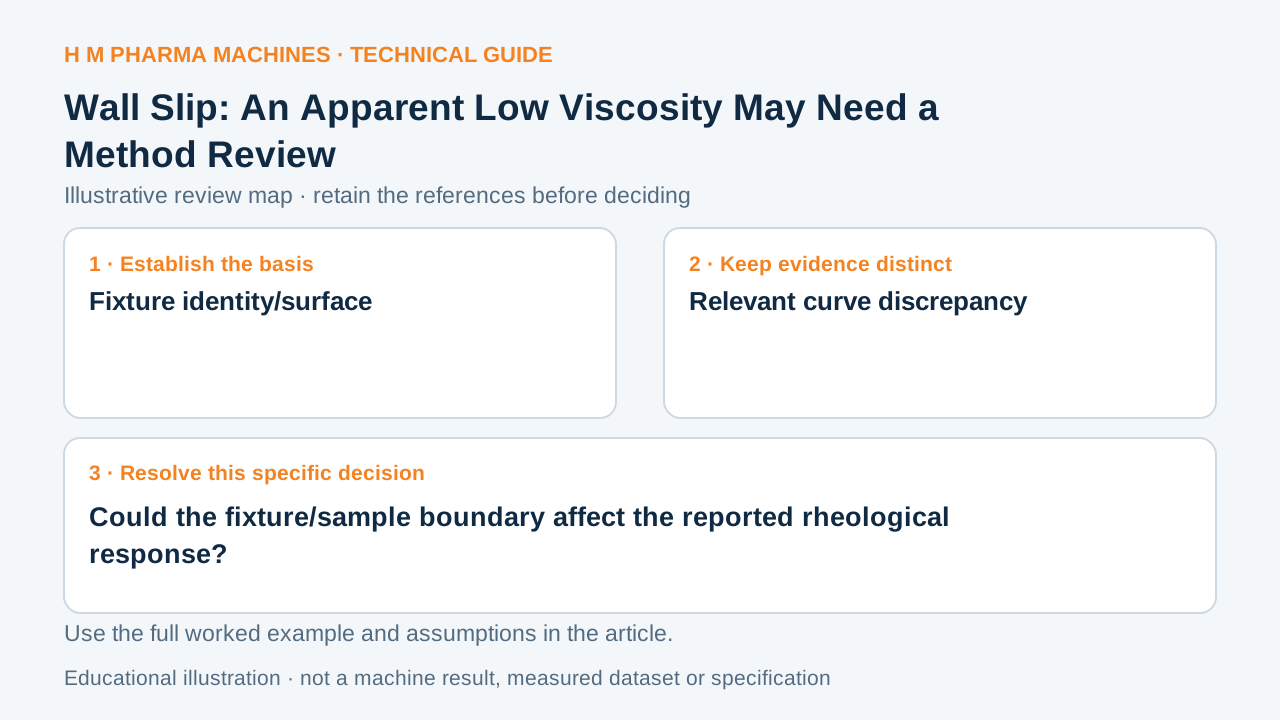
A low apparent viscosity can reflect a measurement-boundary effect. Preserve the geometry evidence before attributing it to the formulation.
Recognize the Boundary Effect
Anton Paar explains that wall-slip effects can produce measured responses that are too low. The selected measuring geometry and its boundary with the sample therefore belong to the interpretation. An apparent low response should not immediately be assigned to a thinner formulation.
Its primary guidance discusses surface comparisons using smooth and profiled or sandblasted fixtures to investigate wall-slip behaviour. The laboratory should choose the actual method and account for geometry dimensions and sample condition; this guide does not prescribe a fixture for every material. Primary rheology reference.
Illustrative Comparison
Suppose an invented sample gives different low-rate apparent responses on two identified fixture surfaces. The disagreement is a reason to review the boundary and method, not immediate proof that the product batch changed. Other experimental differences still need to be controlled.
The example contains no HM trial result or quoted yield-stress value. Keep the raw curves and exact fixture identities available to the measurement owner. A selected result should not be relabelled as true viscosity simply because it agrees with the buyer’s expectation.
Ask for a Bounded Method Conclusion
Request the laboratory’s evaluation of whether slip may affect the intended comparison and how it was assessed. Retain sample condition, surface, dimensions and the relevant low-rate range. If the cause remains unresolved, preserve that limitation rather than inventing a formulation explanation.
Complete the worksheet before sharing the selected curve in a filling enquiry. Separating a possible test-boundary effect from a material change improves the product description, while actual product-path compatibility and machinery performance remain separate questions. HM application context: Servo Piston Liquid Filling Machine.
Wall Slip: An Apparent Low Viscosity May Need a Method Review — blank interpretation record
This blank worksheet is for your own project. It contains no H M machine trial result.
| Comparison | Evidence/reference | Reviewer |
|---|---|---|
| Fixture identity/surface | To complete | To complete |
| Relevant curve discrepancy | To complete | To complete |
| Laboratory slip assessment | To complete | To complete |
| Selected result and residual limitation | To complete | To complete |
Customer Questions
Does a low result always mean the batch is thinner?
No. The measurement boundary and other method differences may need review.
Can roughened fixtures always remove every effect?
The laboratory must assess suitability and the remaining limitations for the sample.
Does this guide define equipment adjustments?
No. It concerns interpretation of laboratory evidence.
Related Equipment References
Review the actual offered equipment and application separately from this educational example.
Primary References
These references support the technical principles discussed in this guide. The worked examples and review questions are educational.
Discuss Your Machine Requirement
Share your product, container, required output and the evidence needed for your technical review.
Request a Technical Review