
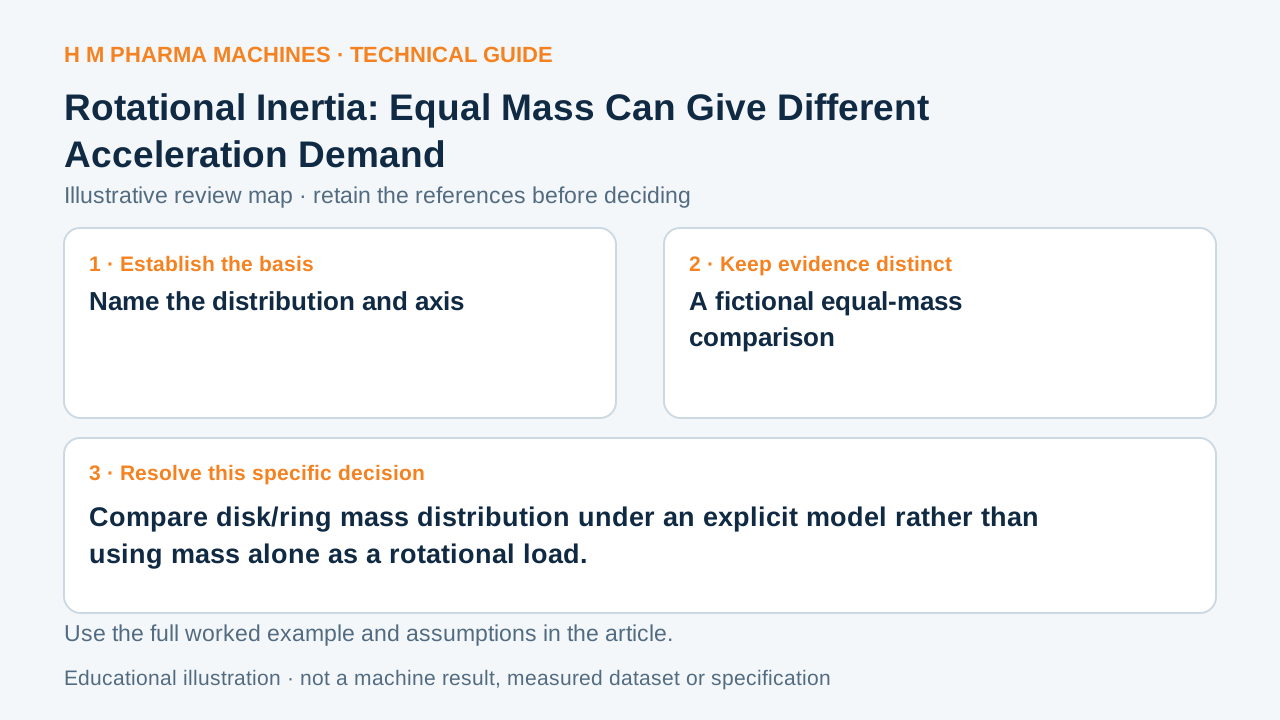
Retain mass distribution and rotation axis when estimating acceleration torque.
Name the distribution and axis
About their central axes, an ideal uniform disk has inertia ½MR² and a thin hoop has MR². Equal mass and outer radius therefore need not give equal rotational inertia. Primary reference: rotational inertia.
An actual component may be neither model. Holes, hubs, attached parts and the chosen axis change the calculation. Record the geometry behind an inertia value rather than inferring it from a weighing result alone.
A fictional equal-mass comparison
Assume two hypothetical 2 kg components with radius 0.1 m: one uniform disk and one thin hoop. Their modeled inertias are 0.01 and 0.02 kg·m². At 20 rad/s² angular acceleration, the inertial torque terms are 0.2 and 0.4 N·m respectively.
The second component requires twice this inertial torque despite equal mass. Neither result includes bearings, process loads or other drive contributions. A different acceleration history changes the demand again. These invented shapes are calculation aids, not proposed machine parts or motor selections.
Prepare a load-inertia record
List each rotating component, its axis, geometric model and any supplier inertia evidence. Keep inertia at the load shaft separate from an inertia transformed through a transmission. Do not combine values referenced to different shafts without a stated relationship.
Ask which portions accelerate together and which can disconnect or slip. A defensible drive comparison uses the actual assembly definition and motion profile. This guide does not establish permitted acceleration, shaft strength or drive performance for HM equipment; it shows why equal weight alone cannot settle rotational demand.
Customer Questions
Does equal mass imply equal inertia?
The distribution about the chosen axis also matters.
Does Iα include every motor load?
It is the inertial term under the stated model.
Can a disk formula describe every circular part?
Check the actual geometry and axis.
Primary References
These references support the technical principles discussed in this guide. The worked examples and review questions are educational.
Discuss Your Machine Requirement
Share your product, container, required output and the evidence needed for your technical review.
Request a Technical Review