
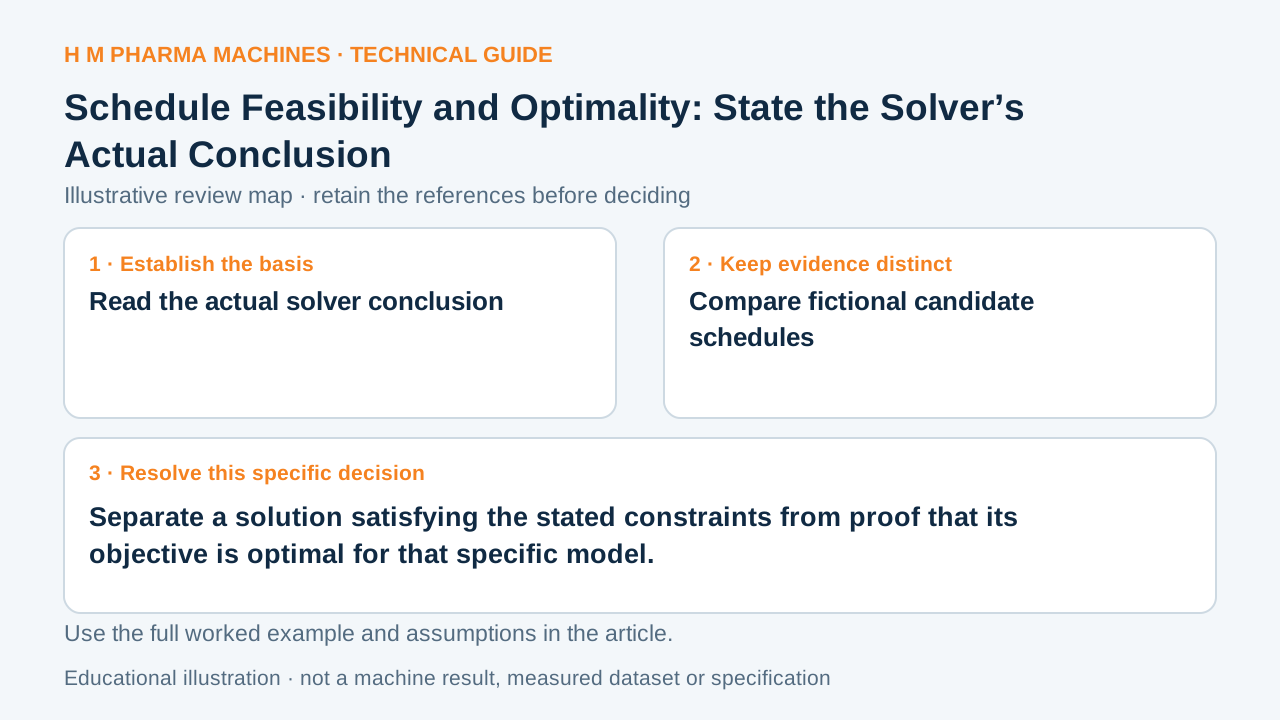
A schedule satisfying a model is useful evidence, but it does not always prove optimality. Retain the solver’s status and model scope alongside the result.
Read the actual solver conclusion
CP-SAT distinguishes a feasible solution from an optimal feasible solution. FEASIBLE reports a solution satisfying the model without a known optimality conclusion; OPTIMAL reports an optimal feasible solution. UNKNOWN is not the same as proven infeasibility, and an invalid model is another separate outcome. Primary reference: Google OR-Tools CP-SAT: solver status meanings.
For an original schedule worksheet, keep the status returned by the run beside its objective value and termination condition. Do not replace a time-limited feasible result with the word optimal merely because its schedule looks efficient. Also retain whether the run actually included an optimization objective.
Compare fictional candidate schedules
Suppose a hypothetical model minimizes the last completion time and returns a feasible schedule finishing at minute 20. Another manually checked feasible candidate finishes at 18. The existence of the 20-minute candidate alone cannot prove it is best, and the better 18-minute candidate directly disproves that claim.
Even an optimal 18-minute result would refer to the defined model, including its durations, constraints and objective. It would not establish a best actual factory plan if important physical resource or process requirements were omitted. These invented numbers are not results from a deployed solver run.
Review the model and run record
Prepare a trial record containing model revision, objective, constraints, status, any bound or gap reported, and stopping limit. Check candidate schedules against the same definitions before comparing objective values. A changed constraint set is a changed problem rather than a better solution to an identical one.
Use appropriate actual evidence before translating model feasibility into operational approval. The guide certifies neither an HM schedule nor a production plan. Its reader decision is whether the reported mathematical conclusion is supported by the solver’s real status and the explicitly reviewed model.
Customer Questions
Does FEASIBLE mean proven best?
No. It establishes a model-satisfying solution without a known optimality conclusion.
Does UNKNOWN mean proven infeasible?
No. The solver did not establish the relevant conclusion before it stopped.
Does an optimal model schedule automatically approve a factory plan?
No. The model’s requirements and physical applicability need their own review.
Primary References
These references support the technical principles discussed in this guide. The worked examples and review questions are educational.
Discuss Your Machine Requirement
Share your product, container, required output and the evidence needed for your technical review.
Request a Technical Review