
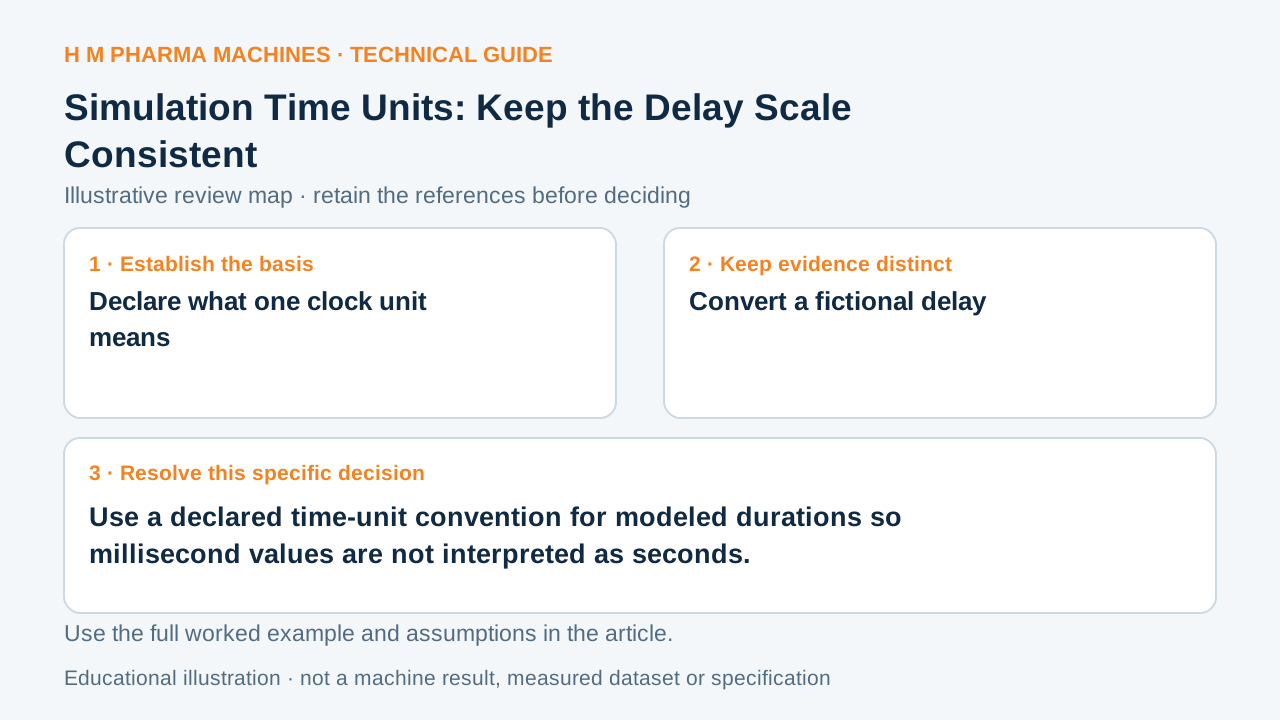
A numerical simulation clock can accept a duration without knowing its physical unit. Declare the scale before mixing delay inputs.
Declare what one clock unit means
SimPy’s simulation time is a number without an intrinsic physical unit. A model can adopt seconds, minutes or another consistent convention. Every numerical timeout then needs to use that declared scale; the engine does not infer a millisecond label from the magnitude entered. Primary reference: SimPy environments: unitless simulation time.
For an original input worksheet, record each source value, its original unit, the selected clock unit and its converted value. Keep reporting labels tied to the same convention. Changing only a chart’s axis text does not convert a duration already supplied to the event logic.
Convert a fictional delay
Suppose a hypothetical sensor delay is specified as 250 milliseconds and the model convention is seconds. Its entered duration is 0.250 second. Entering 250 instead schedules a 250-second delay, a factor of 1000 longer, even though the digits match the original millisecond value.
A second hypothetical operation takes 2 minutes and must enter as 120 seconds under the same convention. Adding its 120 seconds to the 0.250-second delay gives 120.250 seconds. Adding the unconverted source numbers 2 and 250 would have no consistent physical time meaning.
Review input and output conversion
Prepare a trial event ledger with expected elapsed durations and compare it with the engine’s numeric clock differences. Include a deliberately small known delay to expose a scale mistake. Keep conversion outside the solver or event engine unless the model explicitly implements it.
Also state whether the display is elapsed duration or a calendar timestamp; that presentation does not replace the underlying delay convention. The worked values are fictional and establish no HM sensor latency or machine cycle. This guide checks consistency of scale, not synchronization of actual clocks.
Customer Questions
Does the engine automatically know a number is milliseconds?
No. The model needs a declared unit convention and converted input.
What is 250 milliseconds in a seconds-based model?
0.250 second.
Does changing an axis label convert existing delays?
No. The numerical duration inputs must be converted.
Primary References
These references support the technical principles discussed in this guide. The worked examples and review questions are educational.
Discuss Your Machine Requirement
Share your product, container, required output and the evidence needed for your technical review.
Request a Technical Review