
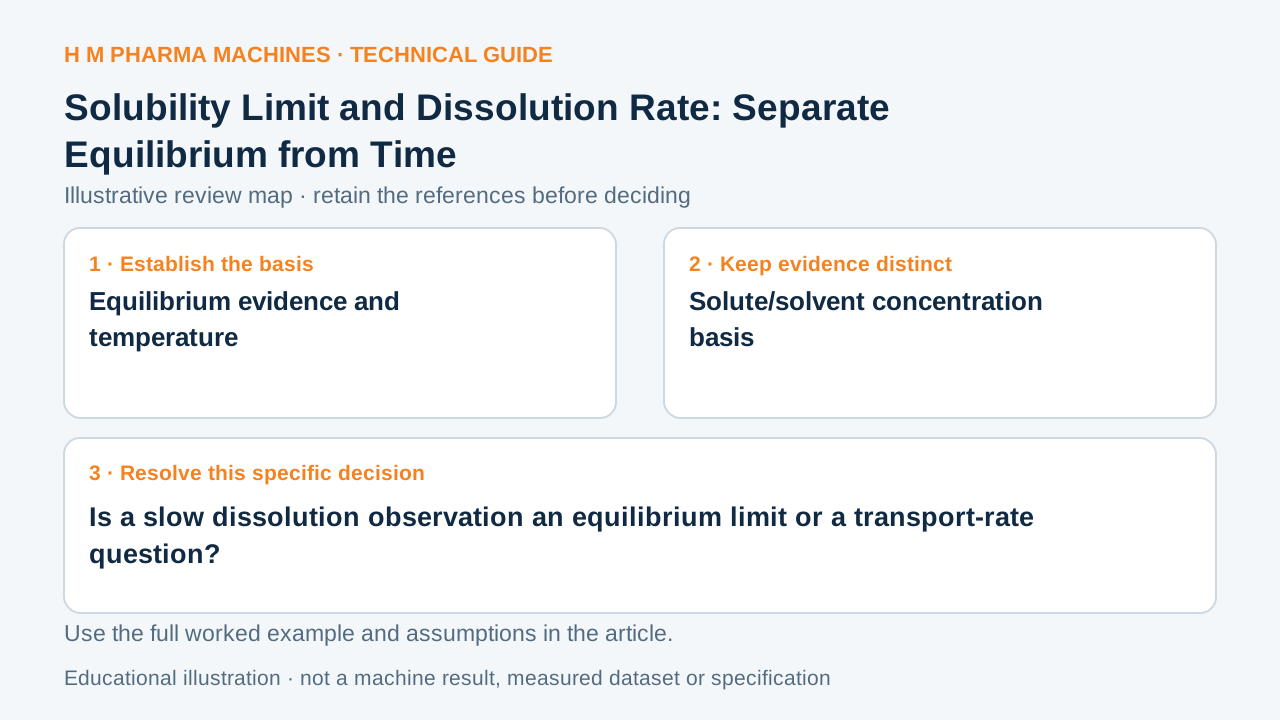
A solubility limit describes a possible equilibrium composition. Dissolution rate describes how quickly a process approaches a state.
Define the Process Model
IUPAC’s solubility definition refers to the composition of a saturated solution. State the solvent, temperature and concentration basis when using that composition. A faster mixer cannot be assumed to increase the equilibrium limit; rate improvement and a changed equilibrium condition are different engineering claims.
Compare a Hypothetical Case
Imagine a hypothetical equilibrium characterization at one stated temperature gives 10 g solute per 100 g solvent. Adding 15 g to 100 g solvent exceeds that invented limit by 5 g, assuming the stated material model and no other change. Improving mixing speed might change the time history, but does not by itself demonstrate that all 15 g can form the same equilibrium solution.
Complete the Engineering Review
Keep equilibrium composition evidence apart from a measured dissolution-time curve. Identify whether the reported concentration means solute per solvent mass or a fraction of total solution. Record temperature and other composition changes, and note whether the assessment reached equilibrium or was taken during a transient. A remaining solid observation needs that context before a mixer is blamed.
For a manufacturing-vessel discussion, submit the actual formulation and endpoint requirement. The example is not a solubility value for a real ingredient or a heating instruction. It helps distinguish an endpoint constraint from a process-speed question before selecting a trial change.
Is a slow dissolution observation an equilibrium limit or a transport-rate question?
This blank worksheet is for your own project. It contains no H M machine trial result.
| Review field | Reference or result | Responsible person |
|---|---|---|
| Equilibrium evidence and temperature | To complete | To complete |
| Solute/solvent concentration basis | To complete | To complete |
| Added amount against the stated limit | To complete | To complete |
| Separate time-history and endpoint evidence | To complete | To complete |
Customer Questions
Does faster mixing necessarily increase solubility?
Rate and equilibrium composition are different claims.
Is 10 g per 100 g solvent the same as 10% of solution?
Those denominators differ.
Does the example prescribe heating?
It only illustrates a fixed-condition composition balance.
Related Equipment References
Review the actual offered equipment and application separately from this educational example.
Primary References
These references support the technical principles discussed in this guide. The worked examples and review questions are educational.
Discuss Your Machine Requirement
Share your product, container, required output and the evidence needed for your technical review.
Request a Technical Review