
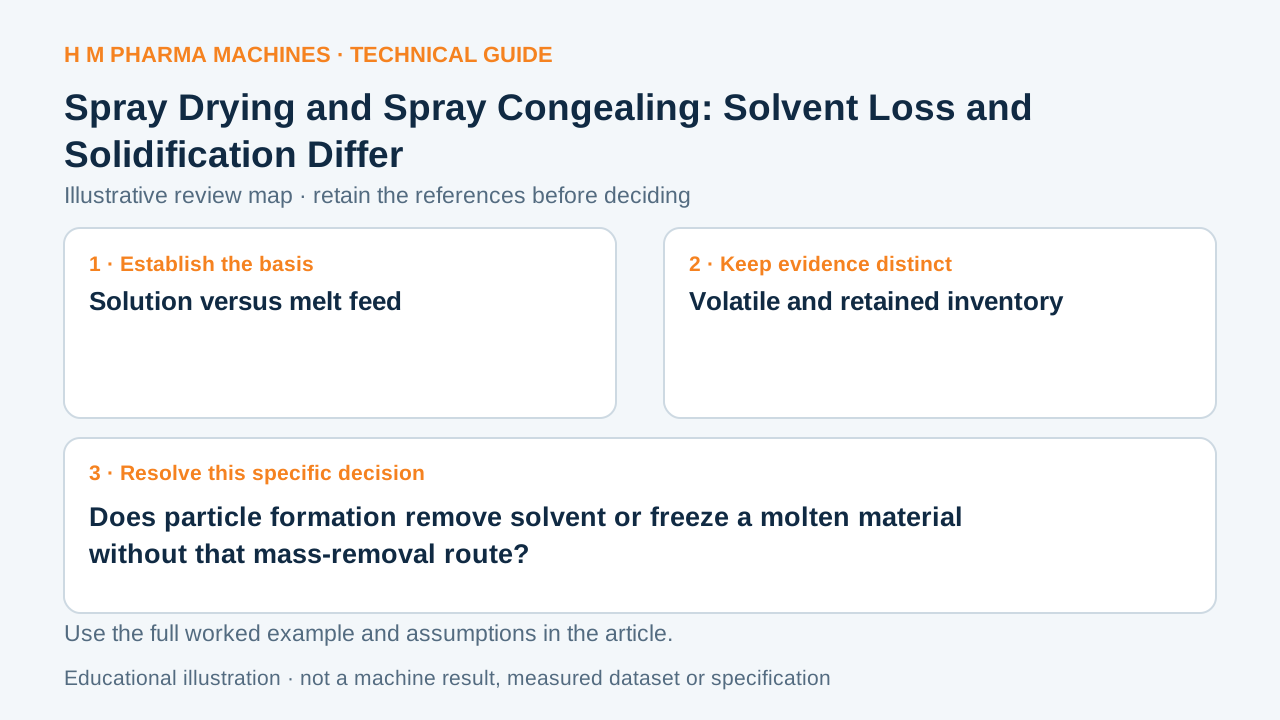
Identify whether particle formation exports solvent or changes the phase of the incoming melt before comparing the mass balance.
Define the Material or Thermodynamic Model
BUCHI’s spray-drying description identifies solvent evaporation, whereas GEA’s spray-cooling definition describes solidification of a melt by cooling. Both can produce particles, but their material-removal boundaries differ.
Review a Hypothetical Comparison
A fictional 100 g solution contains 20 g retained nonvolatile solid and 80 g removable solvent. Ideal complete drying leaves 20 g solid and exports 80 g solvent. A separate 100 g solvent-free melt that only solidifies retains 100 g, excluding losses. Similar-looking powder at the outlet does not make these two mass accounts interchangeable.
Keep the Evidence with the Decision
Record initial material state, volatile inventory, retained components and the destination of any removed mass. Keep cooling duty and evaporation duty separate from this inventory comparison. Equal feed mass in these examples gives unequal retained powder mass; normalize the output basis before making a throughput or utility comparison.
No actual formulation, recovery percentage or energy comparison is supplied. Residual solvent, product loss, decomposition or volatile components in the melt would add terms to the simplified account.
Does particle formation remove solvent or freeze a molten material without that mass-removal route?
This blank worksheet is for your own project. It contains no H M machine trial result.
| Review field | Reference or result | Responsible person |
|---|---|---|
| Solution versus melt feed | To complete | To complete |
| Volatile and retained inventory | To complete | To complete |
| Removed-mass destination | To complete | To complete |
| Cooling/evaporation and loss terms | To complete | To complete |
Customer Questions
What ideal solution residue is calculated?
20 g.
What remains from the assigned solvent-free melt?
100 g, excluding losses.
Are thermal duties determined?
No thermal property or temperature inputs are supplied.
Primary References
These references support the technical principles discussed in this guide. The worked examples and review questions are educational.
Discuss Your Machine Requirement
Share your product, container, required output and the evidence needed for your technical review.
Request a Technical Review