
Steam-trap selection includes when condensate leaves, not merely how many kilograms per hour a table lists.
Define the Thermal Model
Thermostatic traps respond to temperature, while mechanical designs respond to the density difference between steam and condensate. Spirax Sarco’s trap-introduction lesson explains why cooled-condensate retention and prompt hot drainage have different process effects. Compare the required discharge behavior before selecting the family and model.
Compare a Hypothetical Case
Suppose two hypothetical offers each list a qualifying capacity. Offer A documents discharge after condensate cools below saturation. Offer B documents hot-condensate drainage with a specified air-venting arrangement. If the process calculation assumes a fully available steam-contact surface, the offers cannot be declared equivalent from the capacity column alone.
Complete the Engineering Review
Write the process requirement in observable terms: permitted condensate retention, warm-up air removal and behavior as load changes. Ask the supplier to identify how its selected model meets each item. Separate normal mechanism behavior from maintenance findings; a temperature difference that is deliberate for one family can be interpreted differently for another.
Use the manufacturing-vessel context with the actual steam-space drawing. This guide compares mechanisms and requirements; it does not recommend one family for every jacket or describe an installed HM trap. Capacity and pressure-envelope checks follow the behavior review.
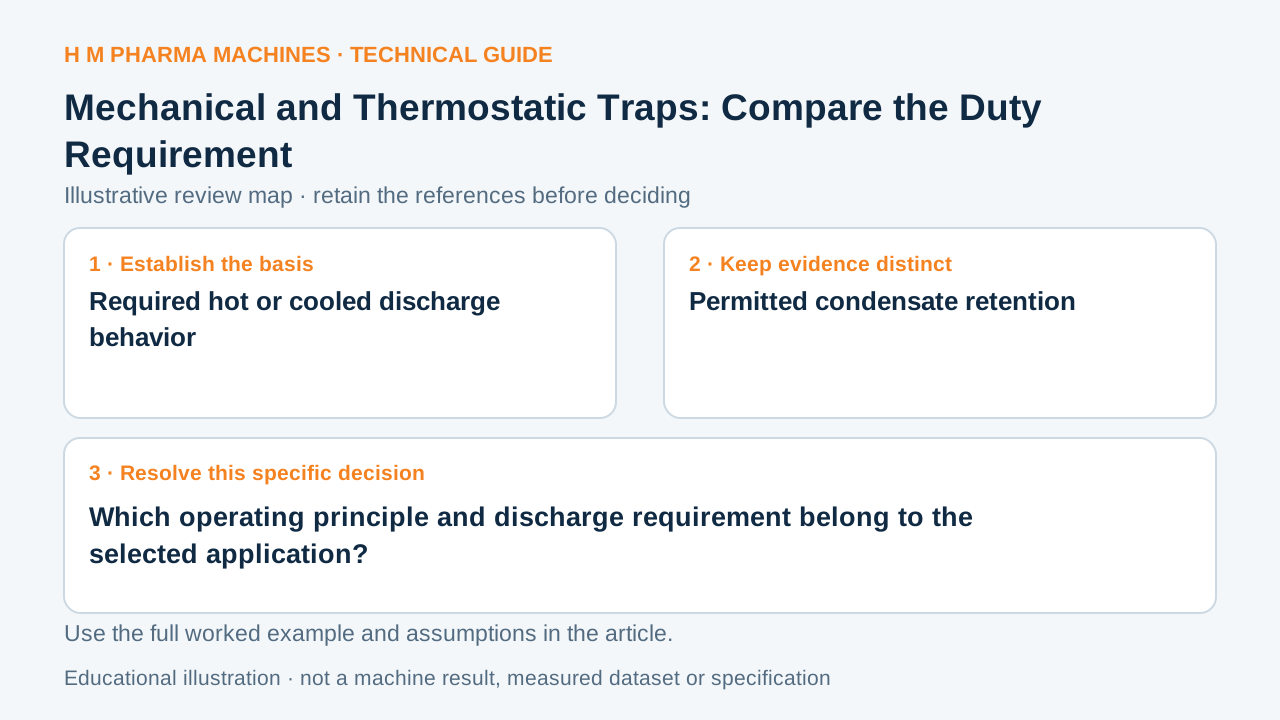
Which operating principle and discharge requirement belong to the selected application?
This blank worksheet is for your own project. It contains no H M machine trial result.
| Review field | Reference or result | Responsible person |
|---|---|---|
| Required hot or cooled discharge behavior | To complete | To complete |
| Permitted condensate retention | To complete | To complete |
| Start-up air-venting arrangement | To complete | To complete |
| Selected family and model evidence | To complete | To complete |
Customer Questions
Are equal kg/h offers equivalent?
Their discharge behavior may differ.
Does a cooler outlet always prove failure?
Consider the selected mechanism and conditions.
Does family choice finish sizing?
Pressure and capacity checks remain necessary.
Related Equipment References
Review the actual offered equipment and application separately from this educational example.
Primary References
These references support the technical principles discussed in this guide. The worked examples and review questions are educational.
Discuss Your Machine Requirement
Share your product, container, required output and the evidence needed for your technical review.
Request a Technical Review