
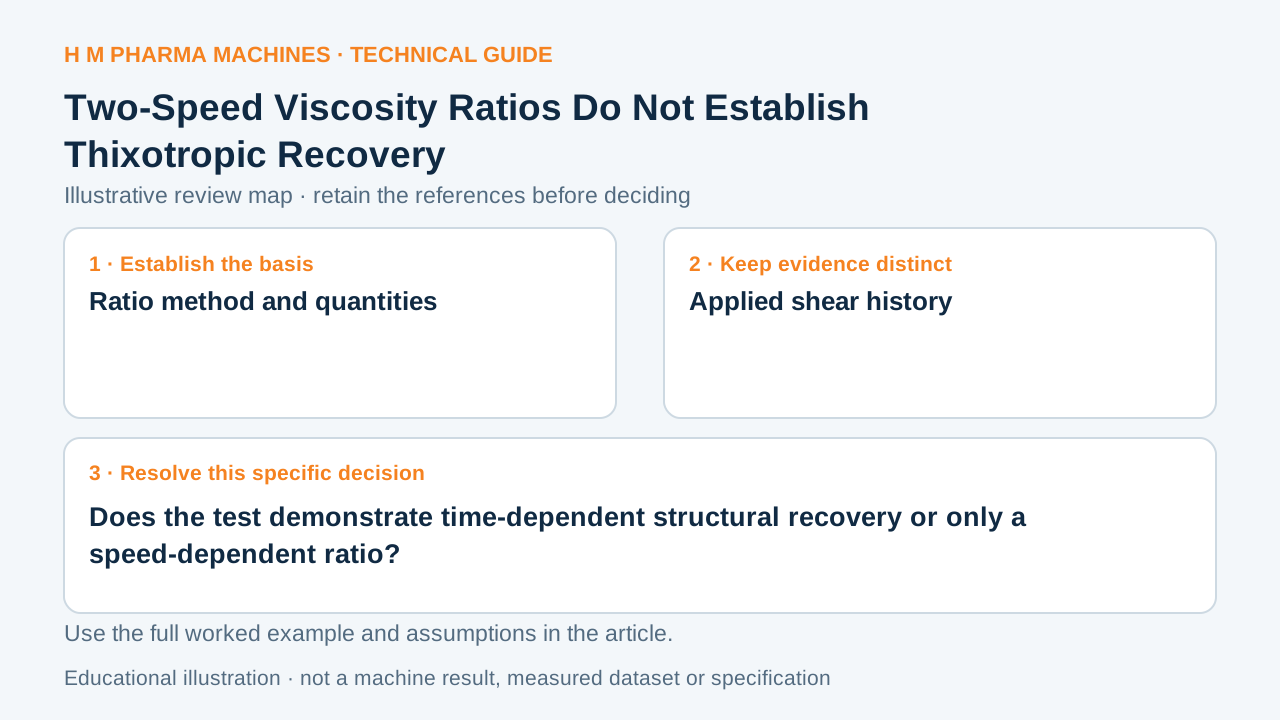
A two-speed viscosity comparison and a recovery test answer different questions about a structured liquid.
Separate Rate Dependence from Time Dependence
Anton Paar explains that a ratio of viscosity at low and high speed can describe shear-dependent behaviour but is sometimes misleadingly called a thixotropic index. Demonstrating thixotropy requires attention to time-dependent structural breakdown and regeneration.
A time-dependent recovery claim needs observations of breakdown and regeneration under the identified sequence. Keep that history alongside the term. A difference between two speed readings does not tell the buyer how the material rebuilds after the applied shear changes. Primary rheology reference.
Illustrative Evidence Gap
Hypothetical report A gives viscosities of 4 and 1 Pa·s at two speeds, producing a ratio of 4. It provides no recovery interval. Report B records a defined shear history and the response during a subsequent recovery stage. The records answer different questions.
Neither invented report is an HM ointment trial. Even a recovery record does not define production behaviour under every rest period or transfer condition. Ask the formulation team which test sequence represents the intended processing question and which part of it has actually been measured.
Request the Time Record
Keep duration, sequence, sample preparation and the recovery quantity identifiable. Describe whether the comparison uses viscosity or oscillatory response, since those quantities need their own interpretation. Avoid describing permanent change as reversible without an appropriate observation.
Complete the worksheet with the test stages and the declared recovery conclusion. For ointment processing, this supplies a useful formulation question about sequence and waiting time while leaving actual mixing and transfer performance to representative equipment trials. HM application context: Ointment Manufacturing Plant.
Two-Speed Viscosity Ratios Do Not Establish Thixotropic Recovery — blank interpretation record
This blank worksheet is for your own project. It contains no H M machine trial result.
| Comparison | Evidence/reference | Reviewer |
|---|---|---|
| Ratio method and quantities | To complete | To complete |
| Applied shear history | To complete | To complete |
| Recovery interval/response | To complete | To complete |
| Bounded formulation conclusion | To complete | To complete |
Customer Questions
Does a ratio above one prove thixotropy?
It can show a speed-dependent response; time-dependent recovery needs separate evidence.
Must the recovery result be tied to time?
Yes. The relevant interval and test history belong to its interpretation.
Does a bench recovery test specify a mixer cycle?
No. The actual process and formulation need their own assessment.
Related Equipment References
Review the actual offered equipment and application separately from this educational example.
Primary References
These references support the technical principles discussed in this guide. The worked examples and review questions are educational.
Discuss Your Machine Requirement
Share your product, container, required output and the evidence needed for your technical review.
Request a Technical Review