
A turbine meter’s pulse factor belongs to an identified meter and flow-condition range. An average factor does not describe every point automatically.
Identify the Physical Basis
A turbine K-factor expresses pulses per unit volume. OMEGA’s turbine reference explains that rotor drag and flow range affect the relationship and that each turbine has its own factor. Viscosity-related behaviour and the quoted linear region matter when deciding whether a single factor supports the proposed operating range.
Work Through an Example
Suppose an illustrative water reference gives K = 1,000 pulses/L. A count of 2,000 pulses corresponds to 2 L using that factor. If a justified product-condition comparison instead established K = 950 pulses/L, the same count would correspond to about 2.105 L. The example explains the effect of using a different factor; neither number is evidence of an actual machine or a universal viscosity correction.
Use the Result in the Review
Capture the selected meter’s identity, factor units and calibration fluid with its usable range. Compare the product’s viscosity and temperature against the supplier’s evidence. Include low-flow start and finish portions of a batch if they pass through a different response region. A factor entered correctly in a controller can still be inappropriate for the fluid or portion of the flow range being counted.
For a flowmeter filling inquiry, first confirm whether the selected instrument is a turbine type. Ask for the product-condition basis before assigning a pulse factor. This article addresses the physical validity of that factor; separate review is needed for pulse input scaling, controller timing and delivered-dose trials.
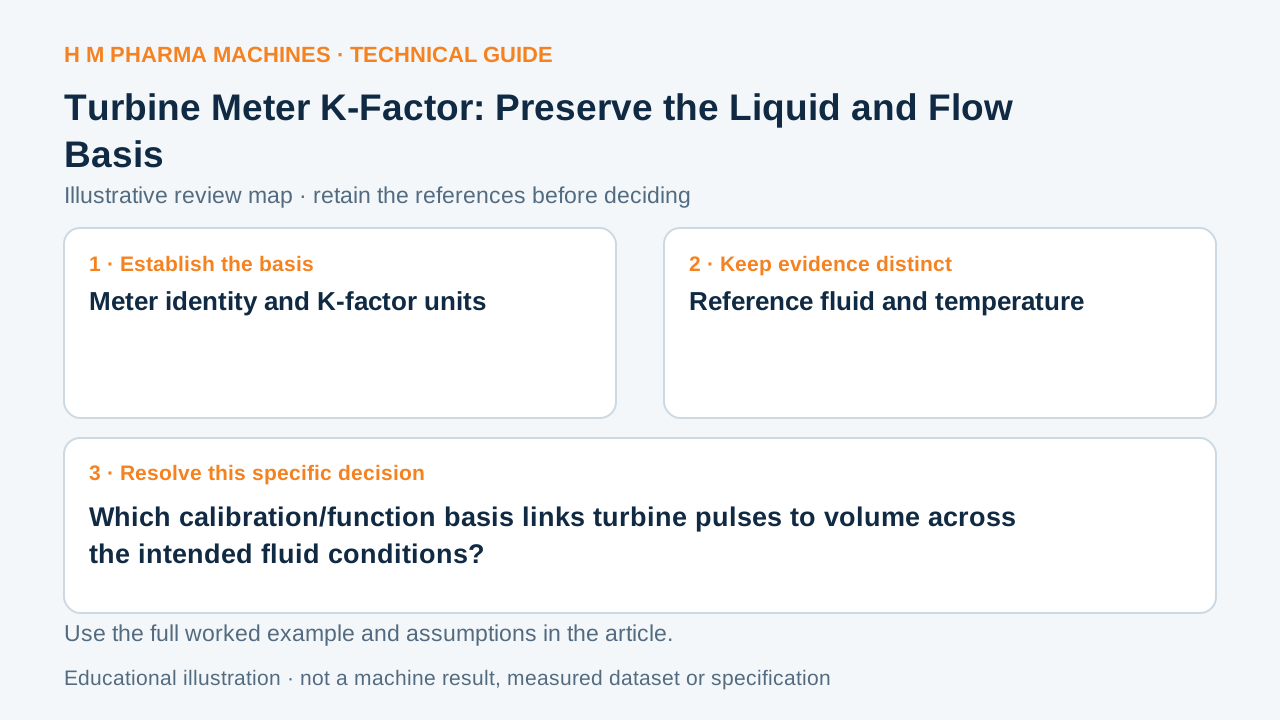
Which calibration/function basis links turbine pulses to volume across the intended fluid conditions?
This blank worksheet is for your own project. It contains no H M machine trial result.
| Review field | Reference or result | Responsible person |
|---|---|---|
| Meter identity and K-factor units | To complete | To complete |
| Reference fluid and temperature | To complete | To complete |
| Linear range and actual rate profile | To complete | To complete |
| Product-condition factor evidence | To complete | To complete |
Customer Questions
Is every K-factor identical for the same nominal size?
No. Keep the individual meter identity and evidence.
Can correct pulse arithmetic validate the fluid basis?
No. Arithmetic and physical suitability are separate questions.
Is the low-flow part of a batch irrelevant?
No. It can fall outside the range used to justify one factor.
Related Equipment References
Review the actual offered equipment and application separately from this educational example.
Primary References
These references support the technical principles discussed in this guide. The worked examples and review questions are educational.
Discuss Your Machine Requirement
Share your product, container, required output and the evidence needed for your technical review.
Request a Technical Review