
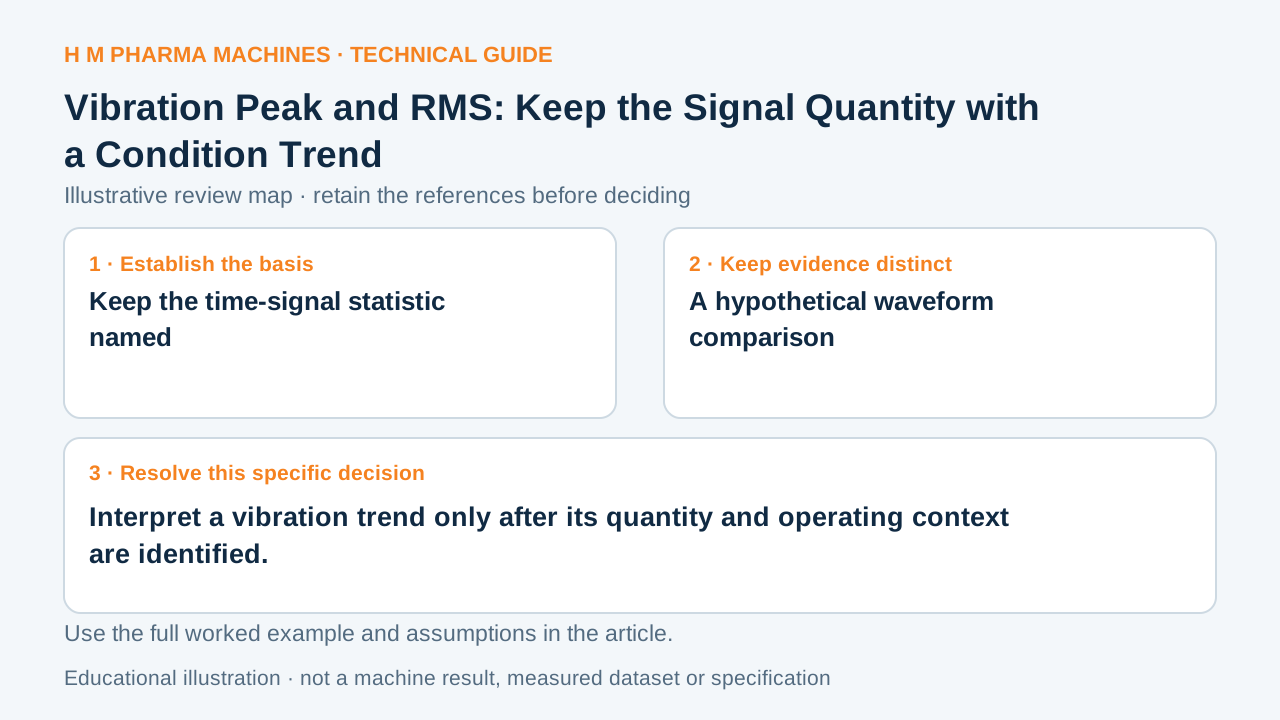
Equal RMS values can coexist with different peaks. A condition trend should retain the named signal quantity.
Keep the time-signal statistic named
Peak magnitude and root-mean-square describe different aspects of a time signal. Brüel & Kjær's handbook defines crest factor as peak divided by RMS. Primary reference: Brüel & Kjær sound and vibration handbook.
A reported vibration number should identify the physical quantity, units, statistic, observation interval and relevant frequency context. Acceleration, velocity and displacement are not interchangeable labels. Nor can an RMS trend alone show every short peak within its observation interval.
A hypothetical waveform comparison
Imagine two fictional signals, each with RMS of 2 in the same stated units and interval. Signal A has peak magnitude 3; Signal B has peak magnitude 8. Their crest factors are 3/2 = 1.5 and 8/2 = 4. Equal RMS does not erase the difference in peaks. The arithmetic establishes only those descriptive ratios, not which component is faulty.
Make columns for statistic, peak, RMS, interval, units and operating mode. Keep the raw signal or the referenced acquisition record where available. These invented signals are not HM vibration results or alarm thresholds.
Use the trend to ask a bounded condition question
Compare like quantities at comparable operating conditions before interpreting a change. A different speed, load or observation interval can alter a summary even when the measurement system remains unchanged. Preserve those conditions alongside the equipment identity.
If a peak-related concern emerges, ask what evidence would distinguish its possible sources rather than assigning a fault from crest factor alone. The useful outcome is a correctly labeled condition record and a focused follow-up question. This article sets no diagnostic limit, prescribes no sensor calibration and does not claim that one statistic provides a complete machinery-health assessment.
Customer Questions
Does equal RMS imply equal peak magnitude?
No. The waveform shape and peaks can differ while RMS matches.
What is crest factor in this comparison?
The stated peak magnitude divided by the RMS for the defined signal basis.
Does a large crest factor identify one fault?
No. It describes the signal; diagnosis needs the operating and component evidence.
Primary References
These references support the technical principles discussed in this guide. The worked examples and review questions are educational.
Discuss Your Machine Requirement
Share your product, container, required output and the evidence needed for your technical review.
Request a Technical Review