
In This Guide
- Identify the Reading and the Pre-Dose State
- Keep the Empty-Container Identity with Each Observation
- Time-Link Reading Changes to Nearby Activity
- Preserve the Approved Setup during Comparison
- Build an Empty-Reading Event Record
- Send a Focused Evidence Package for Service Review
- Customer Questions
- Product References
- Discuss Your Requirement
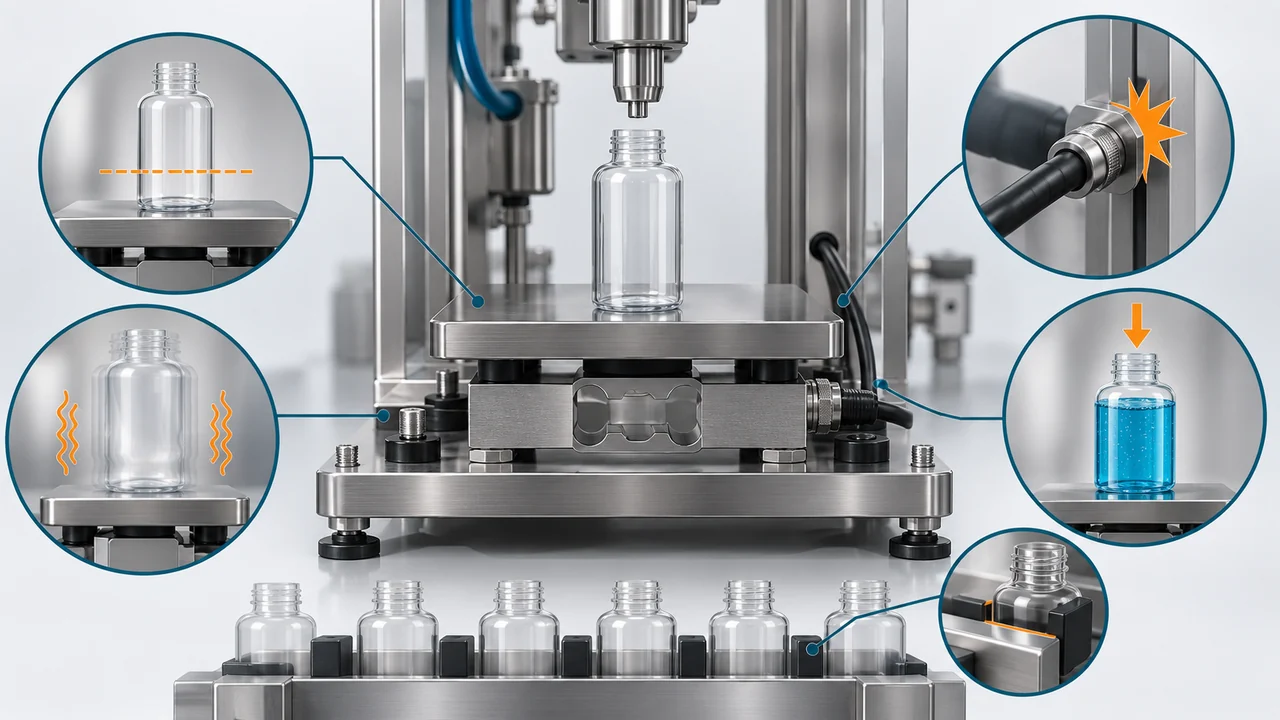
An empty bottle is in position, yet the indicated weighing value changes before product delivery begins. Capture the displayed reading, container position and nearby activity while preserving the approved setup. Time-linked observations help the service team review surrounding conditions without turning an unexplained display movement into a dose-setting change.
Identify what the supplied display means at the empty-container stage. Record when the reading changes, the container and station involved, and nearby activity. Keep observations and suspected explanations separate. Refer the record to the responsible service team before any unapproved setting or mechanical change.
Identify the Reading and the Pre-Dose State
Use the supplied instructions to identify the displayed value and machine phase. Record whether the container is empty and product delivery has begun. A display label alone may not explain the measurement or how the tare sequence uses it.
Include the station and document revision. If the value's meaning or tare-capture point is unclear, request clarification. Follow required protective responses first; collecting a note must not delay a safe stop or another action required by the approved procedure.
Keep the Empty-Container Identity with Each Observation
Record the bottle format, sample or lot reference and how it sits on the weighing support. Note an observable tilt or contact with a guide or neighbouring container. Describe what is visible from the normal permitted position; mark inaccessible details as unknown.
Use identified containers and the documented setup. Changed bottles and support arrangements create different conditions. Retain those differences rather than describing every display movement as one repeated fault. Do not reposition guides or reach into protected areas to test an assumption.
Time-Link Reading Changes to Nearby Activity
Note the reading's change alongside visible activity, such as nearby conveyor movement or another known machine event. Use a consistent time reference for the observations and identify the record or permitted recording that supports the sequence. If separate records use different clocks, disclose that uncertainty.
An event occurring at the same time is a possible relationship, not a confirmed cause. Keep the beginning, change and later observation in order. Ask the supplier whether the installed system provides suitable records; do not assume automatic weight logging, filtering or disturbance detection is included with every load-cell filler.
Preserve the Approved Setup during Comparison
Retain the current machine, container and setup references with the last available acceptable observation. Record any changes already made, including who authorized them and when. An unexplained display change should remain visible in the evidence rather than being concealed through repeated zeroing or an improvised parameter adjustment.
A further comparison must use the procedure and personnel approved for the supplied equipment. Inspection of clearances, cables, supports or guarded components belongs to the appropriate service scope. This guide supplies record fields; it does not specify a calibration method, allowable fluctuation or a universally valid settling period.
Build an Empty-Reading Event Record
Keep one identified record for each relevant event. The fields below are blank prompts for service review and contain no measured result or diagnosed fault.
| Evidence field | Information to enter |
|---|---|
| Machine and reading | Station, displayed value meaning and instruction reference |
| Pre-dose state | Empty-container status and actual machine phase |
| Container and support | Format identity, position and observable contact |
| Time sequence | Initial observation, reading change and later condition |
| Nearby activity | Known event, evidence reference and clock uncertainty |
| Setup history | Approved reference and recorded changes |
| Service response | Reviewed finding, unresolved question and follow-up owner |
Send a Focused Evidence Package for Service Review
Provide the machine and station identity, document references, event record and permitted photographs or recordings. Explain which details were observed and which remain unknown. Ask the responsible team to review the pre-dose reading against the supplied weighing and handling arrangement, then retain its response and any approved follow-up.
The load-cell filling trial guide covers purchase acceptance from tare through the settled fill. This event record addresses an unstable empty-container indication before dosing. Keep a proposed explanation separate from a confirmed finding, and preserve unresolved items until their reviewed disposition is recorded.
Customer Questions
Does a reading change beside a moving conveyor prove vibration is the cause?
No. Record the timing and surrounding conditions as a possible relationship. The responsible team must review the evidence and any further approved comparison before confirming a cause.
Should an unstable empty reading be corrected by repeatedly zeroing the display?
Use the supplied weighing procedure. Preserve the unexplained observation and refer it for review before an unapproved parameter, setup or mechanical change.
What if the machine does not provide an automatic weight history?
Use an approved manual event record or permitted recording with an identified time reference. State missing evidence clearly and confirm the actual controller capability with the supplier.
Product References and Further Details
These pages describe published equipment arrangements. Review the supplied machine, actual materials and agreed operating requirements when applying the guide.
Discuss Your Machine Requirement
Share your product, container or closure samples, required output, process conditions and line layout with H M Pharma Machines for a technical review.
Request a Technical Review