
Define the quantity being accepted
A weight-filling trial needs a shared definition of the accepted quantity. State whether the order concerns net product mass and how the buyer will check it independently. Keep the target, acceptance limits, sampling method and measurement equipment in the agreed scope, rather than introducing them after a demonstration.
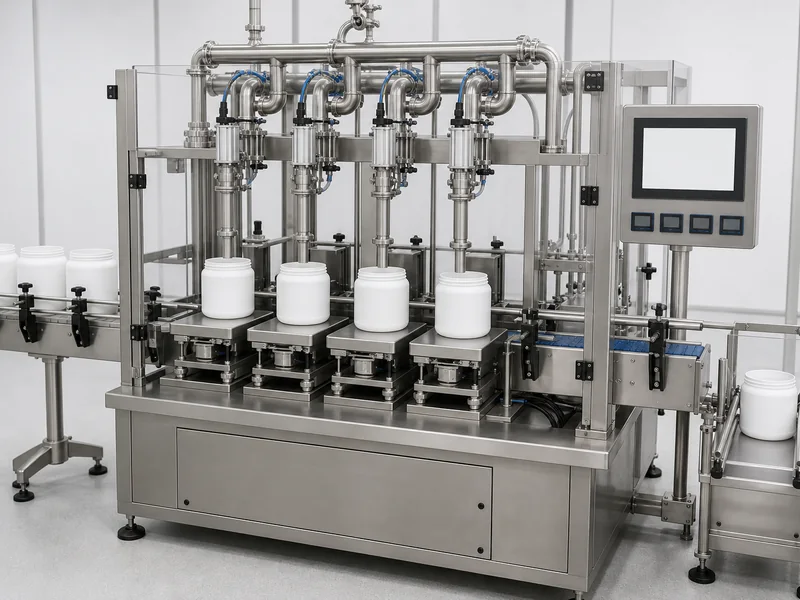
The load cell liquid filling machine should be reviewed as a complete weighing and container-handling arrangement. A control display is one observation in that assessment. It does not replace an agreed independent check, and a successful demonstration does not establish legal-metrology compliance or performance for untested products.
Bring containers that represent the order
Provide the bottle formats and representative samples needed for the quoted duty. Record the container reference and any relevant differences in shape, stability or empty weight. Do not evaluate the entire order using a convenient demonstration bottle unless that substitution is identified and the remaining tests are agreed.
Ask how the empty container is positioned and how its tare is captured in the supplied configuration. Separate the empty-container record from the net product result. If containers vary, the trial should show how the approved sequence handles that variation. Changes to tare capture, format parts or bottle presentation belong in the recorded configuration.
Separate live weight from the final settled result
Observe the agreed filling sequence, including the coarse and fine stages where provided. Record when the display is read and when the independent measurement is taken. An observation during active flow is different from a result after flow has stopped and the product has settled under the agreed conditions.
Keep the product condition and stopping behavior with the sample identity. Ask how nozzle cut-off, residual flow and container movement are addressed by the quoted arrangement. Do not infer an automatic compensation feature from a changing display. If a setting is adjusted during the trial, retain the earlier observation and identify which repeat samples assess the revised setting.
Include release, interruptions and downstream handling
Review how the filled container leaves the weighing position and joins the next operation. The trial should use the agreed conveyor, indexing and support arrangement where these affect the ordered scope. A result produced with the conveyor stopped may not answer every question about the intended production sequence.
Include a normal stop and restart in the agreed assessment, using the supplier's approved procedure. Define the handling of containers that do not meet the accepted conditions. A warning, a machine stop, a physical reject device and an operator decision are different arrangements; identify what is actually included and who owns any downstream inspection or rejection task.
Keep an uncompleted tare-to-release worksheet
Use the fields below to prepare a trial record. They are blank prompts, not measured values or an example of a passed test. Create a record for each selected container and sampling stage.
| Record field | Buyer and supplier to complete |
|---|---|
| Container reference and trial stage | To be recorded |
| Empty-container tare observation | To be measured |
| Programmed net target and agreed limits | To be agreed |
| Displayed result and reading point | To be recorded |
| Independent settled result and method | To be measured |
| Release or reject handling | Supplied arrangement to confirm |
| Setting revision and open action | To be recorded |
Turn observations into a defined offer
Attach the accepted product, container, measuring method and operating sequence to the quotation. Keep the settings reference, tested conditions and unresolved requirements visible. If the intended acceptance quantity is volume rather than mass, agree the relevant density and temperature basis; a scale reading alone does not establish a universal volume conversion.
The dosing-method guide supports mechanism selection, while the fill-drift guide addresses changing results. Send your container samples, product, net target and required output to discuss a weight-filling trial with a clear measurement and handling scope.
Buyer Questions
Is gross bottle weight the same as net product weight?
No. Keep the empty-container tare and the product quantity distinct, using the measuring and calculation method agreed for the trial.
Does a weight filler always include automatic rejection?
Reject equipment and responsibilities depend on the supplied configuration. Confirm the actual arrangement rather than inferring it from weight monitoring.
Can a net-weight result prove a labelled volume?
Only an agreed assessment can establish the relationship for the actual product and conditions. Do not assume one weight reading is a universally valid volume result.
Related Equipment and Guides
Primary References
Review these published machine and support pages alongside the approved configuration, actual samples and project documents.
Discuss Your Machine Requirement
Share the machine duty, actual samples, required result and relevant site information with H M Pharma Machines for a technical review.
Request a Technical Review